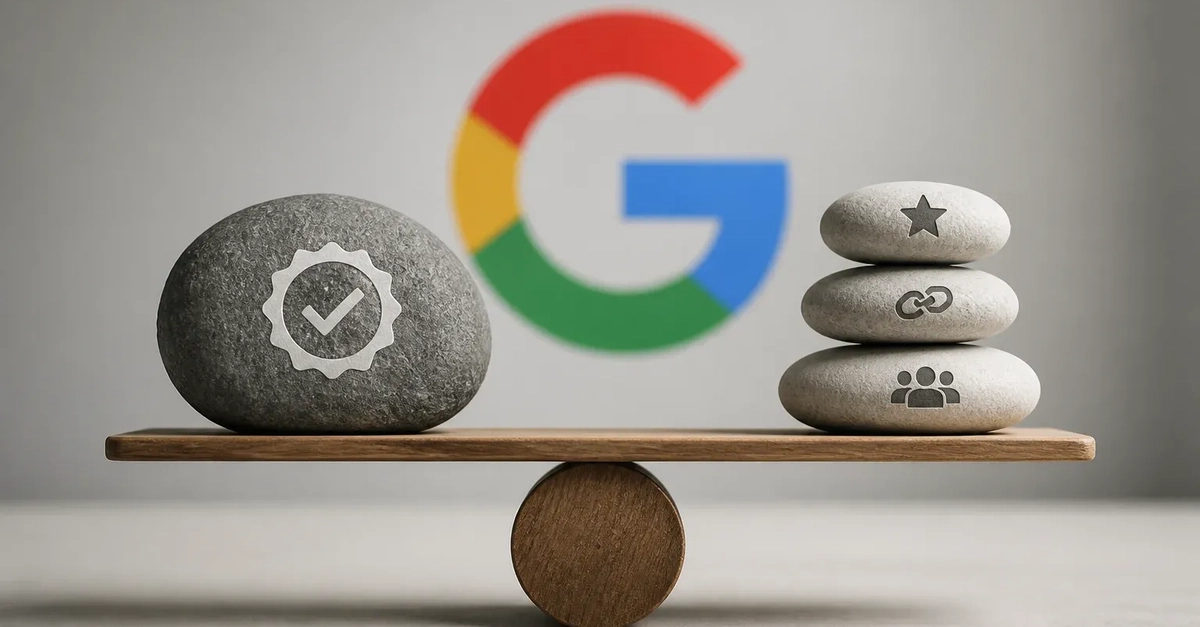
Google's Dual Focus in 2026 Search Evolution
Google’s search landscape is undergoing a significant transformation, marked by a series of updates throughout 2026 that fundamentally alter how content is evaluated and surfaced. Two critical shifts, highlighted by the February Discover Core Update and subsequent core updates alongside AI-driven search features, necessitate a new understanding for website owners. The core distinction lies in separating the inherent quality of content from the signals Google uses to select sources for its AI-assisted search experiences. This separation is not merely semantic; it implies that improving content depth, originality, and presentation addresses one set of visibility challenges, while optimizing for inclusion in AI-driven results may require a different approach altogether.
The February 2026 Discover Core Update specifically targeted the quality and relevance of content appearing within Google Discover. This update emphasized on-page factors like depth, originality, timeliness, and presentation. Websites that saw a decline in Discover visibility were likely experiencing issues related to these content-centric quality metrics. However, the subsequent core updates in May 2026, which introduced preferred sources into AI Mode and AI Overviews, introduced a second, distinct challenge: source selection for AI-generated summaries and responses.
Think of it like a library. The Discover update is about ensuring the books on the shelves are well-written, informative, and engaging. The AI search updates, on the other hand, are about which books the librarian (Google) chooses to reference when answering a complex question. A book can be perfectly written (high content quality) but still not be the primary source the librarian cites if it doesn't align with other criteria, such as being a frequently cited authority or being directly relevant to the specific, nuanced query.
This distinction is crucial because the remediation strategies differ. A site losing Discover visibility might need to invest in more in-depth research, original reporting, or a clearer, more user-friendly presentation of its existing content. Conversely, a site struggling with AI-assisted search visibility might be facing a shift in Google's preference for authoritative, direct sources that are explicitly deemed suitable for AI summarization. While content improvements are always beneficial, they do not guarantee a reversal of source-selection changes driven by AI integration. Page-level edits alone may not be sufficient if the issue is Google’s algorithmic preference for specific types of sources in its AI outputs.
Six Ranking Updates and Evolving Quality Signals
Google’s official Search Status Dashboard logged a total of six ranking-related updates in 2026. While the sheer number might seem daunting, the true value for website owners lies in the insights these updates provide into Google's evolving criteria for quality and ranking. Independent analyses of the March core update, for instance, revealed a significant trend: destination sites and original publishers gained visibility, while intermediary aggregators and pure directories often lost ground.
This pattern suggests a broader algorithmic push towards rewarding primary sources of information. Google appears to be refining its systems to distinguish more effectively between content that originates information and content that merely aggregates or repackages it. This is a critical signal for businesses reliant on organic search traffic. Understanding the timeline of these updates, as provided by the Search Status Dashboard, allows website owners to differentiate between normal performance fluctuations and periods where Google was actively modifying its ranking or spam detection systems.
The six updates encompass various aspects of search, including Discover, core ranking algorithms, and spam detection. Specifically, the dashboard details one Discover update and two core ranking updates. These are not isolated incidents but part of a sustained effort by Google to refine its search engine's ability to deliver high-quality, relevant, and authoritative information. The emphasis on distinguishing original publishers from aggregators indicates a strategic move to combat the proliferation of low-value content and to prioritize authoritative voices, especially in the context of increasingly sophisticated AI search features.
Implications for Content Strategy and Source Selection
The 2026 updates mark a pivotal moment for digital publishers and content creators. The clear separation between content quality signals (primarily impacting Discover) and AI search destination signals means that a one-size-fits-all approach to SEO is no longer viable. Websites must now consider two distinct, albeit interconnected, optimization strategies.
For Discover visibility, the focus remains on the fundamentals: producing original, in-depth content that offers unique insights, is timely, and is presented in an engaging manner. This involves investing in research, expert authorship, and clear, user-friendly formatting. The goal is to create content that is inherently valuable and useful to the reader, irrespective of how it is surfaced.
However, for AI-assisted search experiences, the game changes. Google's AI Overviews and AI Mode are designed to synthesize information from various sources. The updates suggest that Google is prioritizing sources that are demonstrably authoritative, frequently cited, and directly relevant to a query. This implies that websites need to not only produce high-quality content but also establish themselves as definitive authorities in their niche. This might involve building stronger backlink profiles from reputable sources, increasing brand mentions, and ensuring content is structured in a way that is easily digestible and verifiable by AI systems. The success of intermediary sites and directories in AI Overviews is likely to diminish as Google favors direct access to original information providers.
The challenge for many businesses will be adapting their content creation and distribution workflows to meet these dual demands. A successful strategy will likely involve a layered approach: maintaining a high standard of content quality across the board, while also implementing specific tactics to enhance authority and suitability for AI-driven search. This could mean creating dedicated content hubs for core topics, actively seeking out citations from authoritative platforms, and ensuring that content adheres to best practices for machine readability and fact-checking. The era of simply aggregating information and expecting visibility is rapidly drawing to a close, replaced by a demand for genuine expertise and direct contribution to the knowledge base.
The Unanswered Question: AI's Long-Term Impact on Publisher Authority
While Google's 2026 updates clearly signal a shift towards prioritizing original sources in AI-driven search, what remains unaddressed is the long-term impact on publisher authority itself. As AI synthesizes information and potentially reduces direct traffic to individual sites, how will publishers maintain their brand recognition and perceived authority? Will users begin to associate the synthesized answers directly with Google, diminishing the importance of the original content creators? This question is critical for the sustainability of the open web and the incentive structures that currently drive quality content production.