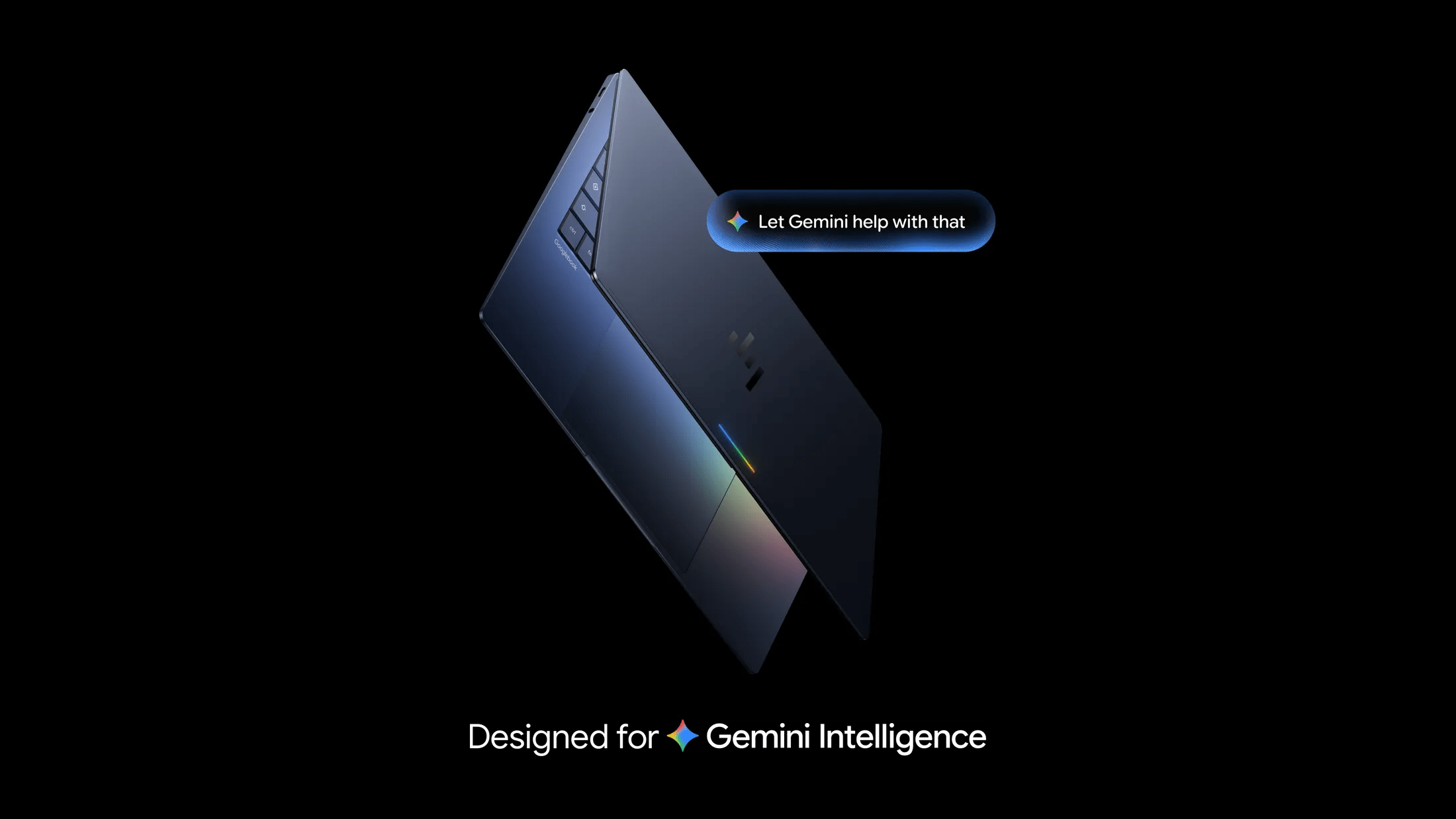
Googlebook: A New AI-Native Laptop Platform Arrives
Google has officially launched Googlebook, a new category of laptops designed from the ground up to integrate its Gemini AI capabilities. Preorders are now open, with the base model starting at $899. Devices are slated to ship on October 4th in the United States and October 5th in other regions. This launch signifies Google's ambition to position laptops not just as personal computing devices, but as a dedicated platform for AI-driven experiences, complete with its own operating system and on-device AI functions.
Unlike previous hardware ventures, Google is adopting a broad partnership approach for Googlebook. The company has collaborated with established PC manufacturers including Acer, ASUS, Dell, HP, and Lenovo. This strategy allows Google to focus on the software and AI layer – the Gemini integration and cross-device features – while leveraging the manufacturing and distribution expertise of these hardware giants. This move aims to ensure a wide availability and diverse hardware selection for the new platform from its inception.
Gemini Integration: The Core of the Googlebook Experience
The defining characteristic of Googlebook is its deep integration of Gemini AI. This isn't merely an application running on a laptop; it's woven into the fabric of the operating system and user experience. Gemini AI is tied directly to the cursor, enabling intelligent context-aware actions as users navigate. Dictation features are enhanced, promising more accurate and nuanced speech-to-text capabilities powered by advanced AI models. Widgets and other desktop elements are also designed to be AI-aware, adapting and offering proactive suggestions based on user activity.
Google envisions this as a fundamental shift in how users interact with their laptops. Instead of opening specific AI tools, the intelligence is ambient, assisting users across a spectrum of tasks. This could range from summarizing lengthy documents on the fly, drafting emails with contextually relevant information, to intelligently managing system resources for optimal performance. The goal is to make the laptop a more proactive and helpful partner in daily computing tasks.
This approach contrasts with the more fragmented AI integrations seen in current laptops, where AI features are often siloed within specific applications or require explicit user invocation. Googlebook aims for a more seamless, AI-first desktop environment. The tight coupling of Gemini to the cursor and OS-level functions suggests a significant engineering effort to ensure responsiveness and utility. It's a bet that users will find this deeply integrated AI experience compelling enough to adopt a new hardware platform.
A New Platform, Not Just a New Device
Google is careful to frame Googlebook not as a single product, but as the genesis of a new device platform with its own operating system. This implies a long-term commitment and a vision extending beyond the initial hardware release. The emphasis on on-device AI functions suggests a focus on privacy and performance, allowing certain AI tasks to be processed locally rather than relying solely on cloud connectivity. This can lead to faster response times and greater data security for sensitive operations.
The cross-device features are another key pillar of the Googlebook strategy. While specifics remain somewhat vague in the initial announcements, the implication is a more cohesive ecosystem experience, likely building upon existing Android and ChromeOS integration capabilities. This could mean seamless handoffs between Googlebook and Android phones, shared clipboards, unified notifications, and potentially even shared AI processing power across devices. This ambition to create a unified, intelligent computing experience across multiple form factors is a significant undertaking.
The $899 starting price point positions Googlebook in the competitive mid-range to upper-mid-range laptop market. This segment is crowded with established players offering a wide array of devices. Google's strategy relies on the unique value proposition of its integrated Gemini AI and its vision for an AI-native platform to differentiate Googlebook. The success of this new category will hinge on whether the AI features are perceived as genuinely useful and transformative by a broad audience, and whether the hardware partnerships can deliver reliable and performant devices that live up to Google's software promises.
Market Implications and Competitive Landscape
The launch of Googlebook introduces a new dynamic into the PC market. By partnering with multiple OEMs, Google avoids the pitfalls of building and selling hardware at scale, instead focusing on its core strengths in software and AI. This model could potentially disrupt the traditional laptop market by offering a standardized, AI-centric software experience across various hardware configurations. Competitors, including Microsoft with Windows AI features and Apple with its silicon-driven AI capabilities, will be closely watching the reception of Googlebook.
For the hardware partners, this collaboration offers a chance to tap into Google's AI expertise and potentially capture a new segment of users looking for AI-enhanced computing. However, it also means relying on Google's OS and AI roadmap, which could present its own set of challenges. The long-term success of Googlebook will depend on Google's ability to continuously innovate its AI offerings and ensure a robust, secure, and user-friendly platform that evolves with user needs and technological advancements.