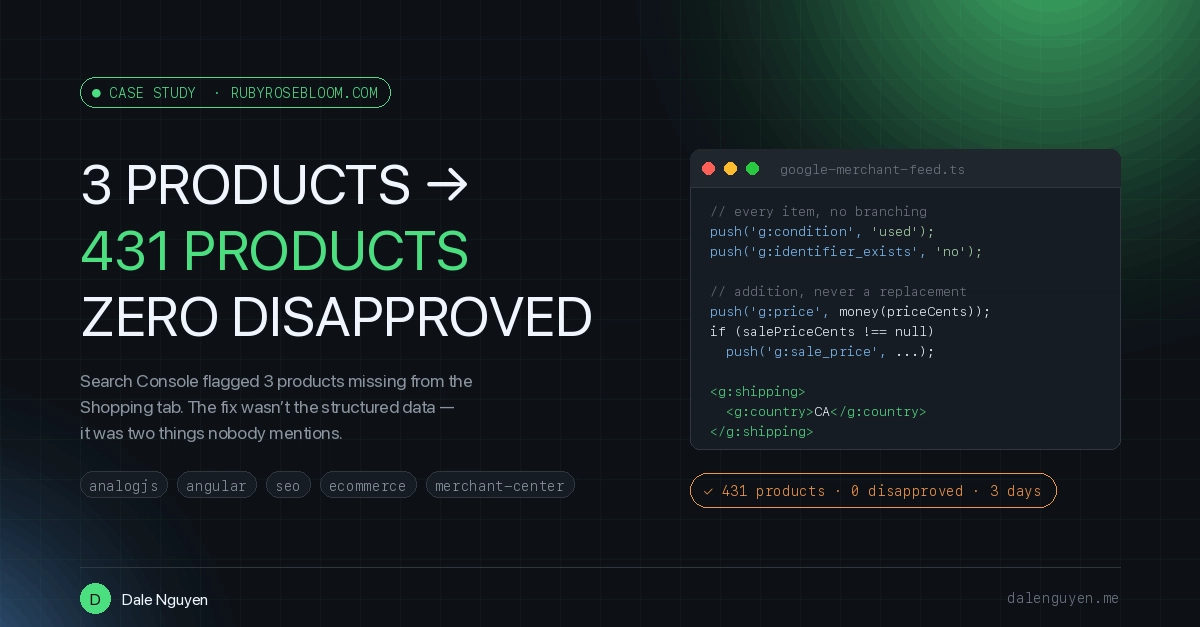
Unpacking Google Merchant Center: More Than Just the Shopping Tab
For e-commerce sellers, the term "Google Merchant Center" often conjures images of product listings populating Google's Shopping tab. However, the reality is far more nuanced. As demonstrated by a vintage seller operating a self-hosted storefront, the journey to appearing on Google's surfaces is not a single destination but a complex ecosystem with multiple entry points and outcomes. The perceived simplicity of "getting into Merchant Center" belies a system where different product placements are fed by distinct mechanisms, and the highly visible Shopping tab is only one piece of a larger puzzle.
The core question for any independent e-commerce operator is: what tangible benefits does integrating with Google Merchant Center actually provide for a standalone storefront, and where do those products ultimately surface? The answer involves understanding how Google indexes product information and presents it across its vast network, extending beyond simple product ads.
The Multifaceted Nature of Product Visibility
Google Merchant Center acts as a bridge between a merchant's product catalog and Google's various search and shopping platforms. While the Shopping tab is the most commonly discussed outcome, it's essential to recognize that products can appear in several other places, each with its own requirements and impact. These include Rich Results within standard Google Search, and increasingly, through AI-driven shopping experiences.
For a seller like Ruby Rose Bloom, who opts for a self-hosted solution without relying on platforms like Shopify or marketplaces, understanding these different surfaces is critical. The absence of a direct "fix" within Search Console for products not appearing on the Shopping tab points to a deeper integration challenge. It's not about a single setting but about how product data is structured and submitted.
The primary mechanisms for getting products recognized by Google are through product feeds and structured data markup. A product feed is a file (often CSV, TSV, or XML) that contains detailed information about each product, including title, description, price, availability, and a link to the product page. This feed is uploaded to Google Merchant Center.
Structured data, specifically schema.org markup embedded within the product's web page, provides Google with explicit information about the product directly from the source code. This markup can include details like product name, price, currency, availability, reviews, and more. For rich results in Google Search, this structured data is paramount. When Google successfully parses this information, it can display enhanced product details directly in the search results pages, making listings more visually appealing and informative, thus increasing click-through rates.
Rich Results: Enhancing Organic Search Visibility
One of the significant, yet often overlooked, benefits of properly configuring Google Merchant Center and implementing structured data is the ability to achieve "Rich Results" in Google Search. These are not paid ads but enhanced organic search listings that feature more detailed information directly visible to the user. For a product page, this can mean displaying the product's price, availability (in stock/out of stock), star ratings from reviews, and even small product images.
Implementing schema.org markup for products on a self-hosted site is crucial for enabling these rich results. Google's algorithms crawl these pages, and if the structured data is correctly implemented, it can significantly improve how a product is presented in organic search. This is particularly valuable for independent sellers, as it provides a competitive edge against larger retailers by making their individual product listings more attractive and informative directly on the search results page.
The process involves adding specific JSON-LD (JavaScript Object Notation for Linked Data) scripts to the product pages. These scripts describe the product's attributes in a machine-readable format that Google can easily understand. For example, marking up the price with the correct currency code and specifying the availability status helps Google accurately represent the product to potential buyers. This structured data acts as a direct signal to Google about the product's details, reducing ambiguity and increasing the likelihood of rich result display.
The Evolving Landscape: AI Mode and Future Shopping Experiences
Beyond traditional search and the Shopping tab, Google is increasingly integrating AI into its shopping experiences. "AI Mode" refers to the emerging ways Google uses artificial intelligence to understand user intent and connect them with relevant products, often in a more conversational or personalized manner. Google Merchant Center data plays a vital role in feeding these AI models.
When product information is accurately and comprehensively submitted through Merchant Center, it becomes part of the vast dataset that Google's AI systems learn from. This allows AI to better understand product attributes, compare similar items, and recommend products based on nuanced user queries or browsing history. For a seller, this means their products have a greater chance of being surfaced not just through direct searches, but also through AI-powered discovery tools that might offer personalized recommendations or answer complex shopping questions.
The implications for sellers are profound. As AI becomes more integrated into the shopping journey, the quality and completeness of product data submitted to Merchant Center will directly influence a product's discoverability in these new, AI-driven contexts. This moves beyond keyword matching to a more semantic understanding of products and user needs. Sellers who focus on providing rich, accurate, and well-structured product information will be better positioned to benefit from these evolving AI capabilities.
Connecting the Dots: From Feed to Discovery
The journey from a product listed on a self-hosted website to appearing in Google's various shopping surfaces is a complex interplay of data submission, structured markup, and Google's indexing algorithms. Google Merchant Center is the central hub, but its effectiveness hinges on the quality of the data provided and the understanding of where that data is utilized.
For independent sellers, meticulously managing their product feeds and implementing robust schema.org markup is not merely a technical task; it's a strategic imperative. It ensures that products are not only visible on the Shopping tab but also benefit from enhanced organic listings through Rich Results and are discoverable within emerging AI-powered shopping environments. The effort invested in these areas directly translates to increased visibility, better user engagement, and ultimately, more potential customers finding their unique offerings.
The initial frustration of a seller discovering no single "fix" for Shopping tab visibility highlights a critical learning: Google's e-commerce ecosystem is not monolithic. It's a collection of interconnected surfaces, each requiring specific data inputs and configurations. By mastering product feeds, structured data, and understanding the role of Merchant Center in the broader Google ecosystem, independent sellers can unlock significant potential for their businesses.