
Google Takes AI Processing to Orbit
Google is embarking on an ambitious experiment: launching a dedicated AI data center into orbit. The company plans to send a satellite equipped with four of its custom-designed Tensor Processing Units (TPUs) into space on October 1. This initiative marks a significant step in exploring the feasibility of running advanced artificial intelligence computations beyond Earth's atmosphere. The satellite will also feature a 1,000-watt solar power system to sustain its operations, highlighting a focus on self-sufficiency in space-based computing.
This orbital data center is not designed for general-purpose computing or to mirror the vast infrastructure Google operates on the ground. Instead, it's a highly specialized testbed. The primary objective is to assess how AI workloads perform under the unique and often harsh conditions of space, including radiation, extreme temperature fluctuations, and microgravity. By isolating these factors and observing the behavior of the TPUs, Google aims to gather crucial data that will inform future space-based AI applications.
The Hardware: Powering Spaceborne AI
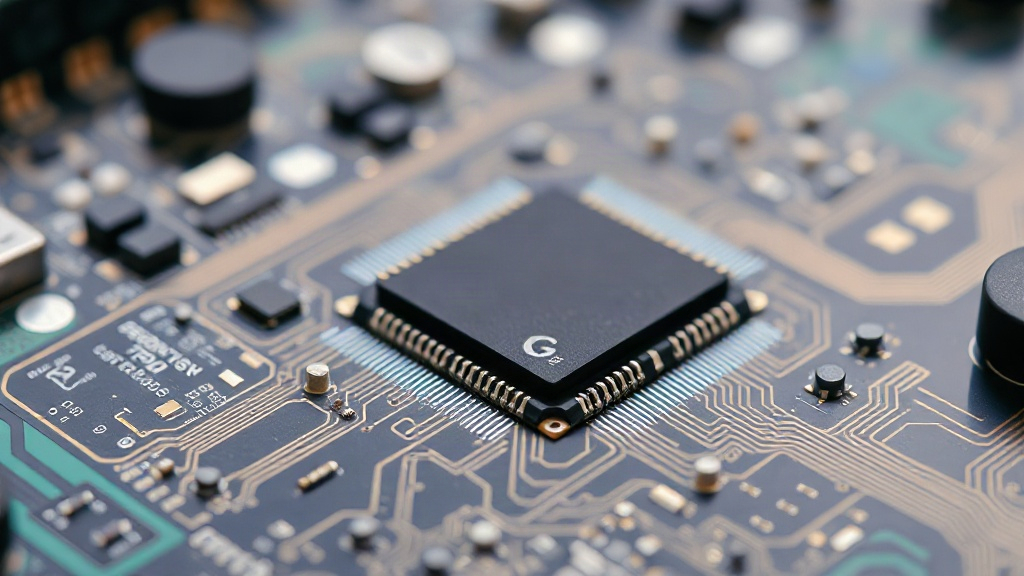
At the heart of this orbital data center are four Google Tensor Processing Units (TPUs). These custom-designed chips are optimized for machine learning tasks, offering significant performance advantages for AI inference and training compared to general-purpose CPUs or even GPUs for specific workloads. In the context of a satellite, the choice of TPUs is strategic. Their efficiency and specialized architecture could be crucial for performing complex AI analyses on data collected by the satellite itself, such as Earth observation imagery, or for processing communication signals in real-time.
The limited number of TPUs—just four—suggests a focus on specific, high-value AI tasks rather than broad computational power. This approach is also driven by the inherent constraints of launching payloads into space. Every kilogram launched represents a substantial cost, and power is also a critical limiting factor. Therefore, the system must be designed for maximum efficiency and targeted functionality. The choice of TPUs aligns with this philosophy, offering potent AI acceleration within a compact and power-conscious package.
Powering the Mission: Solar Energy in Space
Sustaining the operation of an AI data center in orbit requires a robust and reliable power source. Google's experimental satellite is equipped with a 1,000-watt solar power system. This is a considerable amount of power for a single experimental satellite, underscoring the energy demands of running TPUs, even in a specialized configuration. Solar power is the de facto standard for most satellites due to its relative simplicity, scalability, and the abundant energy available in space.
The 1,000W capacity suggests that the satellite is designed not only to power the TPUs during active processing but also to manage the energy needs of communication systems, onboard sensors, and other essential satellite functions. Efficient power management will be key. The satellite will likely feature advanced battery systems to store energy generated during periods of sunlight and to provide power during orbital eclipses. Furthermore, the solar arrays themselves will need to be highly efficient and designed to withstand the harsh space environment, including micrometeoroid impacts and intense ultraviolet radiation.
Why Space? The Case for Orbital AI
The decision to test AI data centers in orbit stems from a growing recognition of the unique advantages and necessities of space-based computation. Firstly, latency is a significant factor. For applications requiring real-time analysis of data collected by satellites—such as autonomous navigation for spacecraft, rapid threat detection, or immediate processing of Earth observation data for disaster response—sending data back to ground-based data centers for processing and then receiving results can introduce unacceptable delays. Processing AI models directly in orbit drastically reduces this latency.
Secondly, bandwidth is often a bottleneck in space communications. Transmitting vast amounts of raw sensor data from satellites to Earth consumes considerable bandwidth and can be very expensive. By performing AI-powered data reduction and analysis onboard, satellites can transmit only the most relevant insights or summarized data, significantly reducing the data downlink requirements. This makes space-based AI a critical enabler for more efficient and data-intensive space missions.
The challenges of space are also a key driver. While radiation and temperature extremes pose risks, they also present opportunities for studying how AI hardware and algorithms behave under stress. Data gathered from this experiment could lead to the development of more resilient AI systems, not just for space but also for terrestrial applications in harsh environments. This is analogous to how early aviation research in extreme conditions ultimately led to more robust aircraft designs for all purposes.
The Broader Implications for AI and Space Exploration
Google's orbital AI data center test is more than just a technological trial; it signals a strategic shift towards enabling more autonomous and intelligent operations in space. As humanity expands its presence beyond Earth, from lunar bases to Mars missions, the need for onboard intelligence will only grow. Satellites and probes will need to make complex decisions independently, analyze scientific data in situ, and manage resources without constant human intervention or reliance on Earth-based communication links.
This experiment could pave the way for a new generation of space infrastructure. Imagine swarms of intelligent satellites collaborating on complex tasks, or deep-space probes capable of self-diagnosis and adaptation. The data collected from this mission will be invaluable for designing future hardware and software architectures tailored for the space environment. It also raises questions about the future of data centers themselves. While terrestrial data centers will remain dominant for many applications, specialized, distributed data centers in orbit could become essential components of a global, interconnected computing fabric.
What nobody has addressed yet is the long-term sustainability and scalability of such orbital AI infrastructure. While this initial test focuses on functionality, future deployments will need to consider maintenance, upgrades, and the eventual decommissioning of orbital hardware, along with the potential for space debris. The success of this mission will undoubtedly spur further innovation, but it also opens a new frontier of operational and logistical challenges for the burgeoning space economy.