
Google's AI-Centric Smart Speaker Arrives
Ten months after its initial announcement, Google's latest smart speaker, now officially the Google Home with Gemini, is finally available for preorder. Priced at $100, the device marks a significant shift in Google's smart home strategy, prioritizing its advanced AI model, Gemini, over premium audio performance. This move signals Google's intent to deeply integrate its AI capabilities into the fabric of the home, making the smart speaker less of a music player and more of an intelligent assistant.
The speaker, first teased at Google I/O last year, has undergone a name change and a clear redefinition of its purpose. While previous Google Home devices focused on core smart home functions and decent audio, this iteration is explicitly designed to showcase Gemini's conversational abilities, task completion, and contextual understanding. This is not just another smart speaker; it's a dedicated Gemini hardware interface for the home.

Gemini Integration: The Core Offering
The headline feature of the new Google Home speaker is its deep integration with Gemini. Unlike existing smart speakers that rely on cloud-based AI processing for most queries, this device is engineered to leverage Gemini's enhanced capabilities directly. This means faster response times, more nuanced understanding of complex commands, and the ability to perform multi-step tasks more seamlessly. Google is positioning this speaker as a central hub for interacting with their AI, enabling users to ask questions, manage their schedules, control smart home devices, and even get creative assistance, all through natural language conversations.
The Gemini integration aims to move beyond simple command-response interactions. Users can expect more proactive suggestions, better context retention across conversations, and a more personalized experience as Gemini learns user preferences and routines. For developers, this opens up new avenues for integrating their services and devices with a more intelligent AI assistant. The platform's ability to understand context and intent is expected to significantly improve the user experience for complex workflows, such as planning a trip or coordinating multiple smart home actions simultaneously.
Google's decision to emphasize AI over audio quality is a telling one. While the speaker will undoubtedly offer functional audio playback, its design and marketing are clearly geared towards showcasing Gemini's intelligence. This approach mirrors a broader industry trend where AI capabilities are becoming the primary differentiator for consumer electronics. The $100 price point makes this advanced AI accessible, aiming to bring sophisticated AI assistance into more households.
Hardware and Design Philosophy
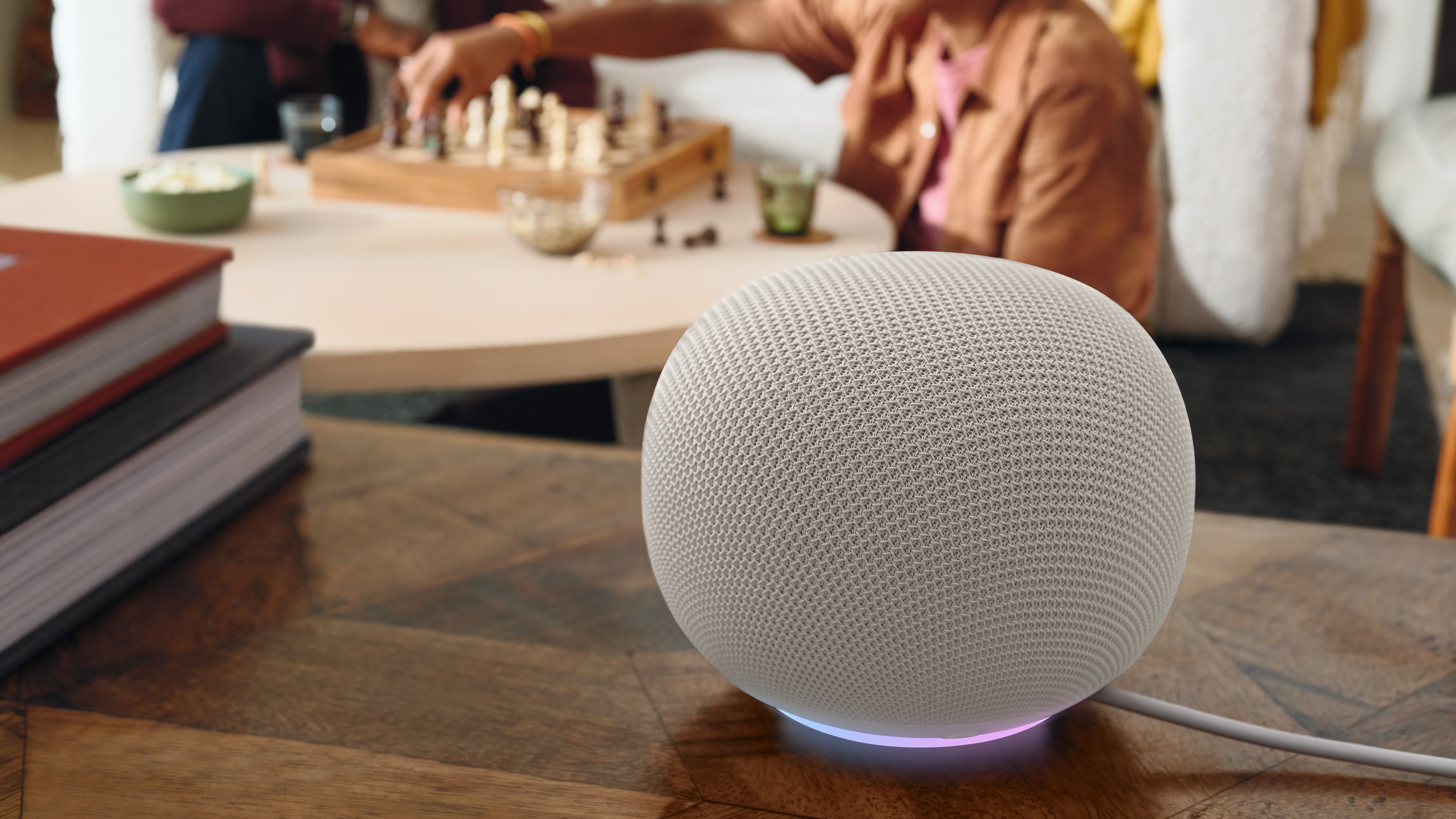
From a hardware perspective, the Google Home speaker with Gemini features a compact, minimalist design intended to blend into any home environment. Specifics on the audio drivers and acoustic design are less prominent in Google's official announcements, reinforcing the focus on AI. The device includes the necessary microphones for far-field voice recognition, ensuring it can pick up commands even in noisy environments or from across a room. Connectivity options are standard for smart speakers, including Wi-Fi and Bluetooth, enabling seamless integration with other devices and services.
The user interface, primarily voice-driven, is augmented by subtle visual cues or companion app interactions, though the emphasis remains on a hands-free experience. Google is likely banking on Gemini's advanced natural language processing to make the voice interface so intuitive that a complex visual interface becomes unnecessary for most tasks. This design philosophy aligns with the goal of making AI assistance feel as natural and effortless as possible.
Market Implications and Future Outlook
The launch of the Google Home speaker with Gemini at a $100 price point directly challenges existing players in the smart speaker market, particularly Amazon's Echo lineup and Apple's HomePod. By prioritizing AI over audio, Google is carving out a distinct niche. Competitors will need to respond by either enhancing their own AI capabilities or reinforcing their strengths in audio quality and ecosystem integration.
For Google, this device is a critical step in its AI-first strategy. It serves as a tangible gateway for consumers to experience Gemini's power in their daily lives, potentially driving adoption and further development of AI-powered services. The success of this speaker could influence future product roadmaps across Google's hardware division and accelerate the integration of advanced AI into a wider range of consumer devices. The question remains whether consumers will prioritize advanced AI over premium sound in their smart home devices, a bet Google is clearly willing to make.
The preorder availability on June 25th marks the beginning of this new chapter for Google's smart home ambitions. Developers and users alike will be watching closely to see how Gemini performs in real-world home environments and what new possibilities it unlocks.