%22%20%2F%3E%0A%20%20%3C%2Fsvg%3E)
Google's AI Momentum Accelerates
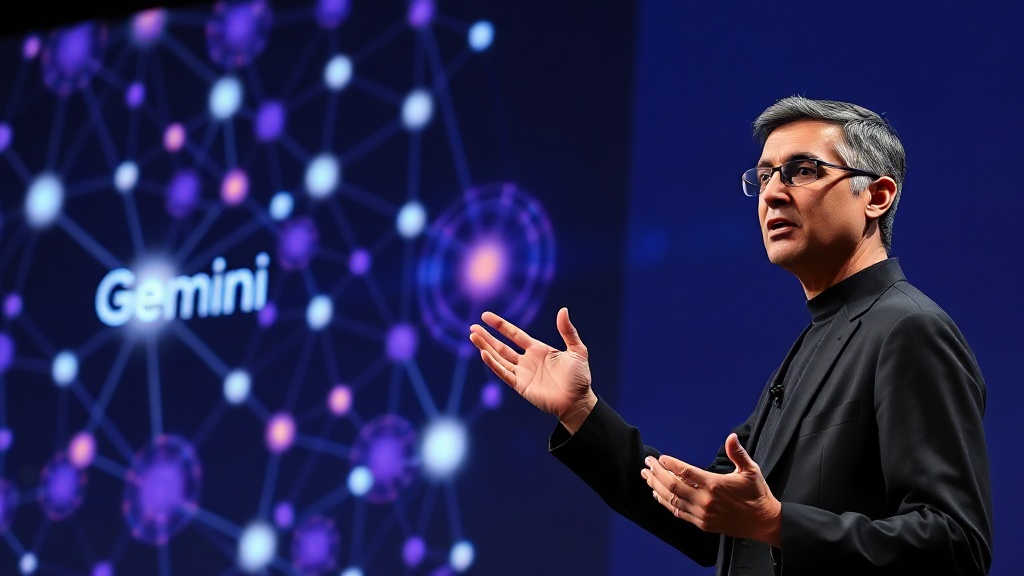
Google CEO Sundar Pichai has articulated a clear vision for the company's ongoing AI endeavors, framing the current period as the "next chapter of our AI momentum." This phase is characterized by the rapid integration of Google's most advanced AI models, particularly Gemini, across its entire product ecosystem. Pichai emphasizes a commitment to building AI responsibly and making it helpful for everyone, a sentiment that underpins the strategic direction of the company's AI development and deployment.
The core of this next chapter revolves around making AI more capable, more integrated, and more broadly accessible. This isn't just about releasing new AI models; it's about weaving AI's capabilities into the fabric of products that billions of people use daily. From enhancing search results to streamlining productivity in Workspace and empowering developers in Cloud, Google's strategy is to embed AI intelligence at every level. The company views AI not as a standalone feature but as a fundamental shift in how computing and information access will evolve.
Gemini Integration Across the Ecosystem
The Gemini family of models is central to Google's AI strategy. Pichai highlights its deployment across a range of products, signaling a move from experimental phases to widespread, practical application. In Google Search, Gemini is being used to power new generative AI experiences, aiming to provide more comprehensive and nuanced answers to complex queries. This involves understanding context, summarizing information, and generating content directly within search results, fundamentally altering how users interact with information online.
For Google Workspace, Gemini is being integrated to enhance productivity and creativity. Features like "Help me write" in Gmail and Docs, "Help me visualize" in Sheets, and advanced meeting summaries in Google Meet are designed to reduce tedious tasks and unlock new possibilities for users. This integration aims to transform everyday work into a more efficient and intuitive experience, allowing individuals to focus on higher-level thinking and creative output. The goal is to make AI a seamless assistant that anticipates needs and augments user capabilities.
Empowering Developers and Businesses with Cloud AI
Google Cloud is positioned as a critical platform for enterprises looking to leverage AI. Pichai details how Google Cloud is making its AI capabilities, including access to Gemini models, available to businesses. This includes offering tools and infrastructure that allow developers and organizations to build, deploy, and scale their own AI-powered applications. The focus is on providing a comprehensive suite of services, from data analytics and machine learning platforms to pre-trained models and specialized AI solutions.
The strategy here is to democratize access to powerful AI technologies, enabling businesses of all sizes to innovate. Google Cloud aims to be the preferred platform for AI development, offering not just raw computing power but also specialized expertise and a robust ecosystem of partners. This includes providing responsible AI frameworks and tools to ensure that AI is developed and deployed ethically and securely. The company is investing heavily in making its cloud offerings competitive and comprehensive for the AI era.
AI in Hardware and Future Directions
Beyond software and cloud services, Google is also integrating AI into its hardware products. Pichai alludes to how AI is enhancing the capabilities of devices like Pixel phones, making them more intelligent and personalized. This includes features powered by on-device AI, which offer privacy benefits and faster performance by processing information locally. The vision is to create devices that are not just connected but truly intelligent, adapting to user needs and providing proactive assistance.
Looking ahead, Pichai reiterates Google's long-term commitment to AI research and development. The company continues to invest in fundamental AI research, exploring new frontiers in areas like multimodal AI, reasoning, and AI safety. This foundational research is crucial for driving future innovation and ensuring that Google remains at the forefront of AI advancements. The "next chapter" is not just about current product integrations but also about laying the groundwork for future breakthroughs that will continue to shape the AI landscape and its impact on society.
The overarching theme is a relentless pursuit of making AI more helpful and accessible, guided by principles of responsibility and safety. Google's approach is to build AI that augments human capabilities, fosters creativity, and solves complex problems across its vast product portfolio and for its enterprise customers.