Widespread Blogger Lockdowns Triggered by Malware False Positive
Hundreds of blogs hosted on Google's Blogger platform have been unexpectedly locked or outright deleted following an aggressive, automated malware scan that misidentified legitimate content as malicious. The incident, which began surfacing on social media and developer forums over the weekend, has left creators and businesses scrambling to regain access to their online presences. Affected users report receiving notices claiming violations of Google's "Malware and Similar Malicious Content" policy, a policy designed to protect users from harmful software and phishing attempts.
The scale of the issue suggests a significant flaw in Blogger's content moderation system, potentially affecting a wide range of users from personal bloggers to small businesses that rely on the platform for their web presence. Many users discovered their blogs were inaccessible, displaying a generic error page or a message indicating the blog was no longer available. For some, the lockout was temporary, with Google eventually restoring access after manual review. However, a disturbing number of users reported their blogs were permanently deleted, with no clear recourse for recovery.
This incident highlights the fragility of relying on automated systems for content moderation, especially when the stakes involve the complete removal of a user's digital footprint. The lack of immediate, clear communication from Google exacerbated the problem, leaving affected users in a state of uncertainty and distress. The company has not yet provided a detailed explanation for the widespread false positives, nor has it outlined a comprehensive plan for compensating or assisting those who lost content.
Impact on Bloggers and Content Creators
The repercussions for affected bloggers are significant. For many, their blog is not just a hobby but a primary source of income, a portfolio of work, or a critical communication channel for their audience. The sudden loss of access means a loss of readership, potential revenue, and established online authority. The deletion of entire blogs represents a catastrophic loss of years of work, content, and community engagement.
Compounding the frustration is the opacity of the process. Users who attempted to appeal the decision through Google's automated systems often received generic responses or no response at all. The process of manually contacting support for a platform as large as Blogger can be notoriously difficult and time-consuming, especially for issues involving content policy violations. This lack of a clear, accessible appeals process leaves users feeling powerless against an arbitrary system.
One common thread among affected users is that their blogs did not host any overtly malicious content. Many suspect that the false positives may have been triggered by specific keywords, code snippets, or even the structure of certain legitimate posts that were misinterpreted by an overzealous algorithm. This points to a broader challenge in AI-driven content moderation: the difficulty in distinguishing between legitimate use cases and malicious intent, especially with nuanced or technical content.
The Broader Implications of Automated Moderation
This incident is not an isolated event but rather a stark reminder of the challenges inherent in large-scale automated content moderation. While essential for managing the sheer volume of content on platforms like Blogger, these systems are prone to errors. False positives, like the one experienced by Blogger users, can have devastating consequences for individuals and small businesses. Conversely, false negatives, where malicious content is missed, pose security risks to users.
The situation also raises questions about the robustness of Google's internal review processes. If an automated system can lock or delete hundreds of legitimate blogs, it suggests that the safeguards and human oversight mechanisms in place may be insufficient. The reliance on algorithms, while efficient, must be balanced with rigorous testing, clear appeal pathways, and prompt human intervention when errors are detected.
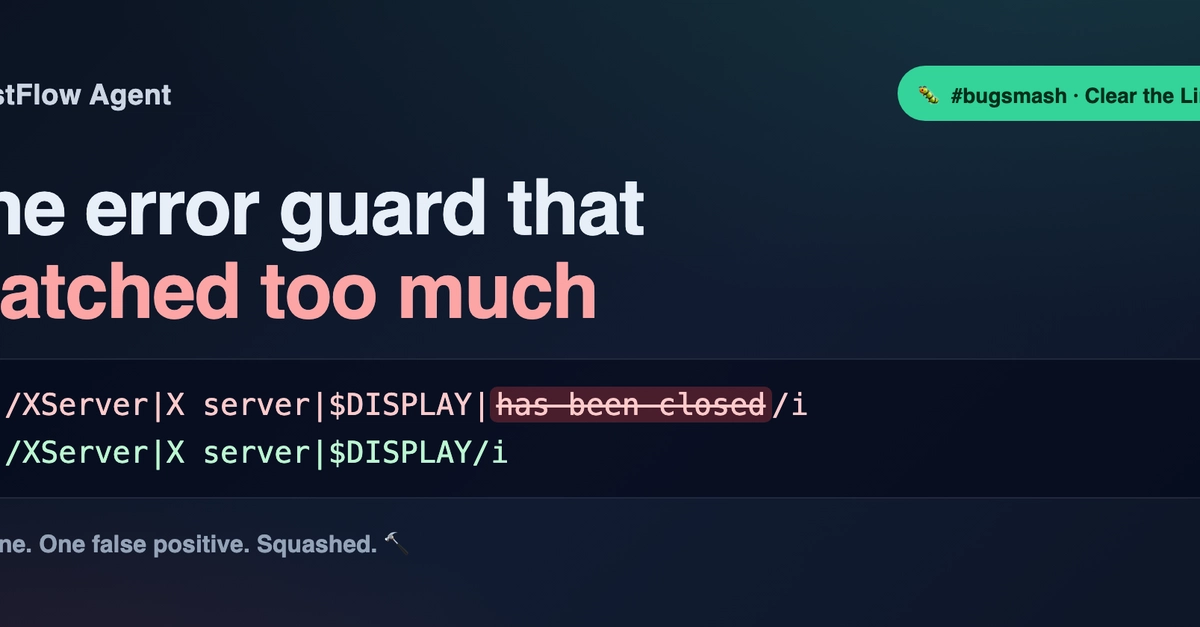
The case of TestFlow Agent, as described in a related dev.to post, offers a micro-level example of how easily automated checks can go awry. In that instance, a simple error-handling guard designed to provide user-friendly feedback in a Docker environment accidentally triggered on legitimate error messages, causing unexpected failures. While the scale and intent differ vastly from Google's mass blog lockouts, it illustrates the principle: automated pattern matching, when not meticulously tuned and tested, can lead to unintended and widespread consequences. The string-matching in the TestFlow Agent's guard, which included phrases like "has been closed," demonstrates how overly broad rules can ensnare innocent cases.
For platforms, the challenge is to develop moderation systems that are both effective at identifying genuine threats and precise enough to avoid penalizing legitimate users. This requires continuous refinement of algorithms, diverse testing methodologies that account for edge cases, and transparent, accessible channels for users to contest automated decisions. The recent Blogger incident suggests that Google has significant work to do in all these areas.