
The Need for Another Go Cache
The Go ecosystem already boasts several robust in-memory cache libraries. Despite this, developer mkbeh embarked on building pacecache. The motivation wasn't to create a universally superior cache, but rather to address specific design trade-offs. Cache design inherently involves balancing competing concerns: lock contention, eviction strategies, memory efficiency, expiration policies, and implementation complexity. Pacecache aims for a focused approach: a relatively small, generic in-process cache with explicit, predictable behavior around bounded capacity, expiration, cache-aside loading, and concurrent mutations.
The core map implementation was straightforward. The real challenge lay in defining how these various features interact when multiple operations occur simultaneously. This is where pacecache seeks to offer a distinct approach.
Bounded Capacity as a Foundation
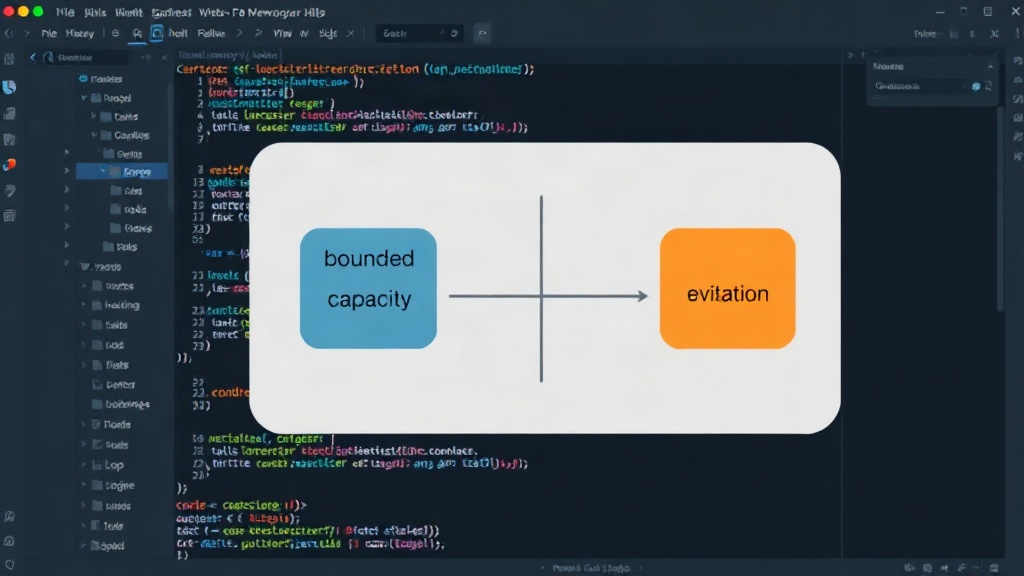
A fundamental requirement for an in-process cache is explicit control over its size. Pacecache starts with a clear definition of bounded capacity. This means the cache will not grow indefinitely, preventing uncontrolled memory consumption that can destabilize an application. When the cache reaches its defined limit, it must employ a strategy to make space for new entries, typically through an eviction policy. The design emphasizes that this capacity limit is not a soft suggestion but a hard boundary, with predictable consequences when it is hit.
Consider a web server handling thousands of requests per second. Without bounded capacity, its in-memory cache could consume all available RAM, leading to system crashes or severe performance degradation. Pacecache's explicit bounding prevents this, ensuring the cache remains a stable component rather than a potential liability. This focus on predictability is key to its design philosophy.
Handling Concurrent Mutations
The complexity of in-memory caches often arises from managing concurrent access. Multiple goroutines might attempt to read, write, or delete entries simultaneously. Without proper synchronization, this can lead to race conditions, corrupted data, or incorrect cache states. Pacecache’s design focuses on explicitly defining the behavior of concurrent mutations. This means developers can rely on consistent outcomes, even under heavy concurrent load.
For instance, imagine a scenario where one goroutine is updating a cache entry while another is attempting to read it. A poorly designed cache might return stale data, a partially updated entry, or even panic. Pacecache aims to resolve these interactions deterministically. This might involve using fine-grained locking mechanisms or lock-free data structures where appropriate, ensuring that operations complete in a well-defined order or that concurrent updates are handled atomically.
Cache-Aside Loading and Expiration
Pacecache incorporates cache-aside loading, a common pattern where the cache is populated on demand. When a requested item is not found in the cache, a specified loader function is invoked to fetch the data from the primary data source (e.g., a database or API). This fetched data is then stored in the cache for future requests. This pattern optimizes performance by reducing the load on the underlying data store while ensuring that frequently accessed data is readily available.
Expiration is another critical feature. Entries in the cache are typically associated with a time-to-live (TTL) or an absolute expiration time. Once an entry expires, it is treated as a cache miss, triggering a reload. Pacecache’s design emphasizes explicit control over these expiration policies, allowing developers to configure how long items should remain valid in the cache. This is crucial for applications where data freshness is important, but occasional stale data is acceptable.
The Trade-offs and the Goal
Building a cache involves navigating a complex web of trade-offs. A cache optimized for minimal lock contention might sacrifice eviction quality. A cache with sophisticated eviction might incur higher memory overhead. Pacecache's goal is not to eliminate these trade-offs but to make them explicit and manageable for the developer. The focus is on providing a predictable, controllable, and relatively simple-to-use in-process cache for Go applications that require specific guarantees around capacity, concurrency, and data freshness.
The project aims to be a practical tool for developers who need a dependable in-memory cache that behaves predictably under common application loads. It’s a deliberate choice to build another cache, driven by a desire for explicit control over these critical aspects of cache behavior.