2026 Edition v2: Key Architectural and Production Hardening Updates
The Go Agent Development Kit (ADK) has seen a significant update with its 2026 Edition (v2), focusing on architectural improvements, production hardening, and essential dependency upgrades. This release aims to provide developers with a more robust and efficient environment for building AI agents. The core of the ADK has been upgraded from v0.2.0 to v1.5.1 (google.golang.org/adk). This core upgrade is critical, bringing substantial enhancements to how AI models are handled and how agent execution pipelines are managed, promising more sophisticated context management and streamlined agent workflows.
Complementing the ADK core, the Google GenAI SDK has been updated to v1.65.0 (google.golang.org/genai). A key benefit of this upgrade is the inclusion of native Vertex AI authentication auto-detection, simplifying the setup and integration process for developers leveraging Google Cloud's AI platform. This means less manual configuration and a smoother path to deploying agents that utilize Vertex AI services.
The underlying Go toolchain has also been brought up to date. The runtime environment now supports Go 1.26.3, and module directives across all sub-modules have been updated to go 1.25.0. This ensures compatibility with the latest Go language features and best practices, while also improving build performance and dependency management. Developers can expect a more modern and secure development environment.
Integrating Multi-Agent Systems with A2A
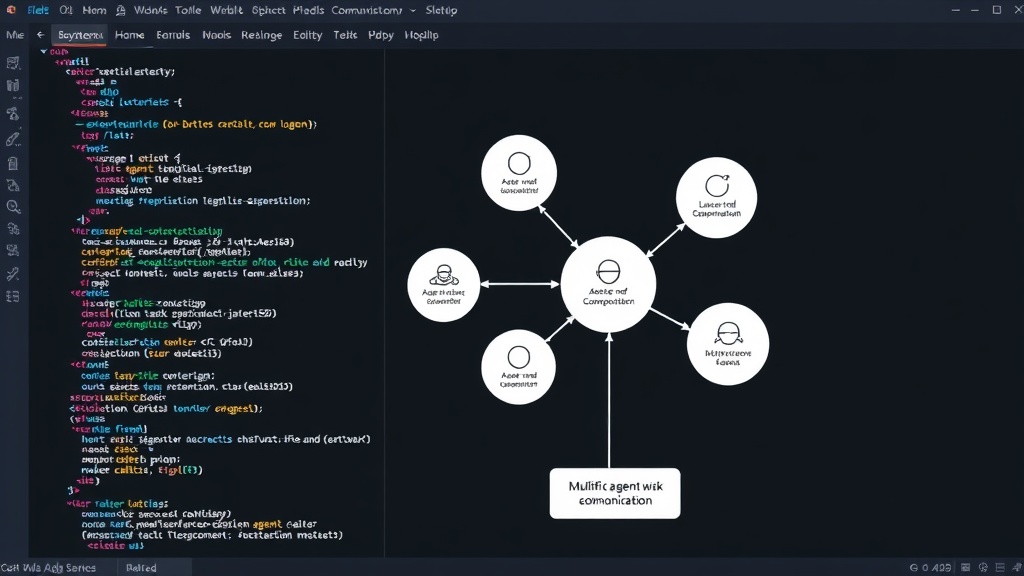
A major addition in this release is the integration of the A2A (Agent-to-Agent) Multi-Agent System, specifically github.com/a2aproject/a2a-go, updated to v0.3.15. This integration, along with its sub-modules, opens up new possibilities for building complex AI systems where multiple agents can collaborate and interact. This is a significant step towards creating more sophisticated autonomous systems that can tackle multifaceted problems by distributing tasks and coordinating actions among specialized agents.
The A2A integration enables developers to design and implement workflows where agents can communicate, delegate tasks, and share information dynamically. This is crucial for applications requiring complex decision-making, distributed problem-solving, or adaptive behavior. The ADK now provides a more comprehensive framework not just for single-agent development, but for orchestrating entire ecosystems of AI agents working in concert.
Production Readiness and Future Outlook
The emphasis on production hardening in the ADK 2026 Edition (v2) suggests a focus on making AI agent development more practical for real-world applications. This includes improvements in stability, error handling, and performance optimization. Developers can now build agents with greater confidence, knowing that the underlying toolkit is designed to withstand the demands of production environments.
The overall direction of the Go ADK with this update points towards a more mature and capable platform for AI agent development. By incorporating the latest advancements in Go, Google's GenAI SDK, and multi-agent system technology, the ADK is positioning itself as a key tool for developers looking to build sophisticated, collaborative AI agents. The move to Go 1.26.3 and Go module directives 1.25.0 indicates a commitment to staying current with the Go ecosystem, ensuring long-term maintainability and access to new language features.
For developers, this means a more streamlined and powerful experience. The native Vertex AI authentication auto-detection simplifies deployment, while the enhanced context handling and execution pipelines in the ADK core allow for more complex agent logic. The A2A integration is particularly noteworthy, enabling the creation of decentralized AI systems that were previously difficult to implement. This update is not just an incremental improvement; it represents a significant leap forward in the capabilities and production-readiness of the Go ADK for AI agent development.
What remains to be seen is how the community will leverage the new A2A multi-agent capabilities. The potential for emergent behaviors and complex emergent intelligence from coordinated agents is vast, and the ADK 2026 Edition (v2) provides the foundational tools to explore this frontier. The next steps will likely involve more advanced agent coordination patterns, shared memory models, and sophisticated inter-agent communication protocols, all of which this updated ADK is poised to support.