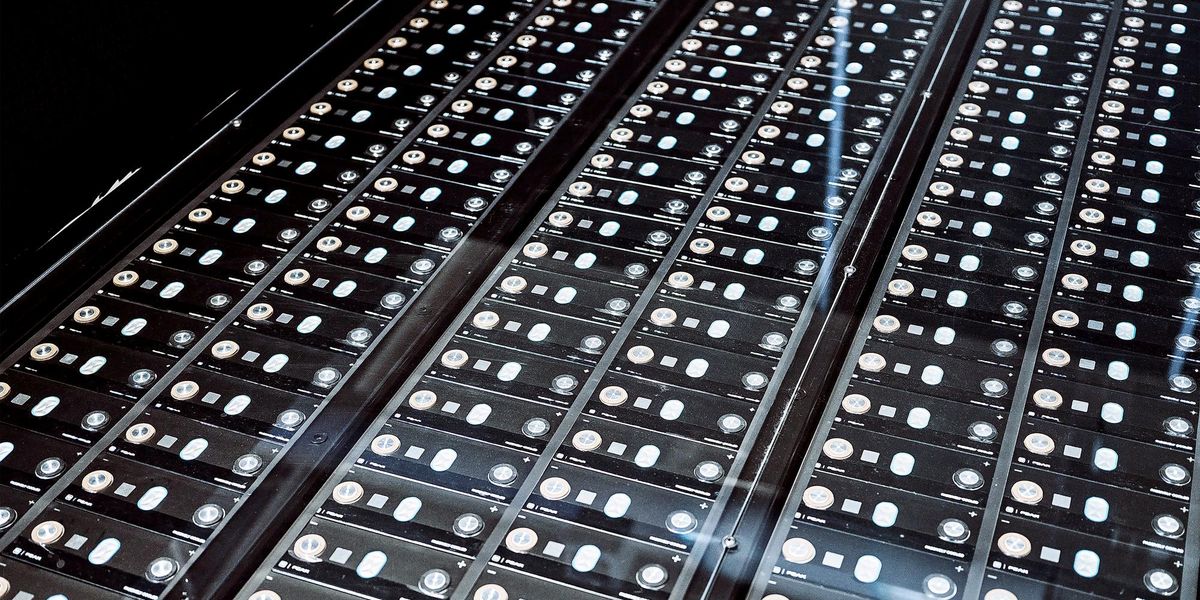
GM's Strategic Pivot to Sodium-Ion for Grid Storage
General Motors, a titan of the automotive industry, is making a significant strategic move by backing sodium-ion (Na-ion) battery technology for grid-scale energy storage in the United States. This investment, while not detailing specific financial figures, signals a clear intent to leverage Na-ion chemistry as a more cost-effective and environmentally benign alternative to lithium-ion for stationary power applications. The move aligns with a broader industry trend towards diversifying battery chemistries beyond lithium, driven by supply chain concerns, cost pressures, and the demand for sustainable energy solutions.
The primary driver for this shift is the inherent economic advantage of sodium-ion batteries. Sodium is orders of magnitude more abundant and widely distributed globally than lithium, which is concentrated in only a few regions. This abundance translates directly into lower raw material costs. Furthermore, Na-ion batteries can utilize aluminum for their current collectors, unlike lithium-ion batteries which require more expensive copper. This seemingly minor substitution contributes to a substantial reduction in overall manufacturing expenses, making Na-ion batteries particularly attractive for the high-volume, cost-sensitive grid storage market.
Beyond cost, sodium-ion batteries offer compelling performance characteristics for stationary applications. They exhibit excellent safety profiles, being non-flammable and less prone to thermal runaway compared to some lithium-ion chemistries. Their operating temperature range is also broader, performing more reliably in both extreme cold and heat, a crucial factor for grid infrastructure exposed to diverse environmental conditions. While energy density is typically lower than lithium-ion, this is less of a constraint for grid storage where space is not as critical as it is for electric vehicles. The longevity of Na-ion cells, often measured in thousands of charge-discharge cycles, further solidifies their suitability for long-duration grid storage needs.
The Technical Landscape of Sodium-Ion Batteries
Sodium-ion battery technology has been a subject of research for decades, but recent advancements in cathode and anode materials have propelled it towards commercial viability. Unlike lithium-ion batteries that rely on lithium ions (Li+) moving between electrodes, Na-ion batteries use sodium ions (Na+). The fundamental principle of intercalation—where ions move into and out of the crystal structure of electrode materials—remains the same. However, the larger ionic radius and higher atomic weight of sodium present unique challenges and opportunities in material design.
Key to the recent progress are novel cathode materials such as layered oxides (e.g., NaNi$_x$Mn$_y$Co$_z$O$_2$), polyanionic compounds (e.g., sodium iron phosphate, NaFePO$_4$), and Prussian blue analogues. These materials are engineered to accommodate the larger sodium ions while maintaining structural integrity over numerous cycles. For anodes, hard carbons have emerged as a promising alternative to graphite, which is less suitable for sodium intercalation. Research also continues into other anode materials like titanium-based compounds.
The development cycle for Na-ion has been accelerated by its chemical similarity to lithium-ion, allowing researchers to adapt existing knowledge and manufacturing processes. This parallelism is a critical advantage, potentially enabling faster scale-up and integration into existing battery production infrastructure. Companies are exploring various electrolyte formulations to optimize performance and safety, balancing conductivity, electrochemical stability, and cost.
Market Implications and Competitive Landscape
GM's endorsement of sodium-ion technology for grid storage is a significant signal to the broader energy sector. It validates the technology’s potential and is likely to spur further investment and development from other industry players. For grid operators and utilities, this offers a pathway to deploy large-scale energy storage systems that are more affordable and sustainable than current lithium-ion offerings.
The competitive landscape for grid storage is evolving rapidly. While lithium-ion batteries, particularly LFP (lithium iron phosphate) variants, currently dominate, their cost and reliance on specific mineral supplies present vulnerabilities. Sodium-ion batteries, with their lower material costs and wider geographical sourcing of raw materials, are poised to challenge this dominance, especially for applications where energy density is not the primary concern. Other emerging battery chemistries, such as flow batteries and solid-state batteries, also compete in this space, each offering different trade-offs in terms of cost, performance, and scalability.
The surprising detail here is not GM's interest in new battery tech, but the specific focus on grid storage rather than electric vehicles. While GM has been a leader in EV battery development, their explicit backing of Na-ion for stationary applications suggests a strategic diversification, recognizing the distinct market dynamics and cost sensitivities of the grid storage sector. This could also be a testbed for Na-ion technology, paving the way for its eventual integration into future vehicle platforms if performance benchmarks are met.
The Road Ahead for Sodium-Ion
The successful deployment of GM's strategy hinges on several factors. Scaling up manufacturing capacity for Na-ion cells and battery packs is paramount. Ensuring consistent quality control and long-term performance validation through rigorous testing will be crucial for building trust in the technology for critical grid infrastructure. Furthermore, the development of robust recycling and end-of-life management systems for Na-ion batteries will be essential for realizing their full sustainability potential.
What nobody has fully addressed yet is the long-term impact on the existing lithium-ion supply chain. A widespread adoption of sodium-ion for grid storage could significantly reduce demand for lithium, potentially destabilizing markets and affecting companies heavily invested in lithium extraction and processing. The transition will require careful management to ensure energy security and economic stability.
For developers and engineers working in the energy sector, this development presents an opportunity to explore new system designs optimized for Na-ion batteries. This includes understanding their specific charging profiles, thermal management requirements, and integration with existing grid control systems. The potential for lower costs could accelerate the adoption of renewable energy sources by providing more affordable and reliable grid stabilization.