The Pristine Demo vs. Production Reality
The standard GitOps demo is a beautiful thing: one repository, one application, one cluster. You commit a change, and seconds later, your production environment mirrors that state. Rollbacks are a simple git revert. This idealized scenario works perfectly when you’re starting out, perhaps managing a single application or a small, unified team.
However, the reality of growing organizations quickly diverges from this clean slate. Two years into adopting GitOps, a company might find itself managing 200 repositories and coordinating 40 distinct teams. At this scale, the elegant simplicity of the demo begins to fray, exposing fundamental challenges that were invisible in smaller deployments.
Beyond a Single Source of Truth: The Repo Deluge
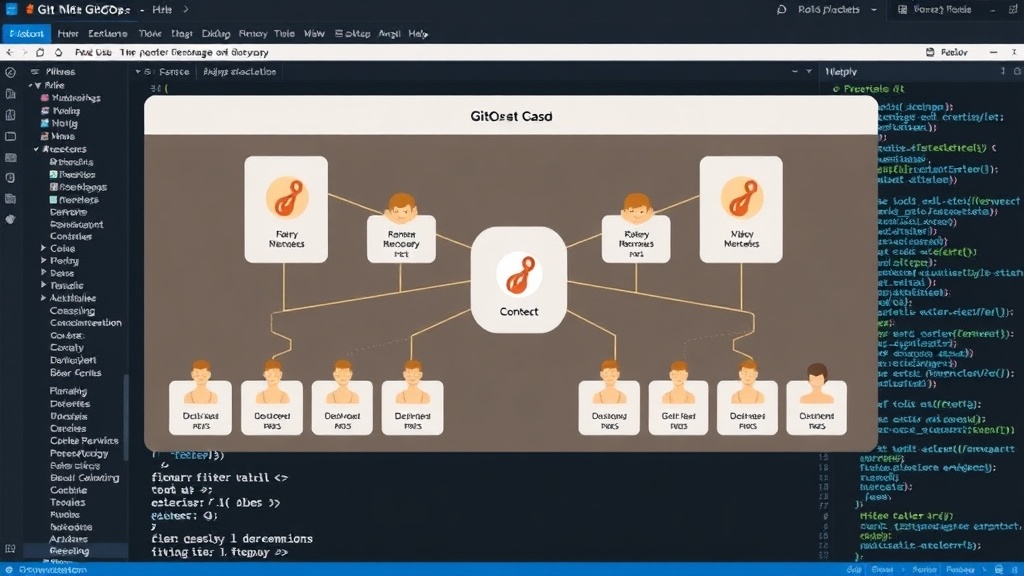
The core tenet of GitOps is using Git as the single source of truth. For a few applications, this is manageable. But as the number of applications and services explodes, so does the number of repositories. Managing 200 repositories introduces significant overhead:
- Discovery and Navigation: Developers struggle to find the correct repository for a given service or configuration. This leads to wasted time, duplicated effort, and the potential for drift if the wrong repo is modified.
- Policy Enforcement: Ensuring consistent application of security policies, linting rules, and deployment standards across hundreds of repositories becomes a monumental task. Manual enforcement is impossible, and automated solutions require complex tooling that itself needs management.
- Dependency Management: Understanding the complex web of interdependencies between services managed across these repositories becomes critical. A change in one repo might have cascading effects across many others, and tracking these relationships is difficult without dedicated systems.
- Access Control: Managing permissions for 40 teams across 200 repositories is a significant administrative burden. Granular access control, ensuring teams only modify what they are authorized to, becomes a major security and operational challenge.
This proliferation of repositories turns the ideal of a single source of truth into a distributed, hard-to-manage jungle. The overhead of maintaining this structure can easily outweigh the benefits of GitOps for individual services.
Team Autonomy vs. Centralized Control: The Balancing Act
The promise of GitOps is empowering teams with autonomy. They can manage their own services, deploy their own changes, and iterate quickly. However, at scale, this autonomy creates tension with the need for centralized control and observability:
- Drift and Inconsistency: Without strong guardrails, teams can adopt different deployment strategies, tooling, or even Kubernetes versions. This leads to environment drift, making it difficult to debug issues or ensure consistent performance and security across the organization.
- Observability Gaps: Each team might have its own monitoring and logging setup, leading to fragmented visibility. Understanding the overall health of the system or performing cross-team incident response becomes significantly harder when data is siloed.
- Standardization Challenges: Introducing new standards or best practices requires buy-in and implementation across 40 teams. This can be a slow and painful process, especially if teams perceive the changes as hindering their autonomy or velocity.
- Onboarding Complexity: New developers or teams joining the organization face a steep learning curve. They need to understand not only the application they are working on but also the specific GitOps workflows, tooling, and conventions adopted by their team and the broader organization.
The challenge lies in striking a balance: enabling team autonomy without sacrificing organizational coherence, security, and operational efficiency. This often means introducing higher-level abstractions or platforms that provide standardized patterns while still allowing for team-specific customization within defined boundaries.
Tooling and Automation: The Hidden Complexity
While GitOps relies on automation, the tooling required to manage GitOps at scale is itself complex. The simple demo might use a single tool like Argo CD or Flux CD. However, at 200 repos and 40 teams, the tooling landscape often expands:
- Multi-Cluster Management: Managing deployments across multiple Kubernetes clusters (dev, staging, prod, regional deployments) requires sophisticated tooling that can handle varying configurations and dependencies.
- CI/CD Integration: Seamless integration between CI pipelines (building images, running tests) and GitOps controllers (applying manifests) is crucial. Orchestrating these pipelines across numerous services and teams can become a bottleneck.
- Policy as Code: Tools like OPA Gatekeeper or Kyverno are often introduced to enforce policies at runtime or during the GitOps reconciliation process. Managing these policies across a large number of clusters and repositories adds another layer of complexity.
- Secrets Management: Securely managing secrets (API keys, database credentials) across a distributed GitOps environment is a persistent challenge. Solutions like Sealed Secrets, external secrets operators, or Vault integrations add to the operational load.
The initial promise of simplified deployment via GitOps can be overshadowed by the intricate web of automation and tooling required to make it work reliably at scale. This tooling often becomes a specialized area requiring dedicated expertise.
What Breaks and How to Fix It
When GitOps scales to hundreds of repositories and dozens of teams, several critical areas break:
- Developer Velocity: The overhead of managing repositories, understanding complex dependencies, and navigating tooling slows down individual developers and teams.
- Operational Efficiency: Manual tasks creep back in, debugging becomes harder, and incident response times increase due to fragmented visibility and control.
- Security Posture: Inconsistent policy enforcement, difficult access management, and complex secrets management create vulnerabilities.
- System Stability: Unmanaged drift and inter-service dependencies can lead to unpredictable behavior and production incidents.
Addressing these issues requires moving beyond basic GitOps tooling. Organizations need to invest in:
- Platform Engineering: Building internal platforms that abstract away much of the GitOps complexity, providing standardized templates, CI/CD pipelines, and policy enforcement mechanisms.
- Repository Strategy: Adopting a clear strategy for repository structure, such as monorepos for related services or well-defined conventions for poly-repo setups, coupled with robust tooling for discovery and management.
- Centralized Observability: Implementing unified logging, monitoring, and tracing across all environments and services.
- Automated Governance: Leveraging Policy as Code and automated compliance checks to maintain security and consistency.
The journey from a simple GitOps demo to a scaled, production-ready system is not merely about adopting more tools; it's about fundamentally rethinking how teams interact with infrastructure and how organizational structure impacts technical operations.