
GitHub Copilot Managed Settings: Governing App and Cloud Agent Safely
GitHub has expanded enterprise managed settings to encompass the GitHub Copilot app and its cloud agent, effective July 27, 2026. This move addresses a critical governance gap by extending plugin and marketplace rules to cover developers using Copilot CLI and VS Code, all the way into app and cloud tasks. A significant architectural change is the separation of access controls for the Copilot app and the Copilot CLI. This allows administrators to independently manage whether the Copilot app is available to their developers, without this decision being tied to CLI access.
This is not a monolithic control system. Administrators should not expect a single JSON file to dictate identical behavior across all client types. The recommended approach is to start by establishing a client-by-key matrix. This involves differentiating policies based on the specific client and the setting in question. It is crucial to keep access to the Copilot app distinct from the runtime guardrails. This means that policies controlling what the app can do once running should be managed separately from policies that determine if a developer can even launch the app.
The deployment strategy emphasizes starting with the smallest possible policy. This minimal policy should be introduced through a pull request, allowing for review and iteration. Before proceeding to a broad rollout, administrators must rigorously prove six distinct negative and recovery test cases. These tests should cover scenarios where the policy is expected to block certain actions, and also demonstrate how the system recovers gracefully when those actions are attempted.
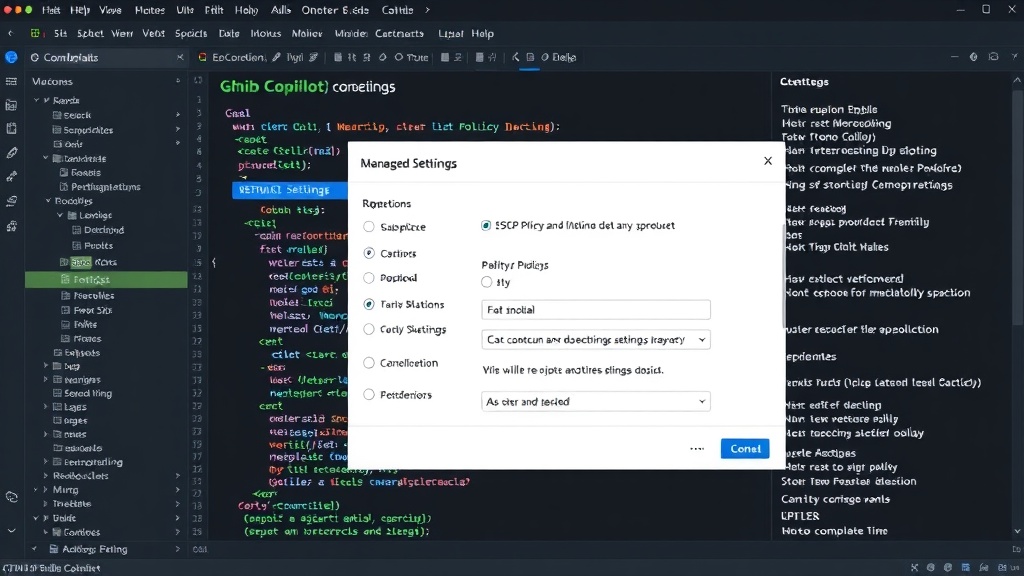
Key Considerations for Policy Management
Several specific points require careful attention during the configuration and rollout process:
- Bypass-Prompt Controls: These controls are designed to manage interactive client behavior. It is essential to understand that they apply specifically to interactive clients, such as the IDE extensions, and do not extend to the Copilot cloud agent. This distinction is vital for ensuring that security and compliance policies are applied appropriately based on the execution context.
- OpenTelemetry Settings: Currently, OpenTelemetry settings are applied on a per-client basis. This means that administrators must configure these settings individually for each client type where telemetry is required. The implication is that a global setting for OpenTelemetry does not yet exist, necessitating a more granular approach to instrumentation and monitoring.
- Client-by-Key Matrix: Developing a comprehensive matrix that maps each managed setting to the specific clients it affects is foundational. This matrix serves as the single source of truth for understanding policy scope and expected behavior. It should detail which settings are configurable, which clients they apply to, and the default values or allowed ranges for each setting.
- Phased Rollout: A gradual rollout is paramount. Begin with a small group of pilot users or a specific development team. Collect feedback, monitor for unexpected behavior, and iterate on the policies based on real-world usage. This iterative process minimizes the risk of widespread disruption.
- Testing Negative and Recovery Cases: The six required test cases should cover scenarios like attempting to use a disallowed feature, exceeding usage limits, or attempting to run the agent in a restricted environment. Recovery testing should confirm that developers can continue working with minimal interruption after hitting a policy boundary, and that logs accurately reflect the policy enforcement.
Separating App Access from Runtime Guardrails
The decoupling of Copilot app access from Copilot CLI policy offers significant flexibility. Administrators can now grant or deny access to the Copilot application itself without impacting a developer's ability to use the command-line interface for other development tasks. This granular control is particularly useful in organizations with diverse development workflows or strict security requirements. For instance, a team might be permitted to use Copilot for code generation within their IDE (the app) but prohibited from using its cloud agent capabilities for tasks that involve sensitive data processing or external API interactions.
This separation allows for a more nuanced security posture. You can implement policies that restrict the types of code suggestions Copilot can provide, enforce organizational coding standards, or limit the data Copilot can access, all while ensuring the core application remains accessible. Conversely, if the primary concern is preventing the use of AI-assisted tools altogether, administrators can disable the app entirely, irrespective of CLI usage.
The Path to Broad Rollout
A structured approach to rolling out managed settings is critical for success. It ensures that governance is implemented effectively without hindering developer productivity. The process begins with understanding the full scope of available managed settings and how they map to different client types and use cases within the organization. This involves reviewing GitHub's documentation and potentially engaging with GitHub support to clarify any ambiguities.
Once the client-by-key matrix is established, the next step is to define the initial, minimal policy. This policy should focus on the most critical security or compliance requirements. Deploying this policy via a pull request provides a clear audit trail and facilitates review by relevant stakeholders, such as security teams and development leads. The review process should include validating that the policy correctly targets the intended settings and clients.
Following the policy definition and review, the rigorous testing phase commences. The six negative and recovery test cases serve as the backbone of this phase. For example, a negative test case might involve a developer attempting to enable a feature that the managed settings explicitly disable. The recovery test case would then verify that the developer receives a clear, actionable message explaining why the feature is unavailable and what alternatives exist, if any.
Only after successfully validating these test cases and gathering initial feedback from a pilot group should administrators consider a broader rollout. This phased approach, starting small and iterating based on evidence, is the most reliable way to implement complex governance changes like managed settings for GitHub Copilot. The ultimate goal is to balance the powerful capabilities of AI-assisted development with the organization's need for control, security, and compliance.