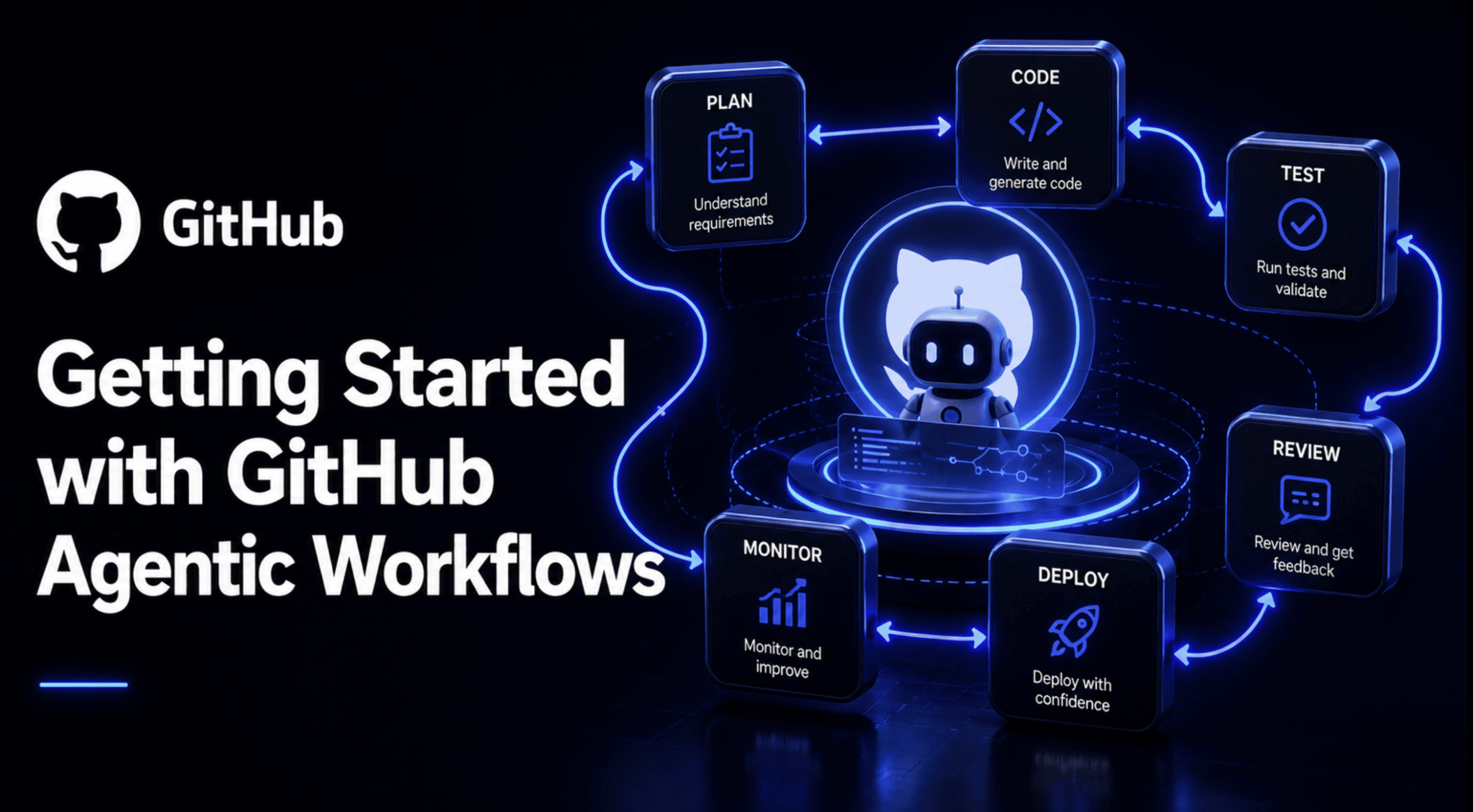
GitHub Agentic Workflows Enter Public Preview
GitHub has launched its new Agentic Workflows in public preview, a significant move to empower developers with more sophisticated automation capabilities directly within their development environment. This feature aims to streamline complex, multi-step processes that previously required extensive manual intervention or custom scripting. By introducing agentic capabilities, GitHub is evolving beyond simple CI/CD pipelines to offer a more intelligent and adaptive automation layer.
Agentic Workflows leverage large language models (LLMs) and other AI capabilities to understand context, make decisions, and execute sequences of actions. Unlike traditional workflows that follow predefined scripts, agentic workflows can adapt to changing conditions, interpret results, and even self-correct. This makes them particularly suited for tasks like code review, bug triaging, automated testing across diverse environments, and even proactive security vulnerability detection.
The core idea behind agentic workflows is to create autonomous agents that can perform tasks on behalf of developers. These agents can be configured to monitor repositories, respond to events, and execute sophisticated actions. For instance, an agent could be tasked with identifying a security vulnerability, automatically creating a pull request with a proposed fix, and then running tests to ensure the fix doesn't introduce regressions. This level of automation promises to accelerate development cycles and improve code quality.
Key Capabilities and Use Cases
While specific details of the public preview are still emerging, the potential applications for Agentic Workflows are vast. Developers can envision agents that:
- Automate Code Reviews: Agents can analyze pull requests for style, best practices, potential bugs, and security flaws, providing initial feedback before human reviewers even see the code.
- Triage and Fix Bugs: Upon detecting a bug via automated tests or user reports, an agent could automatically create an issue, attempt to pinpoint the root cause, and even generate a fix.
- Manage Dependencies: Agents can monitor for outdated dependencies, test compatibility with newer versions, and automatically create pull requests to update them.
- Enhance Testing: Beyond standard unit and integration tests, agents could orchestrate more complex testing scenarios, such as performance testing under load or cross-browser compatibility checks.
- Proactive Security: Agents could continuously scan code for known vulnerabilities, misconfigurations, or secrets exposure, alerting developers or even attempting remediation.
The agentic approach allows for a more dynamic and intelligent approach to these tasks. Instead of a rigid set of rules, these workflows can learn from past executions, adapt to new information, and handle exceptions more gracefully. This is akin to having a tireless, intelligent assistant that understands the nuances of your codebase and development process.
Technical Underpinnings and Developer Experience
GitHub Agentic Workflows are built upon the foundation of GitHub Actions, meaning they integrate seamlessly with existing CI/CD pipelines and repository infrastructure. The agentic layer adds a new dimension of intelligence, likely powered by advanced AI models that can process natural language instructions, analyze code, and generate code or commands. Developers will interact with these workflows through configuration files, similar to existing GitHub Actions, but with new directives and parameters to define agent behavior and goals.
The public preview is an opportunity for developers and teams to experiment with these new capabilities and provide feedback. GitHub is likely looking for insights into common use cases, desired features, and potential areas for improvement. This iterative approach ensures that the final product will be robust and widely applicable.
For those familiar with GitHub Actions, the transition to Agentic Workflows should feel intuitive. The underlying event triggers, job orchestration, and artifact management will remain familiar. The key difference lies in the enhanced decision-making and execution capabilities of the agents themselves. Think of it less like a pre-programmed robot and more like a skilled intern who can learn, adapt, and execute complex tasks with increasing autonomy.
The Road Ahead
The introduction of Agentic Workflows marks a significant step towards more autonomous software development. As AI continues to mature, we can expect these workflows to become even more sophisticated, potentially handling larger portions of the development lifecycle. The public preview is just the beginning, and the capabilities demonstrated will likely expand rapidly based on user adoption and feedback.
For developers, this means a future where mundane, repetitive tasks are increasingly automated, freeing up valuable time for more creative and strategic work. For teams, it promises faster release cycles, higher quality code, and improved security posture. The true impact will unfold as the community explores the boundaries of what's possible with these new intelligent agents.