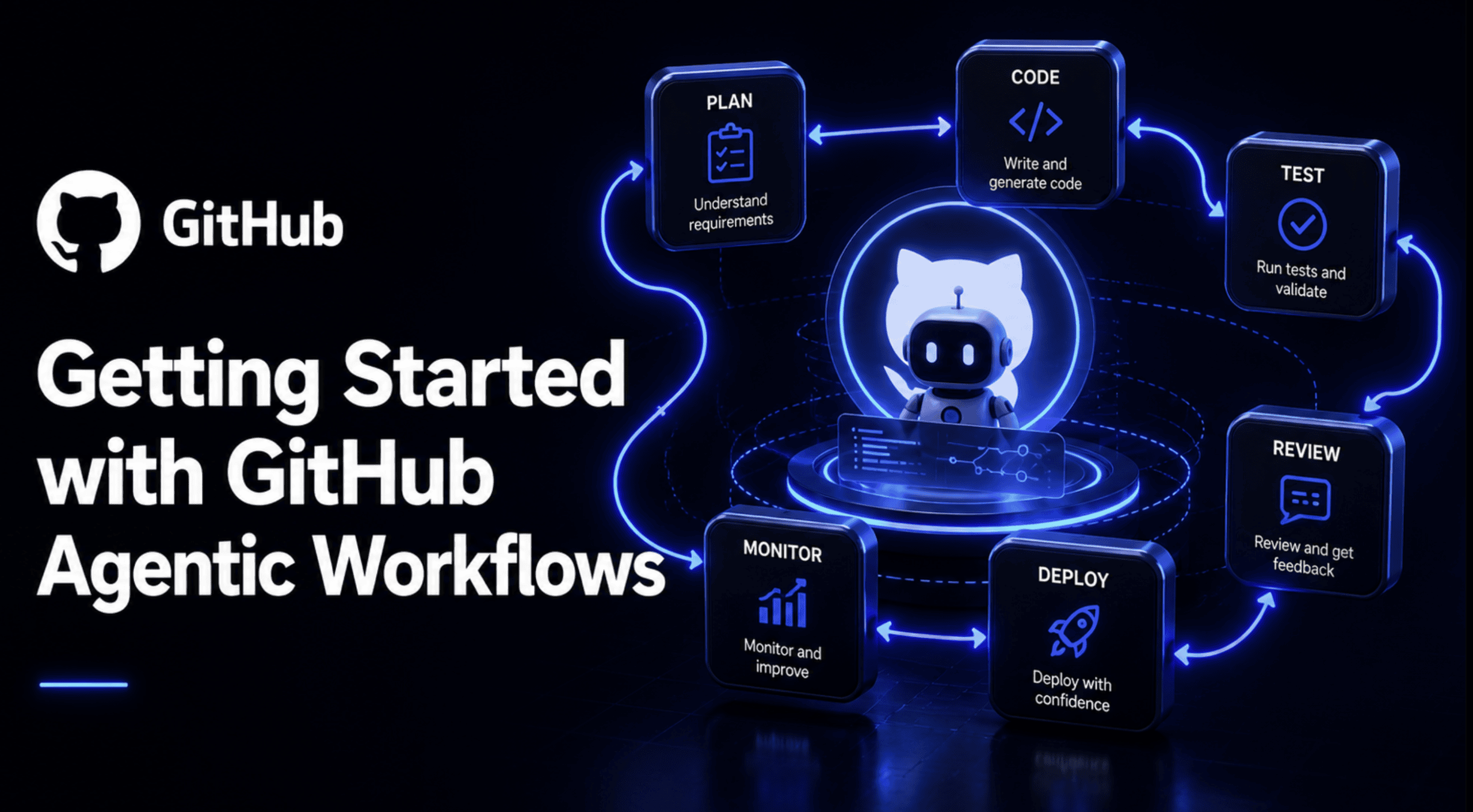
What are GitHub Agentic Workflows?
GitHub Agentic Workflows are a new feature, currently in public preview, designed to automate complex development tasks. These workflows leverage AI to understand context, make decisions, and execute actions within your GitHub environment. Think of them less like rigid, pre-programmed scripts and more like an AI assistant that can reason about your code, your issues, and your project goals to proactively address tasks.
The core idea behind agentic workflows is to move beyond simple CI/CD pipelines. Instead of just reacting to triggers like code pushes or pull requests with predefined steps, agentic workflows can analyze situations, plan multi-step actions, and adapt their execution based on intermediate results. This is particularly useful for tasks that require a degree of intelligence and decision-making, such as triaging bugs, generating documentation, or even suggesting code refactors.
While the specifics of the underlying AI models and their training data are not fully disclosed, GitHub emphasizes that these workflows are designed to operate securely within the context of your repository. They aim to streamline development processes by handling repetitive or complex analytical tasks, freeing up developers to focus on higher-level problem-solving and feature development.
Key Features and Capabilities
During its public preview phase, GitHub Agentic Workflows are expected to offer several key capabilities:
- AI-Powered Task Execution: The primary function is to execute tasks that require AI understanding. This could range from analyzing code quality and security vulnerabilities to summarizing complex pull request discussions.
- Contextual Awareness: Workflows are designed to understand the context of your repository, including code, issues, pull requests, and project history. This allows for more relevant and accurate task execution.
- Automated Decision-Making: Agents within the workflow can make decisions based on the analysis of the provided context. For example, an agent could decide whether a bug report is critical based on its description and linked issues, and then assign it to the appropriate team.
- Integration with GitHub Ecosystem: These workflows are built to integrate seamlessly with existing GitHub features, such as Actions, Issues, and Pull Requests, allowing for a cohesive development experience.
- Customization and Extensibility: While specific details on extensibility are still emerging, the goal is to allow developers to define custom agents and logic to tailor workflows to their specific needs.
Getting Started with the Preview
Accessing GitHub Agentic Workflows requires opting into the public preview. Developers can typically find this option within their GitHub repository settings or through a dedicated preview signup page. Once enabled, users can start configuring their workflows.
The configuration process generally involves defining triggers for the workflow, specifying the agents or AI models to be used, and outlining the desired actions or outcomes. For instance, a developer might set up a workflow to automatically triage incoming bug reports. The trigger could be a new issue being opened with a specific label (e.g., 'bug'). The agent would then analyze the issue's content, potentially cross-referencing it with existing issues or documentation, and then suggest a priority level or assign it to a developer based on predefined rules or AI-driven recommendations.
The output of these workflows can be varied. They might result in automated comments on issues, updates to issue labels, the creation of new pull requests with suggested code changes, or even the generation of documentation files. The power lies in the agent's ability to perform these actions autonomously after initial setup.
Potential Use Cases
The implications of agentic workflows are broad, touching various aspects of the software development lifecycle:
- Automated Bug Triaging: Agents can analyze bug reports, identify duplicates, assign severity levels, and even suggest potential fixes based on historical data and code analysis.
- Intelligent Code Review Assistance: Workflows could automatically check for common anti-patterns, suggest performance optimizations, or flag potential security vulnerabilities before a human reviewer even sees the code.
- Documentation Generation and Maintenance: Agents might be tasked with generating README files, API documentation, or updating existing documentation based on code changes.
- Project Management Automation: Beyond bug triaging, agentic workflows could help manage project boards, assign tasks based on team capacity, and provide progress summaries.
- Onboarding New Developers: Workflows could guide new team members through setup processes, explain project architecture, or point them to relevant documentation based on their initial questions.
The Road Ahead and Unanswered Questions
As GitHub Agentic Workflows are in public preview, much of their long-term potential and practical implementation details are still unfolding. The surprising detail here is not just the introduction of AI into workflow automation, but the ambition to create agents that can truly reason and act independently within a developer's core environment. This moves beyond simple script execution to a more dynamic and intelligent form of automation.
What nobody has addressed yet is the long-term impact on developer roles. If AI agents can effectively triage bugs, suggest code, and even write documentation, how does this reshape the day-to-day responsibilities of a software engineer? Will it lead to a higher-level focus on architectural design and complex problem-solving, or could it eventually lead to a reduction in certain types of junior developer roles? Furthermore, the nuances of how these agents learn, adapt, and potentially make errors will be critical to monitor as the technology matures.
For developers and teams looking to experiment, engaging with the public preview is the best way to understand the current capabilities and provide feedback. This early engagement will shape the future of how AI is integrated into the software development workflow on GitHub.