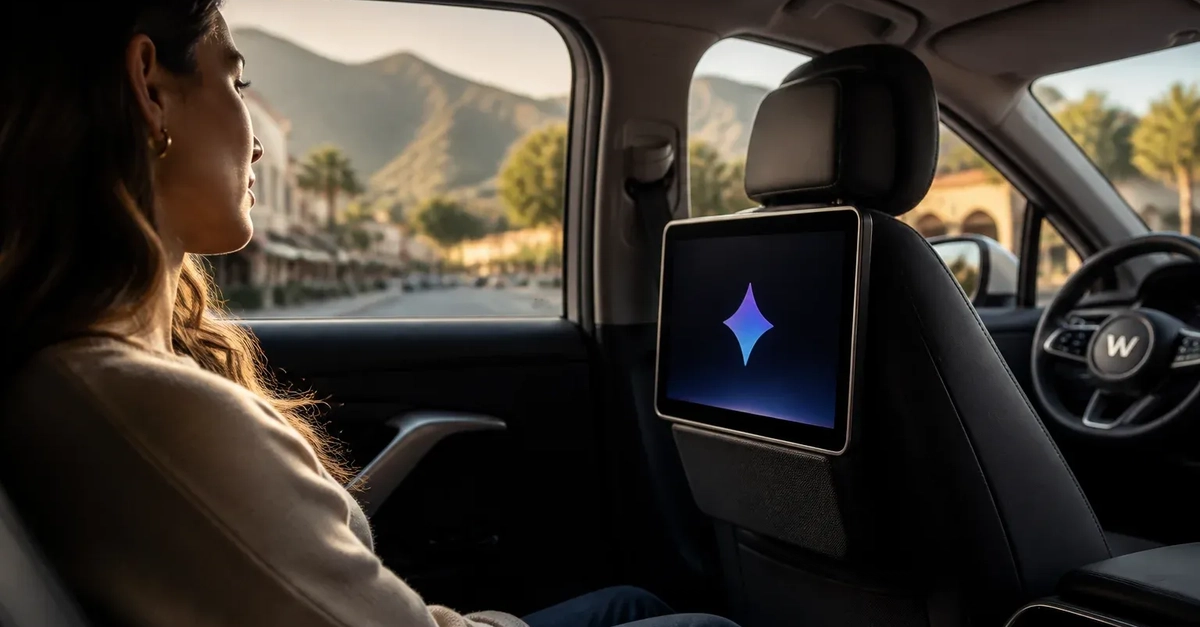
Gemini Debuts as Rider-Facing Assistant in Waymo's Ojai Fleet
Waymo has quietly rolled out a significant new feature for its autonomous ride-hailing service: Gemini in Waymo. This beta program introduces an in-car conversational assistant designed exclusively for passengers, enhancing the rider experience within Waymo's Ojai robotaxi fleet. Accessed via a dedicated Gemini icon on the cabin's display screen, the assistant allows riders to interact using natural language and voice commands.
The core functionality of Gemini in Waymo centers on improving the passenger's journey. Riders can now adjust cabin settings, request information about their route, inquire about points of interest along the way, or even ask broader topical questions. This integration transforms the static cabin screen into a dynamic, interactive interface, offering a more engaging and informative ride. It represents a tangible step toward integrating advanced AI into the commercial mobility sector, focusing on passenger comfort and convenience.
Separation of Concerns: AI for Comfort, Not Control
A critical distinction highlighted by Waymo is the clear boundary between the Gemini assistant and the autonomous driving system. The Waymo Driver, the company's proprietary autonomous driving technology, remains solely responsible for controlling the vehicle. Gemini operates entirely independently and has absolutely no influence over driving decisions, navigation, or safety protocols. This separation is paramount for safety and regulatory considerations, ensuring that AI enhancements for the rider experience do not compromise the core autonomous driving capabilities.
This architecture is designed to build rider confidence. By clearly demarcating the assistant's role, Waymo aims to prevent confusion about who or what is in control of the vehicle. Gemini is there to make the ride more pleasant and informative, akin to a knowledgeable concierge, while the Waymo Driver handles the complex task of navigating public roads autonomously. This approach allows Waymo to leverage the power of generative AI for passenger enrichment without introducing new risks to the driving system.
Transforming the Cabin Experience
The integration of Gemini into the Waymo cabin experience is more than just a voice command system; it's a reimagining of the passenger journey. Traditionally, the in-car screen in a robotaxi serves a limited purpose: displaying route information and perhaps basic vehicle status. Gemini expands this dramatically. Imagine asking, "What's that building we're passing?" or "Can you turn up the air conditioning slightly?" or even "Tell me about the history of this neighborhood." Gemini is engineered to understand and respond to these types of queries.
This conversational interface can also proactively offer information. If the Waymo Driver identifies a point of interest or a significant landmark, Gemini could potentially provide context. This moves the robotaxi experience from a purely functional transport service toward a more personalized and curated journey. For passengers, especially those new to autonomous vehicles or unfamiliar with the city, this can alleviate anxiety and enhance the overall perception of the service. It’s akin to having a well-informed guide for your journey, available on demand.
Broader Implications for the Automotive and AI Markets
The deployment of Gemini within Waymo's commercial robotaxi service is a significant signal for the broader automotive and AI industries. It demonstrates a practical, real-world application of large language models (LLMs) and generative AI in a safety-critical environment, albeit in a strictly non-driving capacity. This moves beyond theoretical applications and showcases a functional integration that directly impacts end-users.
For other autonomous vehicle developers and automotive manufacturers, Waymo's approach offers a blueprint. The clear separation of the AI assistant from the driving system addresses a key concern: how to leverage advanced AI for user experience without compromising safety or introducing regulatory hurdles. This strategy allows for rapid innovation in passenger-facing features while maintaining the integrity of the autonomous driving stack. It suggests a future where the in-car experience becomes a significant differentiator in the mobility-as-a-service (MaaS) market.
Furthermore, this integration underscores the growing trend of embedding sophisticated AI directly into the user's environment. As LLMs become more capable and efficient, their application within vehicles, homes, and workplaces will likely expand. Gemini in Waymo is an early indicator of how these powerful AI models can be tailored for specific contexts, providing personalized assistance and enhancing daily life. The success of this pilot program could accelerate the adoption of similar AI-powered cabin assistants across the automotive landscape.
The Ojai Beta: A Controlled Environment for Innovation
The choice of Ojai, California, for this beta rollout is strategic. Ojai is known for its relatively calm traffic conditions and less complex urban environment compared to major metropolitan areas where Waymo already operates. This controlled setting allows Waymo to test and refine the Gemini assistant's performance and user interaction in a lower-risk scenario. It provides valuable data on how riders engage with the assistant and helps identify any unforeseen issues before a wider rollout.
This phased approach to deployment is typical for advanced technology in the autonomous driving space. By starting in a more manageable environment like Ojai, Waymo can gather crucial feedback and iterate on the user experience. This data will be instrumental in optimizing Gemini's capabilities, ensuring it meets rider expectations and integrates seamlessly into the Waymo service. It also allows Waymo to gauge public reception and address any potential concerns regarding AI in autonomous vehicles.
What’s Next for In-Car AI Assistants?
The successful integration of Gemini into Waymo's Ojai robotaxis opens up a vista of possibilities for the future of in-car experiences. As AI continues to advance, we can anticipate even more sophisticated interactions. Imagine an AI assistant that not only adjusts the cabin but also curates personalized music playlists based on mood, suggests dining options at the destination with real-time availability, or even provides educational content tailored to the passenger's interests. The potential for AI to enhance the journey is vast.
However, this also raises questions. What happens when the AI assistant misunderstands a rider's intent, or provides incorrect information? While Waymo has clearly separated driving control from the assistant, the perception of AI reliability is crucial for user trust. As these systems become more integrated, ensuring accuracy, responsiveness, and a seamless user experience will be paramount. The ongoing development and refinement of Gemini in Waymo will be closely watched as a benchmark for in-car AI innovation.