
GBrain: Your Personal AI Augmentation Layer
GBrain emerges as a novel platform designed to bridge the gap between generic artificial intelligence models and an individual's unique knowledge base, tools, and skills. The core proposition is straightforward yet powerful: empower users to plug their personal context directly into any AI. This moves beyond the typical AI interaction, where users adapt to the AI's limitations, towards a model where AI adapts to the user's specific needs and information landscape.
The platform positions itself as a universal adapter, allowing users to connect a disparate array of personal resources. This includes not just static data, but also dynamic tools and explicit skills. Imagine an AI assistant that doesn't just access public web data, but also understands the specific jargon in your company's internal documentation, references past project files, and can even leverage specialized software you use daily. GBrain aims to make this a reality.
Connecting the Dots: Memory, Tools, and Skills
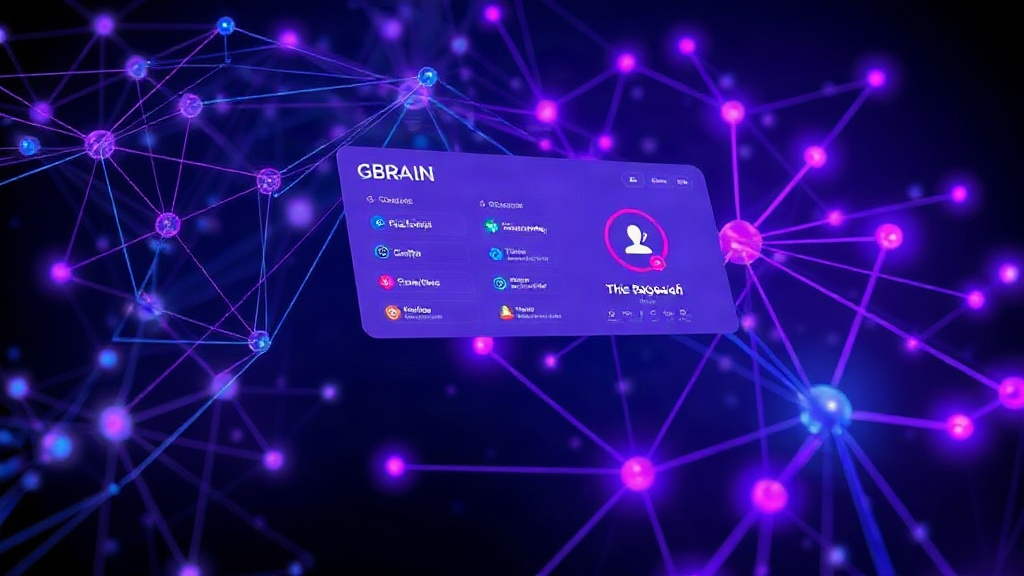
GBrain's architecture is built around three primary integration points: memory, tools, and skills. The 'memory' component refers to personal data. This could be anything from documents, notes, emails, or even conversation logs. By indexing and making this data accessible, GBrain enables AI models to draw upon a user's specific history and knowledge, providing contextually relevant responses that a general-purpose AI would lack.
The 'tools' integration is perhaps one of the most significant differentiators. Instead of the AI merely providing information or generating text, GBrain allows it to interact with external applications. This could mean telling an AI to draft an email and then having it send that email via your preferred client, or asking it to analyze data in a spreadsheet and then having it update that spreadsheet with the findings. This capability transforms AI from an informational oracle into an active agent capable of executing tasks within the user's existing digital environment.
Finally, the 'skills' aspect allows users to imbue AI with specific expertise. This isn't about fine-tuning a model on a massive dataset. Instead, it's about providing direct, actionable knowledge or workflows that the AI can then apply. For example, a developer might plug in their knowledge of a specific coding framework, or a designer could integrate their understanding of brand guidelines. This allows for highly specialized AI assistance tailored to niche domains or individual workflows.
How It Works: The Underlying Mechanism
While the specifics of GBrain's internal workings are not fully detailed, the concept suggests a sophisticated orchestration layer. Users likely connect their data sources (e.g., cloud storage, note-taking apps) and tools (e.g., APIs for email, project management software, development environments) through the GBrain platform. GBrain then acts as an intermediary, translating user prompts into a format that can query these connected resources and, crucially, execute actions through them.
The 'memory' integration likely employs advanced indexing and retrieval techniques, possibly leveraging vector databases or similar semantic search technologies to make personal data efficiently searchable by AI models. The 'tools' and 'skills' integrations probably involve a combination of API management, function calling, and prompt engineering to ensure AI models can reliably invoke external services and apply learned expertise.
This approach allows GBrain to bypass the need for extensive model retraining for every new piece of personal information or specialized task. Instead, it focuses on efficiently connecting and orchestrating existing AI capabilities with user-specific resources. Think of it less like teaching an AI a new subject from scratch, and more like giving a highly capable assistant a comprehensive briefing and a set of approved tools for a specific job.
Implications for AI Interaction and Productivity
GBrain's potential impact on productivity is significant. By allowing AI to access personal data and operate within personal tools, it can automate a wider range of tasks and provide more relevant, actionable assistance. For developers, this could mean AI that understands their codebase, helps debug issues by interacting with their IDE, and drafts documentation based on their project's specific context.
For creators, an AI integrated with their design software, asset libraries, and content management systems could streamline workflows from ideation to publication. For professionals in any field, the ability to have an AI that remembers past conversations, references specific client data, and can draft documents in a company's specific style promises a substantial boost in efficiency and personalization.
The challenge, as with any platform dealing with personal data and tool access, will be security and privacy. Ensuring that user data is handled securely, that tool integrations are robust, and that AI actions are predictable and controllable will be paramount. GBrain's success will hinge not only on its technical capabilities but also on its ability to build trust with users regarding the sensitive nature of the information and actions it manages.
What remains to be seen is how seamlessly GBrain can integrate with the ever-expanding universe of AI models and the diverse toolkit of modern professionals. The promise is grand, but the execution requires a delicate balance of flexibility, security, and user control.