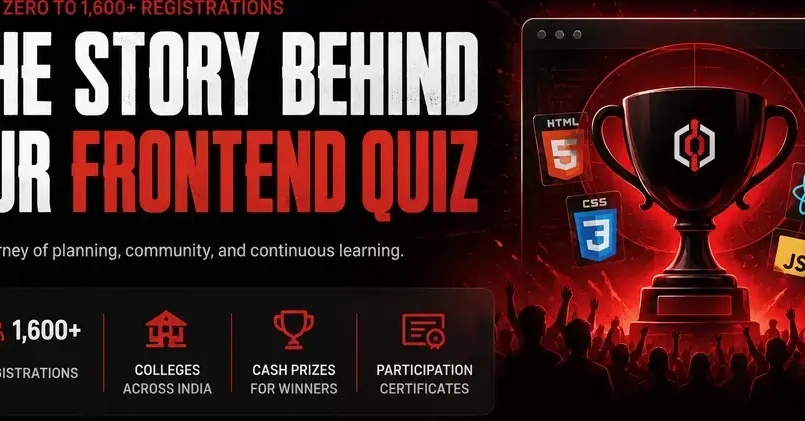
The Genesis of Frontend Quiz Arena 2026
Organizing a community event is more than just building software; it's about fostering connections and creating learning opportunities. Omnikon embarked on its first large-scale community initiative, the Frontend Quiz Arena 2026, with modest expectations. The initial goal was simple: engage a few hundred students and facilitate new learning. However, the reality far surpassed this aspiration, with registrations surging past 1,600 students across India.
The decision to host a frontend quiz stemmed from Omnikon's core vision. The community aimed to be more than just another developer group. Instead, it sought to build a platform that empowered students to learn, compete, build confidence, and connect with peers. A frontend quiz was identified as an ideal starting point to achieve these objectives, offering a structured yet engaging way to test and enhance practical knowledge.
Strategic Planning and Execution
The success of Frontend Quiz Arena 2026 hinged on meticulous planning and effective execution across several key areas. The team focused on defining clear objectives, understanding the target audience, and implementing a robust promotional strategy. The event was designed to be accessible, challenging, and rewarding, appealing to students eager to test their frontend development skills.
Target Audience Identification: The primary audience was students pursuing computer science and related fields, with a particular focus on those interested in frontend technologies. Understanding their motivations—learning, competition, and networking—was crucial in shaping the event's format and content.
Content Development: The quiz questions were carefully curated to cover a broad spectrum of frontend concepts, ranging from foundational HTML and CSS to advanced JavaScript frameworks and modern web development practices. The difficulty level was calibrated to be challenging but fair, ensuring that participants of varying skill levels could engage meaningfully.
Platform Selection: Choosing the right platform for hosting the quiz and managing registrations was critical. The team opted for a scalable and user-friendly solution that could handle a high volume of concurrent users and provide a seamless experience for participants. This involved evaluating various online quiz and event management tools, prioritizing reliability and ease of use.
Promotional Strategy: A multi-channel promotional strategy was deployed to reach the target audience effectively. This included leveraging social media platforms, university outreach programs, partnerships with student developer clubs, and targeted email campaigns. The messaging emphasized the learning opportunities, competitive aspect, and the chance to connect with a wider developer community.
Logistics and Operations: Ensuring smooth operations on the day of the event was paramount. This involved setting up clear communication channels, providing technical support, and establishing a system for scoring and feedback. Contingency plans were put in place to address potential technical glitches or unexpected issues.
Measuring Success and Gathering Feedback
Beyond the sheer number of registrations, Omnikon focused on measuring the event's success through participant engagement and feedback. Post-event surveys were distributed to gather insights into the participant experience, the quality of the questions, and suggestions for future events. This feedback loop is vital for continuous improvement and for understanding the community's needs.
The engagement metrics, such as completion rates and time spent on the quiz, provided quantitative data on how participants interacted with the content. Qualitative feedback, on the other hand, offered deeper insights into the perceived value of the event, the effectiveness of the organization, and the overall satisfaction of attendees. Analyzing this data allows Omnikon to refine its approach for subsequent events, ensuring they remain relevant and impactful for the developer community.
The Frontend Quiz Arena 2026 served as a valuable pilot for Omnikon's community-building efforts. The overwhelming response validated the team's approach and highlighted a strong demand for such interactive learning and competitive platforms among students. The lessons learned from this initial event are instrumental in shaping Omnikon's future strategy for organizing larger and more impactful community initiatives.
Key Takeaways for Future Events
Organizing a successful large-scale tech event involves more than just enthusiasm; it requires strategic planning, targeted outreach, and a commitment to participant experience. Omnikon's Frontend Quiz Arena 2026 provided several key learnings that can inform future endeavors:
- Scalability is Paramount: Ensure that the chosen platforms and infrastructure can handle significant user load, especially during registration and event execution. Test systems rigorously under simulated high-traffic conditions.
- Targeted Outreach Amplifies Reach: Collaborate with educational institutions and existing developer communities to reach a wider, relevant audience. Tailor marketing messages to resonate with student aspirations.
- Value Proposition Must Be Clear: Clearly articulate the benefits of participation, whether it’s learning new skills, testing knowledge, networking, or winning prizes. This helps in attracting and retaining participants.
- Feedback is a Gift: Actively solicit and analyze participant feedback. This not only helps in improving future events but also makes attendees feel valued and heard.
- Iterate and Improve: Treat the first event as a learning opportunity. Identify what worked well and what could be improved for subsequent iterations. Continuous improvement is key to sustained community engagement.
The success of Frontend Quiz Arena 2026 demonstrates the power of well-organized community events in engaging aspiring developers. Omnikon's experience offers a practical blueprint for other organizations looking to build their communities through interactive and educational initiatives.