The Problem: Friction in Online Utilities
Online tools are indispensable for developers, designers, and everyday users. Yet, many platforms impose a significant barrier: mandatory sign-ups. This friction can be particularly frustrating for simple, single-use tasks like generating a QR code or a secure password. Recognizing this common annoyance, a developer has launched a collection of free online utilities designed for immediate use, no account creation necessary.
The initiative, shared on Dev.to, aims to provide a streamlined experience. The current offerings include a QR Code Generator, a Barcode Generator, and a Secure Password Generator. Each tool is built with the core principles of speed, simplicity, and accessibility in mind. The developer’s motivation stems from a personal frustration with the proliferation of sign-up walls for basic functionalities, a sentiment likely shared by many in the tech community.
Core Principles and Current Offerings
The collection operates on a clear set of user-centric principles:
- No Registration: Immediate access without creating an account.
- Fast Loading: Optimized for quick performance.
- Clean Interface: Intuitive and uncluttered design.
- Cross-Platform Compatibility: Works seamlessly on both desktop and mobile devices.
- Free to Use: No cost for any of the utilities.
The initial suite of tools addresses distinct needs:
QR Code Generator
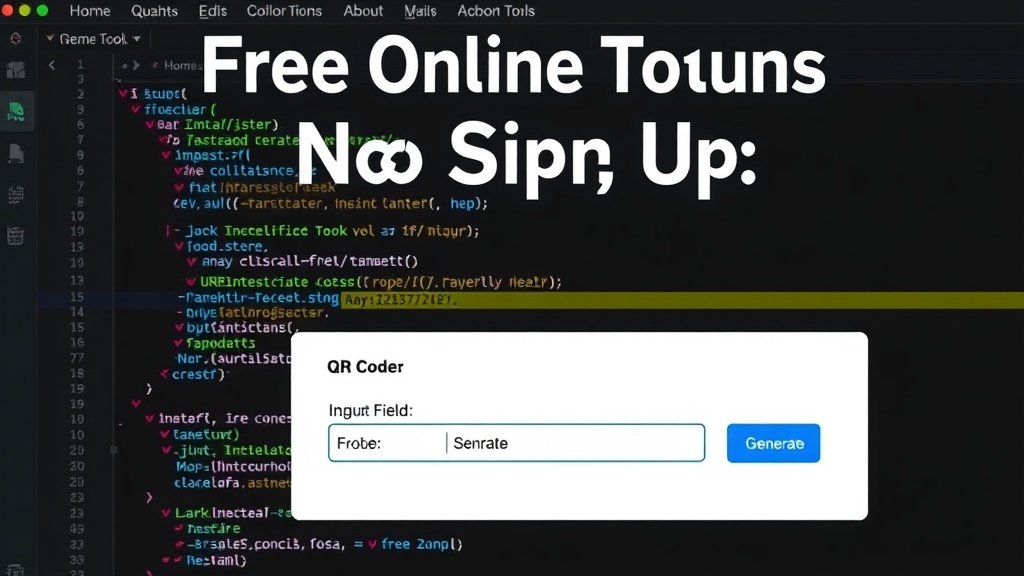
This tool allows users to convert text, URLs, or other data into scannable QR codes. It is designed for quick generation, whether for sharing a website link, contact information, or Wi-Fi credentials. The interface is straightforward, enabling users to input their data and generate the QR code image in seconds.
Barcode Generator
Similar to the QR code generator, this utility focuses on creating various types of barcodes. While the specific barcode types supported are not detailed, such tools typically cater to common formats like Code 128, EAN, or UPC, essential for inventory management, product labeling, and logistics. The emphasis remains on ease of use and rapid output.
Secure Password Generator
In an era of increasing cyber threats, strong, unique passwords are vital. This tool addresses that need by generating complex, random passwords. Users can likely specify parameters such as length, inclusion of uppercase/lowercase letters, numbers, and special characters, ensuring a high level of security for online accounts without requiring users to manually devise complex strings.
Future Development and Feedback
The developer explicitly states an intention to expand the collection. The focus is on adding more developer-centric and productivity tools over time. This suggests a roadmap that could include utilities for text manipulation, file conversion, data formatting, or other common tasks encountered in daily digital workflows.
Crucially, the developer is actively seeking user feedback. This collaborative approach is a positive sign for the project’s evolution. Specific questions posed include which tool users find most valuable and what features might be missing or could be improved. This direct engagement with the community indicates a commitment to building tools that genuinely meet user needs.
The decision to forgo sign-ups is a significant differentiator. Many existing utility sites, even for free services, require users to create accounts, often to track usage, serve ads, or build user databases. By removing this barrier, the new collection positions itself as a go-to resource for users who value efficiency and privacy. The immediate availability of tools like a password generator also aligns with security best practices, encouraging users to adopt stronger authentication methods without the hassle of account management.
This move taps into a growing demand for no-nonsense, utility-focused web applications. As the digital landscape becomes more saturated, users increasingly gravitate towards solutions that offer direct value with minimal overhead. The success of this project will likely hinge on its ability to consistently deliver reliable, fast, and genuinely useful tools, while continuing to listen to and incorporate user feedback into its development cycle.
The Unanswered Question: Monetization and Sustainability
While the current model is free and sign-up-free, a critical question remains for the long-term viability of such a project: how will it be sustained? Without ad revenue tied to user accounts or premium subscription tiers that require sign-ups, the developer faces the challenge of covering hosting costs and development time. Potential avenues could include voluntary donations, affiliate links for related services, or perhaps a future iteration that introduces optional, privacy-respecting premium features. For now, the focus is on building utility and community engagement, but the path to sustainable operation without compromising the core no-sign-up ethos is a challenge many independent developers face.