The AI Inference Cost Problem
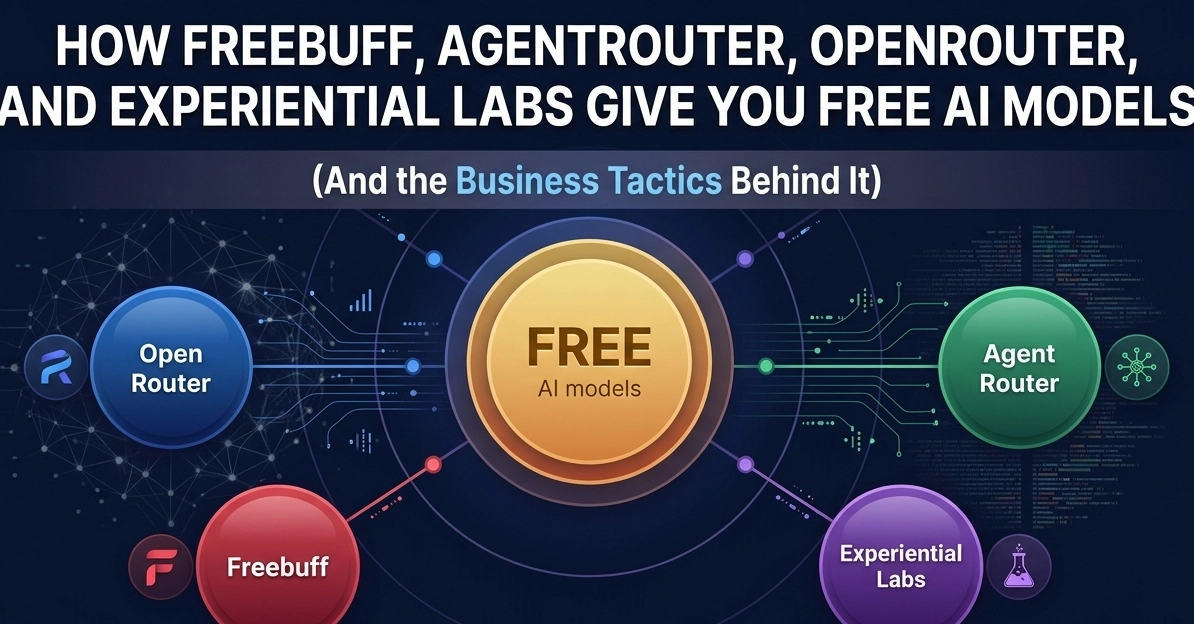
Using frontier AI models directly can quickly become prohibitively expensive, especially for developers engaged in agentic coding loops or iterative prototyping. A single day of intensive use with models like Claude or GPT-5 can generate significant bills. However, a new wave of gateways and agent products is emerging, providing developers with substantial free access to these powerful tools. This article examines four such platforms: Freebuff, AgentRouter, OpenRouter, and Experiential Labs, detailing their unique strategies for subsidizing inference costs while offering free access.
OpenRouter: Community-Subsidized and Free Tier Access
OpenRouter functions as a unified API gateway, compatible with OpenAI's interface, that aggregates hundreds of models from numerous providers. Its free tier is not a proprietary OpenRouter model but rather a carefully selected collection of open-weight models. These include popular options like DeepSeek R1, various Llama variants, and Qwen releases. The $0/M-token price tag for these specific models is made possible through subsidies from their providers or from OpenRouter itself. This approach democratizes access to cutting-edge AI by leveraging the open-source ecosystem and shared economic incentives.
AgentRouter: Free Access via Performance-Based Rewards
AgentRouter takes a different approach by rewarding users with free inference credits based on their contributions to the platform's performance and development. Users can earn these credits by performing tasks that help improve the agentic systems, such as providing feedback, testing new features, or contributing to model evaluations. This model aligns user engagement directly with the platform's growth and refinement. Think of it like a loyalty program for AI development: the more you help the system improve, the more you get to use it for free. This incentivizes a community-driven approach to AI development and deployment.
Freebuff: Time-Limited Free Inference and Freemium Model
Freebuff offers a straightforward freemium model. It provides users with a set amount of free inference time or token usage on a daily or weekly basis. This allows developers to experiment with AI models without upfront costs. Once the free quota is exhausted, users can opt for paid plans, which offer higher usage limits, access to premium models, or faster inference speeds. This strategy is common in SaaS products: hook users with a valuable free offering, and then convert a percentage of them to paying customers by demonstrating the value proposition of premium features. Freebuff's tactic is to make the initial barrier to entry zero, allowing for broad adoption and organic growth.
Experiential Labs: Research & Development Focused Free Access
Experiential Labs, often associated with academic or research institutions, provides free access to AI models primarily for research, educational, and experimental purposes. This can be through sponsored research grants, university partnerships, or dedicated R&D programs. The goal is not direct commercial monetization but rather to foster innovation, gather data on model performance in real-world applications, and contribute to the broader AI community. Access might be granted on a per-project basis or to specific research groups. This model relies on institutional funding and the long-term benefits of advancing AI research, rather than immediate revenue from individual users.
Underlying Business Tactics
The common thread among these platforms is the strategic subsidization of AI inference costs. OpenRouter uses a community and provider subsidy model, effectively pooling resources to offer free access to certain open-weight models. AgentRouter gamifies user contributions, turning active users into a distributed QA and development team. Freebuff employs a classic freemium strategy, using free access as a lead-generation tool to drive paid subscriptions. Experiential Labs leverages institutional funding for research purposes, with the understanding that advancements in AI benefit the broader ecosystem. Each of these approaches acknowledges that direct, unmitigated access to frontier AI models is a cost barrier that can be overcome with creative economic and operational strategies, ultimately driving adoption and innovation.