%22%20%2F%3E%0A%20%20%3C%2Fsvg%3E)
The Heart of the F-14's Digital Brain
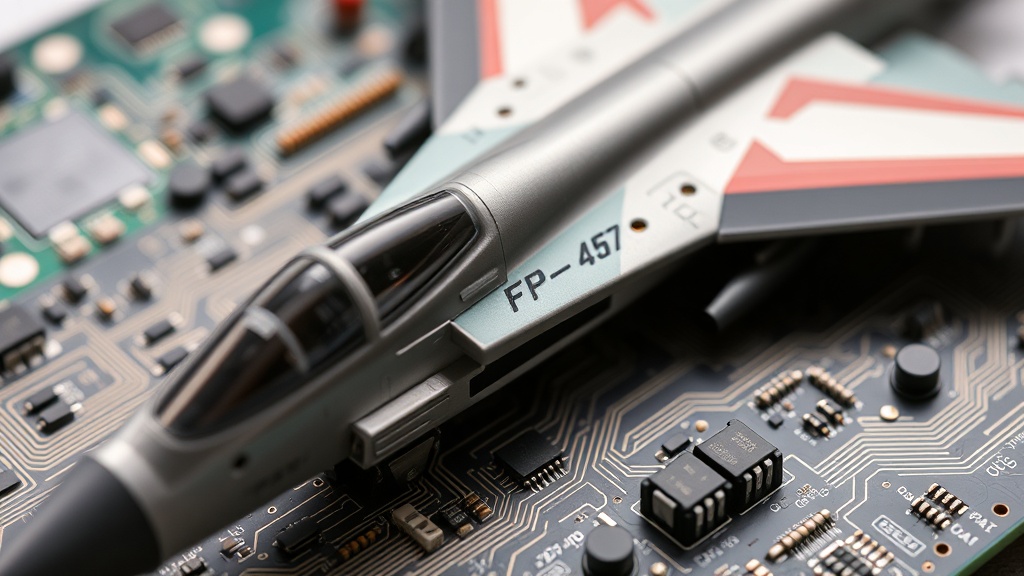
The iconic F-14 Tomcat, a symbol of naval aviation prowess, relied on sophisticated digital systems for its formidable capabilities. At the core of its computational power was the Central Air Data Computer (CADC), a marvel of early digital engineering. Now, an embedded systems expert has meticulously recreated this crucial component, not in a restored aircraft, but within an FPGA and demonstrated it controlling a 3D-printed scale model of the legendary fighter jet.
The project centers around the MP944, a custom-designed chip developed by the Naval Air Development Center (NADC). This chip is widely considered the world's first microprocessor, predating commercial microprocessors like the Intel 4004 by several years. Its development was driven by the stringent requirements of military aviation, where real-time data processing, reliability, and miniaturization were paramount.
The original CADC was a complex assembly of analog and digital components, with the MP944 serving as its central processing unit. It handled a vast array of critical functions, from calculating airspeed and altitude to managing the F-14's distinctive variable-sweep wings. The system's ability to dynamically adjust wing geometry based on flight conditions was instrumental in the Tomcat's performance envelope, allowing for high maneuverability at low speeds and reduced drag at supersonic speeds.
Recreating such a system is no small feat. The MP944 was a custom-designed integrated circuit, meaning its exact schematics and operational details were not readily available in the public domain for commercial emulation. This required the project's creator, an FPGA and embedded systems expert, to delve into historical documentation, reverse-engineer where necessary, and apply deep knowledge of early digital logic and computer architecture.
FPGA Emulation: Bringing the Past to Life
The choice of an FPGA (Field-Programmable Gate Array) for the recreation is significant. Unlike a traditional CPU that executes software instructions sequentially, an FPGA is an integrated circuit that can be configured to implement digital logic circuits. This allows for a highly accurate, cycle-accurate emulation of the original hardware. The expert has essentially designed a digital circuit within the FPGA that behaves identically to the original MP944 and the surrounding CADC logic.
This approach offers several advantages for historical reconstruction. Firstly, it allows for a faithful reproduction of the original chip's behavior, including its timing characteristics and operational quirks. Secondly, it provides a flexible platform for testing and demonstration. The FPGA-based CADC can be interfaced with modern sensors and actuators, enabling it to control a physical model.
The project showcases the MP944's role in controlling the F-14's swing-wing mechanism. In the 3D-printed model, the FPGA-driven CADC interprets simulated flight data and sends commands to servo motors that adjust the angle of the model's wings. This demonstration vividly illustrates the real-time control capabilities that the original MP944 provided to the F-14 pilot.
Beyond the swing wings, the CADC was responsible for numerous other calculations essential for flight. It processed data from pitot tubes, static ports, and other air data sensors to derive true airspeed, Mach number, altitude, and other vital parameters. This information was then fed to other aircraft systems, including the fire control system and the pilot's displays.
Historical Significance and Modern Applications
The MP944's status as the world's first microprocessor is a crucial point. While the Intel 4004, released in 1971, is often cited as the first commercial microprocessor, the MP944 was developed in the late 1960s for military applications. Its existence highlights the advanced state of digital design within the defense sector, often outpacing commercial developments due to specialized needs and substantial funding.
This recreation serves as a powerful educational tool. It allows engineers and enthusiasts to understand the architectural decisions and technological constraints of early digital computing within a high-performance aerospace context. By implementing the MP944 on an FPGA, the creator can experiment with the design, analyze its performance, and even explore potential optimizations or extensions, albeit within the confines of a model.
The project also touches upon the broader trend of retrocomputing and hardware emulation. As older systems become obsolete and components fail, FPGAs offer a viable path to preserve and interact with historical digital hardware. This is particularly relevant in fields like aerospace and defense, where legacy systems may remain in service for decades, or where understanding foundational technologies is critical for future innovation.
The meticulous work involved in this recreation underscores the complexity of the original design and the ingenuity of its creators. It's a testament to how far digital computation has come, yet also a reminder of the foundational innovations that made modern computing possible. The sight of a 3D-printed F-14 gracefully adjusting its wings, controlled by a digital ghost of the past, offers a unique perspective on aviation and computing history.
What remains to be seen is whether this FPGA recreation could be adapted for more extensive simulations or even as a functional replacement for certain elements in historical aircraft restoration projects, provided the necessary interfaces and safety considerations can be met. For now, it stands as a remarkable demonstration of digital archaeology and engineering skill.