The Multi-tenancy Imperative
Building a multi-tenant application, especially one handling sensitive financial data like invoices, presents a fundamental challenge: ensuring absolute data isolation. FoxyInvoice tackles this head-on in its fourth chapter, focusing on what the developers are calling the "vault" – the core mechanisms for identity, isolation, and authorization. The goal is twofold: keep hosting costs low indefinitely by sharing infrastructure and, critically, prevent any possibility of one company accessing another's financial records. A breach of this isolation in a billing product is not just a security failure; it's a business-ending event.
Defining the Threat Model: Beyond the Hacker
The common perception of a security threat often conjures images of external hackers attempting to breach systems. However, FoxyInvoice's development team identifies a more insidious and, arguably, more common threat: the developer's own future self. Specifically, the risk lies in writing code, often late at night or under pressure, that inadvertently bypasses tenant-specific filters. This isn't about malicious intent; it's about the subtle but devastating consequence of a forgotten parameter in a database query. The architecture of FoxyInvoice is designed to make such mistakes either impossible to write in the first place or impossible to deploy if they somehow slip through the initial coding phase.
Identity as the First Line of Defense
The foundation of FoxyInvoice's security model is robust identity management. Every user and every company is uniquely identified. This isn't merely about logging in; it's about establishing a verifiable link between an action and the entity it belongs to. When a user attempts to access or modify data, the system first verifies their identity and, crucially, the tenant they belong to. This tenant ID becomes the primary key for all subsequent data access operations. Think of it less like a simple password check and more like every interaction being stamped with a unique company seal that must match the item being accessed.
Enforcing Isolation: The Tenant Filter
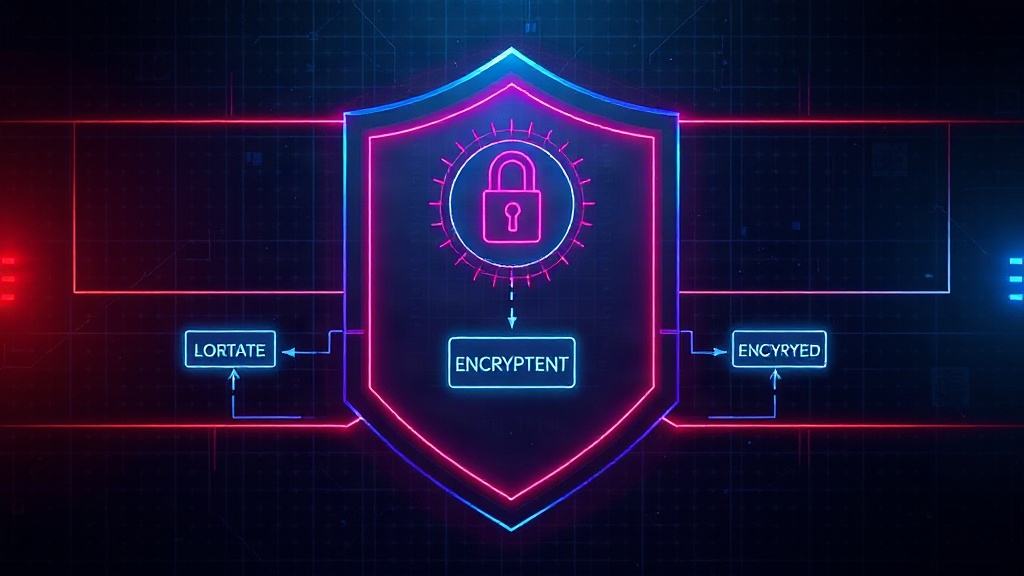
With identity established, the next critical layer is data isolation. FoxyInvoice implements a pervasive tenant filtering mechanism. This means that at the database level, every query is implicitly or explicitly filtered by the authenticated user's tenant ID. This is not an optional setting or a feature that can be easily overlooked. The system is engineered to make tenant filtering a default, non-negotiable aspect of data retrieval. Even if a developer forgets to add a `WHERE tenant_id = ?` clause, the underlying framework or ORM (Object-Relational Mapper) should ideally enforce it. The goal is to create a system where data inherently belongs to a specific tenant and cannot be seen or manipulated by another without explicit, authorized cross-tenant access, which is a separate, highly controlled feature.
Authorization: Who Can Do What?
Beyond simply isolating data, FoxyInvoice must also manage what actions authenticated users can perform within their own tenant's data. This is the realm of authorization. The system defines roles and permissions that dictate whether a user can create, read, update, or delete invoices, company settings, or other sensitive information. This layer works in conjunction with identity and isolation. A user might be authenticated and their data correctly filtered to their tenant, but without the appropriate authorization, they still cannot perform a specific action. This granular control prevents, for example, a standard user from accessing administrative settings or modifying billing information that only an account owner should manage.
The Role of Automated Testing
The most crucial aspect highlighted in this chapter is not just the implementation of these security measures, but how their correctness is proven. FoxyInvoice relies heavily on a comprehensive suite of automated tests. These tests are designed to specifically probe the identity, isolation, and authorization mechanisms. They simulate various scenarios, including attempts to access data from other tenants, unauthorized actions, and edge cases that might arise from complex queries. Every time code is committed or a build is triggered, these tests run. Passing these tests provides a high degree of confidence that the vault is secure and that the critical data isolation guarantees are being met. This rigorous testing regime is what transforms theoretical security into practical, verifiable safety.
Lessons for Building Secure Multi-Tenant Systems
The approach taken by FoxyInvoice offers valuable insights for any developer or team building multi-tenant applications. The emphasis on a realistic threat model, where the developer themselves is a potential source of error, is paramount. Designing systems that make security mistakes impossible to write, or at least impossible to ship, is more effective than relying solely on code reviews or hope. Implementing tenant filtering at a fundamental level, using identity as the anchor for all operations, and layering granular authorization controls are essential. Finally, a robust, automated testing strategy is not a luxury but a necessity for proving that these security measures are effective and remain so as the system evolves.