
The Unthinkable Revival of FoxPro
Microsoft officially shuttered Visual FoxPro in 2007. For many developers who built entire businesses on its powerful database and rapid application development (RAD) capabilities, this felt like the end of an era. Yet, the spirit of FoxPro, known for its straightforward syntax and robust data handling, has refused to die. Today, a vibrant open-source project, aptly named FoxScript, is breathing new life into the platform, offering a modern, accessible way to develop applications using the FoxPro paradigm.
FoxPro was more than just a database; it was a complete development environment. Its xBase lineage meant it was relatively easy to learn for those familiar with dBase or Clipper, but its object-oriented extensions and powerful query capabilities made it a serious tool for professional developers. Applications built with FoxPro were known for their speed and reliability, often handling vast amounts of data with surprising efficiency. When Microsoft discontinued it, many feared that the accumulated knowledge and the existing codebase of countless FoxPro applications would become legacy burdens, difficult and expensive to migrate.
Why FoxScript Matters
FoxScript is not an emulation layer or a direct port of the old Microsoft code. Instead, it's a ground-up reimplementation of the FoxPro language and its core concepts. The project aims to provide a familiar development experience for veteran FoxPro developers while also being approachable for newcomers. This is crucial because, despite its discontinuation, there's still a significant amount of business logic running on FoxPro applications worldwide. Migrating these can be a monumental task, often involving rewriting entire systems. FoxScript offers a compelling alternative: leverage the existing FoxPro expertise and potentially even parts of the codebase in a modern, actively developed, and free environment.
The project's stated goal is to recreate the essential features of Visual FoxPro, including its data engine, its powerful language constructs, and its command-line interface capabilities. This means developers can expect to find familiar commands and functions, significantly reducing the learning curve. Think of it less like learning a completely new language and more like finding a modern, well-maintained workshop that still stocks your favorite, reliable tools, even if the original manufacturer stopped making them.
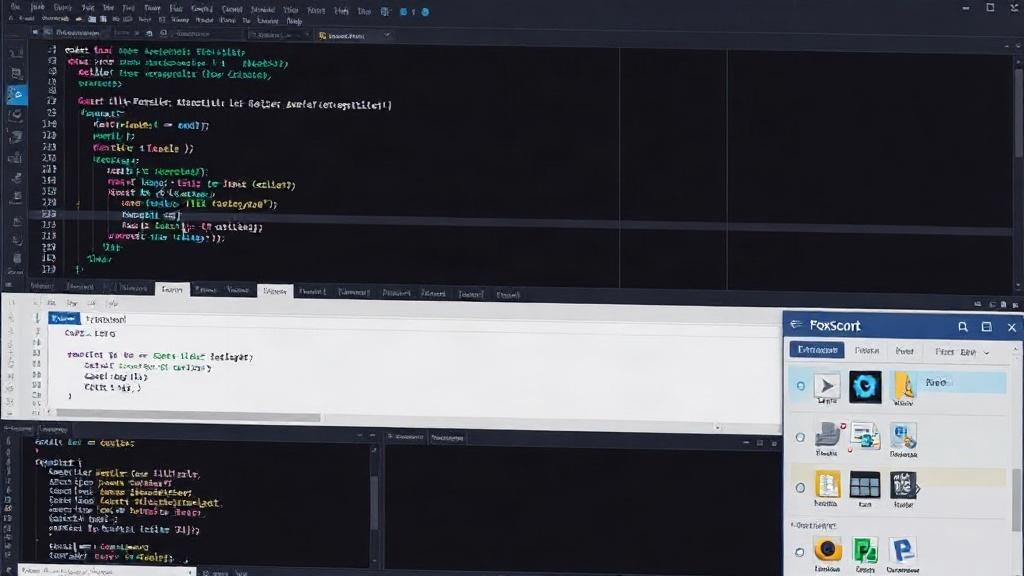
The Technical Underpinnings and Community Effort
The development of FoxScript is a testament to the power of community-driven open-source projects. It relies on modern tools and techniques to achieve its goals. While the specifics of the reimplementation are complex, the focus is on creating a robust, performant, and standards-compliant environment. This involves understanding the intricate details of the original FoxPro language and its runtime behavior, and then translating that into a new codebase. The project welcomes contributions from developers, testers, and documentation writers, fostering a collaborative spirit that is essential for such ambitious undertakings.
The revival addresses several key pain points for businesses still reliant on FoxPro. The primary benefit is the elimination of licensing costs associated with older Microsoft products. Furthermore, an active open-source project means ongoing support and development, which is something that simply isn't available for a product Microsoft abandoned over 15 years ago. This provides a path forward for modernizing applications without a complete rewrite, potentially integrating with newer technologies and platforms.
What This Means for Developers and Businesses
For developers who cut their teeth on FoxPro, FoxScript offers a chance to return to a language and paradigm they understand and perhaps even love, without being tied to obsolete technology. It allows them to continue building and maintaining critical business applications with a familiar toolset. For businesses that still run on FoxPro applications, FoxScript presents a lifeline. It offers a potential strategy to extend the life of existing systems, reduce operational costs, and gradually modernize without the immediate, prohibitive expense of a full migration. This could mean the difference between keeping a vital legacy system running and facing an existential threat from outdated technology.
The success of FoxScript will hinge on its ability to attract a critical mass of users and contributors. If it can achieve parity with the most essential features of Visual FoxPro and demonstrate stability and performance, it could become the de facto standard for FoxPro development going forward. The surprising detail here is not that a community would try to revive a beloved tool, but that it's being done so comprehensively and with a clear vision for modern applicability. It challenges the notion that all legacy software must eventually be discarded or rewritten entirely.
The Road Ahead
While FoxScript is an exciting development, it's important to recognize that it's an ongoing project. Achieving full compatibility with every nuance of Visual FoxPro is a massive undertaking. However, the progress made so far indicates a strong commitment from the development team. For anyone still working with FoxPro, or those who remember its strengths, exploring FoxScript is a worthwhile endeavor. It represents a powerful example of how open-source communities can preserve and advance technology that still holds significant value.
The question that remains is how quickly FoxScript can achieve feature parity and gain widespread adoption. If it can become a robust, well-supported platform, it could unlock significant value for businesses and developers worldwide, proving that even technologies Microsoft left behind can find a vibrant new future.