Project Overview
Formbricks is an open-source platform designed for managing surveys and user experiences. Its JavaScript SDK is embedded into websites and applications. This SDK is responsible for loading surveys, presenting them to users, and sending their answers back to the Formbricks API. The SDK is structured as two distinct packages within a monorepo: @formbricks/js-core, which handles the loader and command queue, and @formbricks/surveys, which manages the survey interface and logic.
The Critical Bug: Uncaught TypeError from Null Response
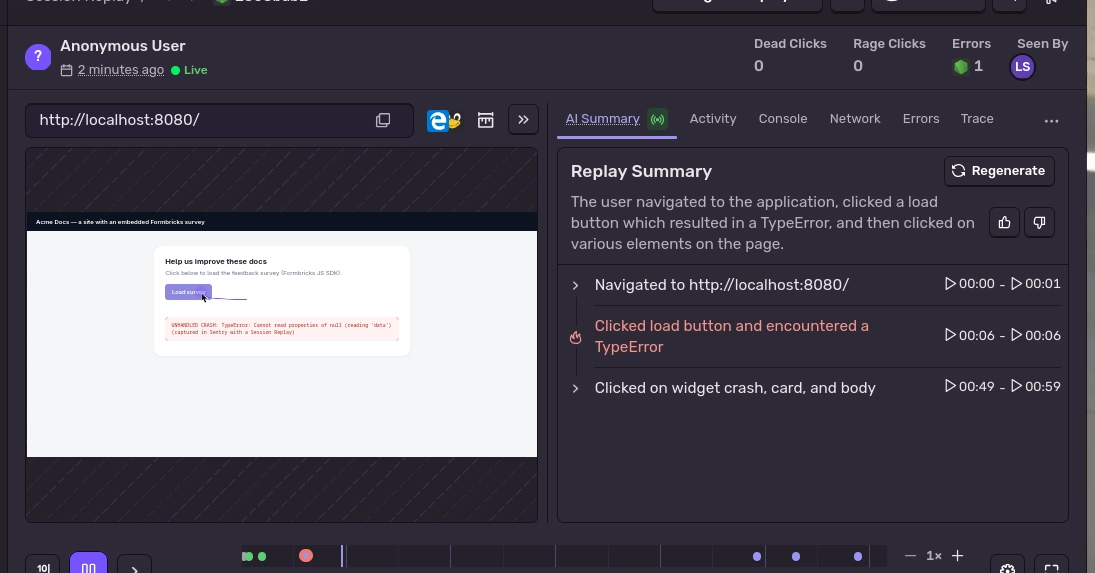
The core issue was that a single API response with a null body could trigger an uncaught TypeError in the visitor's browser. This meant that the survey widget, instead of gracefully handling an empty response, would crash the entire page it was embedded on. This is a critical failure for any user-facing widget, as it directly impacts the user experience and can lead to site instability.
The bug was identified and reported by Sentry's automated bot, which acts as a vigilant guardian for web applications. This bot detected the anomaly and subsequently filed a GitHub issue. Seer, a tool that likely aids in pinpointing the exact location of errors, then directed attention to the precise line of code responsible for the crash.
The Fix: Defensive Programming
The solution implemented was a classic example of defensive programming. The developer needed to ensure that the SDK would not break when encountering an unexpected null response from the API. Instead of assuming the API would always return valid data, the code was modified to check for the presence of a body before attempting to process it.
The specific fix involved adding a conditional check. Before attempting to parse or use the data from the API response, the code now verifies if the response.data (or equivalent property) actually exists and is not null. If it is null, the SDK can now gracefully exit the process or log a warning without throwing a fatal error that halts page execution. This prevents the TypeError from occurring, ensuring the survey widget does not destabilize the host page.
This type of bug, while seemingly small, can have a significant impact on user experience and application stability. It highlights the importance of robust error handling, especially in client-side JavaScript that interacts with external APIs. Even with well-defined API contracts, unforeseen edge cases can arise, such as network interruptions, server errors, or unexpected data formatting, all of which can lead to null or malformed responses.
The collaboration between Sentry, its automated detection capabilities, and the Formbricks development team demonstrates an effective workflow for identifying and resolving critical bugs in open-source projects. Sentry's role in proactively finding such issues before they affect a wide audience is invaluable. The speed at which the issue was filed and then addressed underscores the agility and responsiveness of the Formbricks project.
Implications for Developers and Users
For developers integrating the Formbricks SDK, this fix means increased stability and reliability. They can be more confident that the survey widget will not unexpectedly crash their users' browsing sessions. The patch ensures that the SDK is more resilient to potential API inconsistencies.
Users of websites and applications that embed Formbricks surveys will benefit from a more seamless experience. They are less likely to encounter broken pages or interrupted workflows due to issues with the survey widget. This contributes to a better overall user experience on the host site.
The incident serves as a reminder for all developers working with client-server interactions: always validate and sanitize data received from external sources. Assume that data can be malformed, missing, or otherwise unexpected. Implementing checks for null values, empty strings, and incorrect data types is a fundamental practice for building robust and reliable applications. This proactive approach, exemplified by the fix in the Formbricks SDK, is crucial for maintaining application integrity and user trust.