
The Deceptive Nature of PDFs
Many assume a PDF is a static snapshot of a document, like a photograph. This assumption is fundamentally flawed. In reality, a PDF is an append-only container that meticulously logs its own history, including every revision, whether intentional or not. This characteristic, often overlooked by casual editors, is the key vulnerability exploited in forging bank statements.
Consider a common scenario: an individual needs to inflate their reported income to a lender. They download a bank statement generated server-side, which might show a modest credit. Using a free online PDF editor, they might select the number, delete it, and type in a larger figure. This process takes mere minutes. However, the underlying structure of the PDF means the original data isn't truly erased. Instead, it's marked for deletion or superseded by new content, but the historical record remains buried within the file's byte structure.
This layered approach, designed for document fidelity and version control, inadvertently creates a forensic trail. When a PDF is edited, especially with basic tools, the editor often doesn't perform a full rewrite. It adds new objects or modifies existing ones, but the original objects, or references to them, can persist. This means that a seemingly simple edit leaves behind fragments of the original document's state, like digital breadcrumbs.
The implications are significant for any document requiring verification. Financial institutions, loan providers, and even employers who rely on document submissions are susceptible if they don't employ robust verification methods that can analyze the underlying structure of a PDF, not just its visual output.
Unpacking the PDF Byte Structure
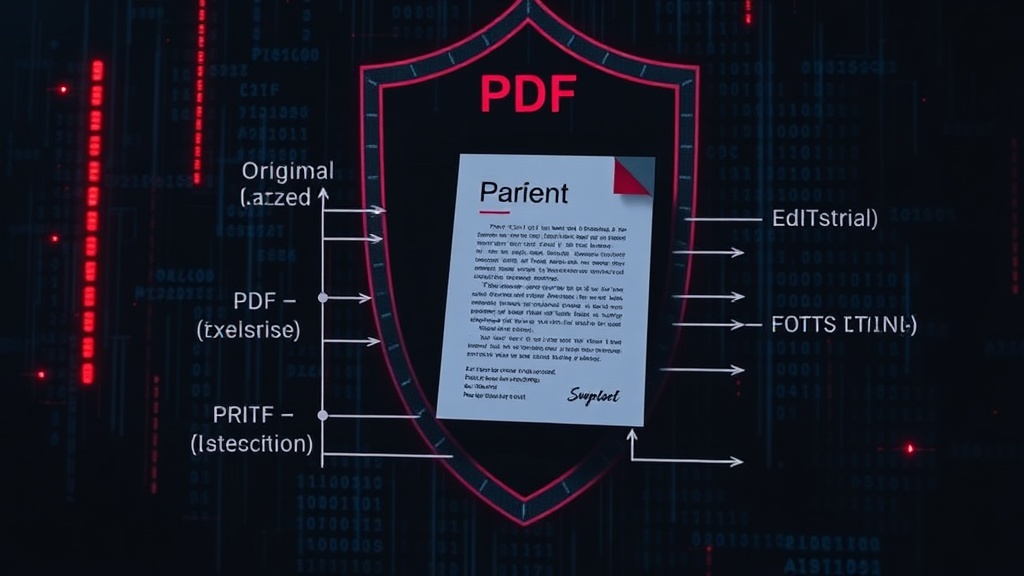
To understand how forgery is detectable, one must look at the PDF's internal structure. A PDF file is composed of objects. These objects can be text, images, fonts, or other graphical elements. When a PDF is edited, particularly with common, free tools, the process typically involves adding new objects or modifying existing ones without necessarily purging the old data. The PDF specification allows for incremental updates, meaning new content can be appended to the file without rewriting the entire document. This is efficient for saving but disastrous for concealment.
Imagine the original bank statement as a series of commands or data points dictating what appears on each page. When a number is changed, the editor might insert a new text object with the altered number and potentially draw a white rectangle over the original number to obscure it visually. However, the original text object, or at least its data, often remains within the file's cross-reference table or object stream. The visual editor simply tells the PDF viewer to render the new object on top of, or instead of, the old one.
This append-only nature means that the file can grow with each edit, containing multiple versions of the same content. Advanced PDF analysis tools can parse these object streams and cross-reference tables to reconstruct previous states of the document. They can identify objects that are no longer referenced by the main document structure but still exist within the file's data blocks. These orphaned or superseded objects are prime indicators of tampering.
The process of identifying forged documents at the byte level involves parsing the PDF structure to find these hidden or superseded objects. Tools can look for inconsistencies, such as text that appears to be rendered over a solid color background (a common technique to hide original text) or objects that are present in the file but not actively displayed in the final rendered output. The cross-reference table (xref) is particularly crucial, as it maps object numbers to their byte offsets within the file, allowing analysts to locate and inspect every object, even those not directly visible on the final page.
Identifying Tampering: The Forensic Approach
The tell-tale signs of a forged bank statement lie in the metadata and the object hierarchy. When a PDF is generated server-side, it often includes specific metadata, such as creation dates, software used for generation, and font embedding information. When a user edits this PDF with a third-party tool, this metadata can change or become inconsistent. For instance, the 'creation date' might reflect the time of editing, while the original creation date might still be embedded within an older object. The software used to create the PDF might also change from the server's proprietary software to a common PDF editor.
Furthermore, the structure of the PDF itself can betray edits. A PDF is structured with a header, body, cross-reference table (xref), and trailer. The xref table is a critical component that lists all objects in the file and their locations. When a PDF is edited incrementally, new entries are added to the xref table, or the table is updated to point to new locations for modified objects. An analysis tool can compare the objects listed in the xref table with the objects actually found in the file's body, looking for discrepancies.
Consider the visual masking technique: a white box drawn over an original number, with a new number typed on top. A byte-level analysis would reveal both the original text object (which is still in the file) and the new text object, along with the graphical objects (like the white rectangle) used to obscure the original. The PDF viewer prioritizes rendering based on object order and layer information, but the underlying data remains. This is akin to finding erased pencil marks under fresh ink; the original information is still there if you look closely enough.
The specific tools for this analysis range from command-line utilities that can parse PDF objects (like `pdfid.py` or `peepdf`) to more sophisticated forensic software. These tools can extract all objects, analyze their types, and identify potentially suspicious elements such as embedded JavaScript (though less common in simple bank statement forgeries), unusual font encodings, or multiple, conflicting sets of text objects for the same visual element. The presence of these artifacts provides strong evidence that the document has been tampered with, even if the visual result appears seamless to the naked eye.
Broader Implications for Document Verification
The vulnerability of PDFs to subtle, byte-level forgery highlights a critical gap in many current document verification processes. Relying solely on visual inspection or even basic OCR is insufficient. Lenders and other institutions must adopt more rigorous methods. This involves not just checking the visual integrity of the document but also its structural integrity.
This analysis is not about cracking complex encryption or finding zero-day exploits. It's about understanding the fundamental design of the PDF format itself. The very features that make PDFs versatile and widely used—their ability to support complex layouts, interactivity, and incremental updates—also create avenues for undetectable alterations if not properly scrutinized. The historical data embedded within the file structure acts as a digital fingerprint, and when this fingerprint is smudged or overwritten, it signals a potential issue.
As document-based verification remains a cornerstone of many industries, the sophistication of forgery detection must evolve. This means investing in tools and training that can analyze the byte-level structure of documents. The battle against forged documents is not just about visual deception; it's about understanding the hidden layers of digital information that bear the true history of a file.