Introducing FluentDB: The AI Database Client for Mac
FluentDB has launched its new AI-powered database client, designed specifically for macOS users. This application aims to streamline database interactions by integrating artificial intelligence, making complex queries and data management more accessible for developers.
In a landscape where developers increasingly rely on sophisticated tools to manage and query diverse data sources, FluentDB positions itself as a next-generation solution. It moves beyond traditional SQL clients by introducing an AI layer that understands natural language prompts, translating them into executable database commands. This capability is particularly valuable for developers who may not be SQL experts or for those working with multiple database technologies simultaneously.
The core promise of FluentDB is to reduce the friction associated with database work. Instead of manually constructing intricate SQL statements, users can describe their data needs in plain English. The AI engine then interprets these requests, generating the appropriate queries for the connected database. This not only speeds up the process but also lowers the barrier to entry for less experienced developers or those new to a specific database system.
Key Features and Functionality
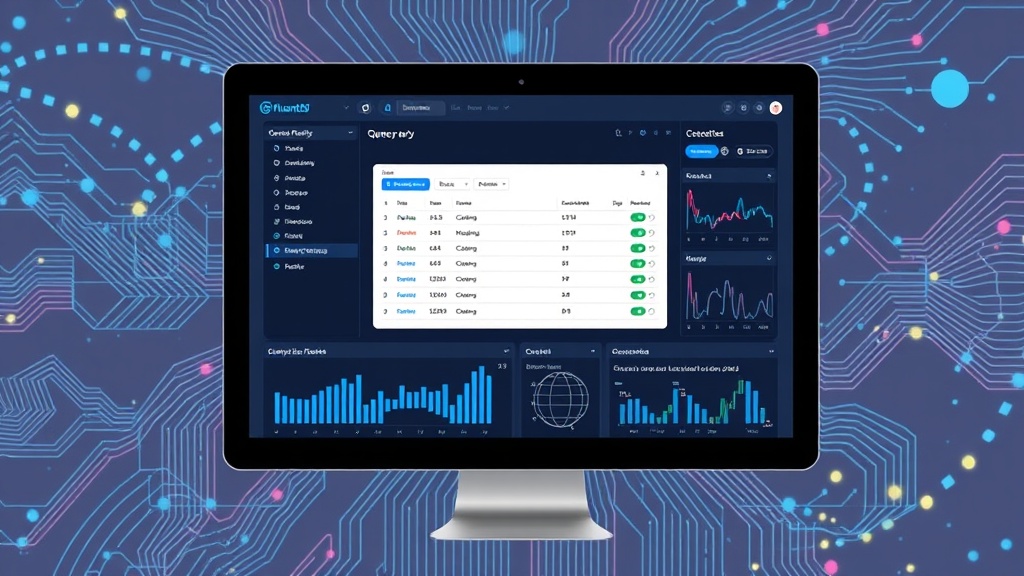
FluentDB offers a suite of features designed to enhance productivity and ease of use. At its heart is the AI query generation engine. Users can input natural language questions, such as "Show me all users who signed up last month and are located in California," and FluentDB will translate this into SQL (or the relevant query language for the connected database). This feature supports a wide range of common database operations, including data retrieval, filtering, sorting, and aggregation.
Beyond query generation, FluentDB provides robust database management capabilities. It supports connections to various popular database systems, including PostgreSQL, MySQL, SQLite, and potentially others through extensible connectors. The client offers a visual interface for browsing database schemas, tables, and data, providing a clear overview of the database structure.
Data visualization is another significant aspect of FluentDB. Once data is queried, the application can generate charts and graphs directly from the results. This allows developers to quickly gain insights from their data without needing to export it to separate visualization tools. The AI can also suggest relevant visualizations based on the data retrieved.
For collaborative environments, FluentDB includes features for saving and sharing queries. Users can store frequently used or complex queries for later use or share them with team members, fostering consistency and knowledge sharing within development teams. The platform also emphasizes security, with features for managing database credentials securely and ensuring that AI interactions adhere to data privacy best practices.
The AI Advantage in Database Management
The integration of AI into a database client represents a significant shift in how developers interact with data. Traditional database tools often require a steep learning curve, demanding proficiency in specific query languages and an understanding of database architecture. FluentDB's AI-driven approach abstracts much of this complexity. Think of it less like a command-line interface and more like a highly intelligent assistant who understands your data goals and can translate them into the precise instructions a database needs.
This is particularly relevant in today's data-rich environments where developers might be managing multiple databases, each with its own nuances. The AI's ability to adapt and generate queries across different systems, based on natural language input, offers a unified and simplified experience. It allows developers to focus more on extracting value from the data and less on the syntactical intricacies of querying.
However, the effectiveness of such an AI client hinges on the quality of its AI model and its understanding of various database contexts. Developers will need to trust that the AI can accurately interpret their requests and generate efficient, correct queries. The potential for misinterpretation, while reduced by advanced AI, remains a factor. Furthermore, the performance of AI-generated queries compared to expertly hand-tuned SQL could be a point of comparison for advanced users.
Implications for Developers and Data Professionals
For developers, FluentDB promises to accelerate workflows. Tasks that previously involved significant time spent writing and debugging SQL queries can now be accomplished much faster. This could lead to quicker development cycles, faster prototyping, and more efficient data analysis. Junior developers may find it an invaluable learning tool, helping them understand database concepts through practical, AI-assisted application.
Data scientists and analysts could also benefit from the improved accessibility to data. The ability to quickly query and visualize data using natural language can facilitate faster hypothesis testing and exploration. While not a replacement for deep statistical analysis tools, it can serve as an excellent front-end for initial data discovery.
The rise of AI-powered tools like FluentDB signals a broader trend in software development: the increasing automation of complex, repetitive, or specialized tasks. As AI models become more sophisticated, we can expect to see similar integrations across other areas of the tech stack, from code generation to infrastructure management. The challenge for companies like FluentDB will be to continuously improve their AI models to handle increasingly complex user requests and diverse data scenarios, while maintaining performance and accuracy.
What nobody has explicitly addressed yet is how FluentDB's AI will handle edge cases or highly specialized database functions not commonly expressed in natural language. Developers accustomed to the granular control of raw SQL might find limitations when attempting to perform very specific, low-level database operations. The success of FluentDB will likely depend on its ability to strike a balance between AI-driven simplicity and the power required by seasoned database professionals.