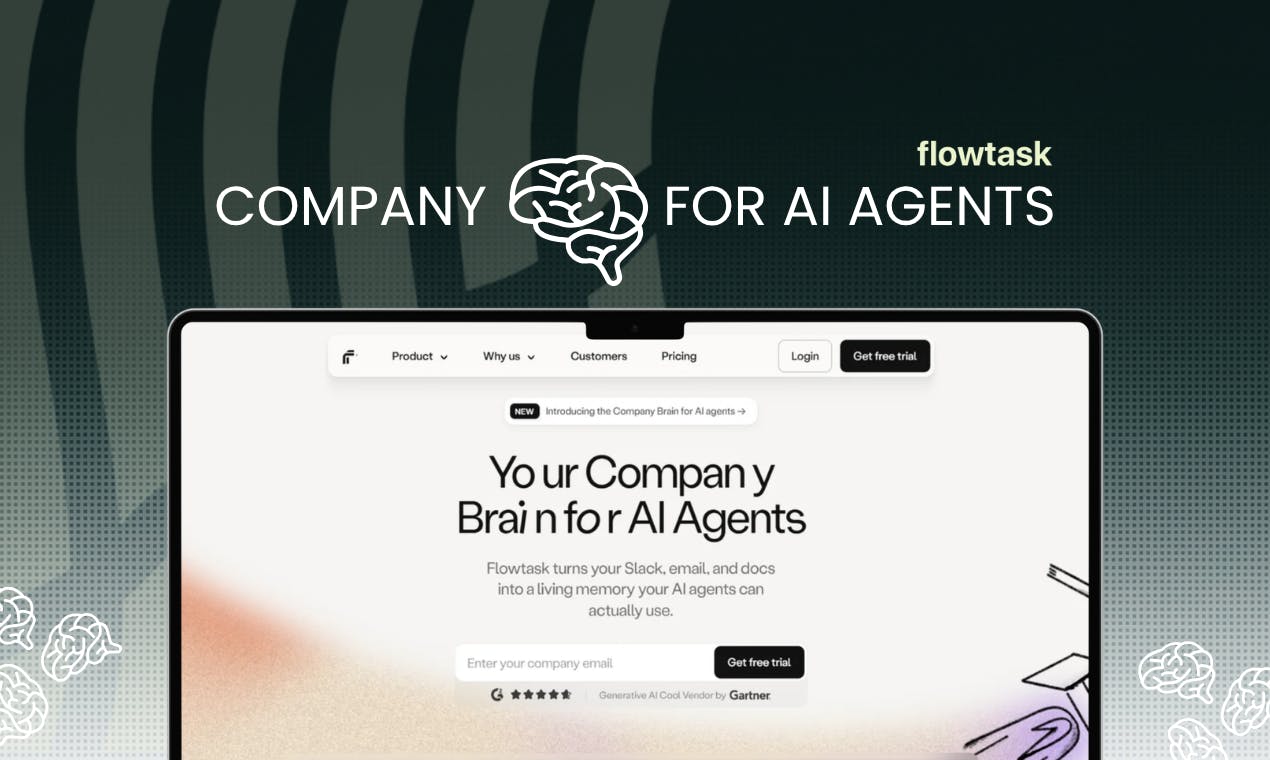
FlowTask 2.0: Orchestrating the AI Agent Ecosystem
The landscape of AI is rapidly evolving, moving beyond simple chatbots to sophisticated autonomous agents capable of complex tasks. FlowTask 2.0 emerges in this dynamic environment with a bold proposition: to serve as the central 'company brain' for these AI agents. This means providing a unified, accessible, and manageable knowledge base and operational framework for multiple, independent AI agents working in concert.
Traditionally, AI agents have operated in silos. Each agent might be trained on specific datasets or designed for particular functions, leading to fragmented knowledge and difficulty in coordinating their efforts. FlowTask 2.0 aims to bridge this gap by creating a persistent, shared memory and a structured environment where agents can access, contribute to, and learn from a common pool of information. This is not merely a database; it's envisioned as an intelligent layer that understands the context and relationships within the data, enabling agents to collaborate more effectively and autonomously.
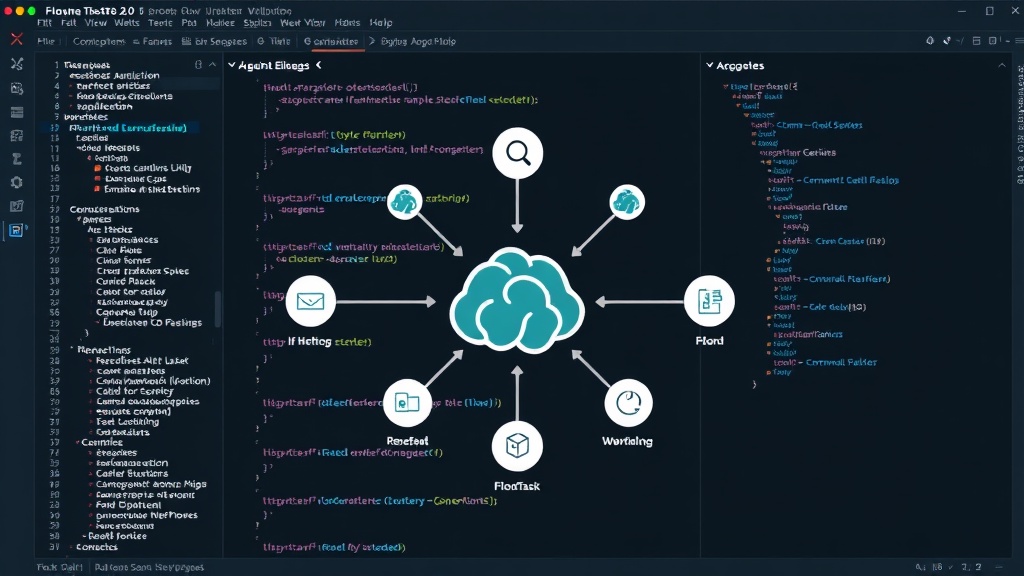
The 'Company Brain' Metaphor Explained
The concept of a 'company brain' is a powerful analogy for understanding FlowTask 2.0's ambition. Think of a large corporation: it has departments, teams, and individuals, each with specialized knowledge and responsibilities. However, the company's overall success relies on a shared understanding of its mission, its resources, its clients, and its history. This collective intelligence, often informal and distributed, allows for coherent strategy and efficient operation. FlowTask 2.0 seeks to replicate this for AI agents.
Instead of each AI agent having its own isolated memory or limited access to external information, FlowTask 2.0 acts as the central repository and manager. When an agent needs information, it queries FlowTask. When an agent generates new insights or data, it contributes it back to FlowTask. This creates a feedback loop that continuously enriches the collective intelligence. The system is designed to handle the complexities of knowledge retrieval, inference, and agent coordination, ensuring that agents do not work at cross-purposes or duplicate efforts. It’s about ensuring that the collective output of multiple agents is greater than the sum of their individual parts.
Key Capabilities and Potential Applications
While specific technical details of FlowTask 2.0 are still emerging, its positioning suggests several key capabilities. Firstly, it likely involves advanced knowledge representation and retrieval mechanisms, allowing agents to access information relevant to their current tasks with high precision. This could involve semantic search, knowledge graphs, or vector databases optimized for agent interaction. Secondly, it implies robust agent management and orchestration features. This would enable users to define workflows, assign tasks to specific agents, monitor their progress, and handle inter-agent communication protocols.
The potential applications for such a system are vast. For businesses, it could mean deploying teams of AI agents to handle customer support, market research, content creation, or operational analysis. Imagine a team of agents collaboratively writing a market report: one agent gathers data from various sources, another analyzes trends, a third drafts the narrative, and a fourth fact-checks and refines the content, all coordinated through FlowTask 2.0. For developers, it offers a framework to build more complex, multi-agent AI systems without having to reinvent the wheel for knowledge sharing and coordination. This could accelerate the development of sophisticated AI applications across numerous industries.
The Challenge of Agent Coordination
The primary challenge FlowTask 2.0 addresses is the inherent difficulty in coordinating multiple autonomous agents. Without a central system, agents can easily fall into a trap of limited perspective, leading to suboptimal decisions or conflicting actions. This is akin to having a team of brilliant specialists who cannot communicate effectively – their individual brilliance is hampered by a lack of shared context. FlowTask 2.0’s role as a 'company brain' is to provide that shared context, ensuring that each agent's actions align with the overall goals and knowledge base.
The success of FlowTask 2.0 will hinge on its ability to abstract away the complexities of agent communication and memory management. Developers and users should be able to interact with the system at a higher level, defining desired outcomes rather than micromanaging individual agent interactions. This requires sophisticated AI itself, capable of understanding intent, managing permissions, resolving conflicts, and ensuring the integrity of the shared knowledge base. The surprising detail here is not the ambition of creating a central brain, but the immediate necessity of such a system as AI agents move from single-task executors to collaborative workforces.
What's Next for AI Agent Infrastructure?
FlowTask 2.0's launch signals a critical step in the maturation of AI agent technology. As agents become more capable and prevalent, the need for robust infrastructure to manage them will only grow. This includes not only frameworks for building individual agents but also platforms for their deployment, monitoring, and, crucially, their coordination. FlowTask 2.0 positions itself at the forefront of this emerging infrastructure layer.
The company's success will depend on building a platform that is both powerful and accessible. Developers need tools that simplify the creation and integration of agents into the FlowTask ecosystem. Businesses need a clear understanding of how these multi-agent systems can deliver tangible value. As AI agents transition from novelties to essential business tools, platforms like FlowTask 2.0 will become indispensable, akin to operating systems for the burgeoning world of autonomous AI.