The Unseen Corruption
Developing a robust storage system requires more than just isolated unit tests. The author of NodeDB-Lite, an embedded database designed for local-first applications, understood this. To validate the integrity of NodeDB-Lite and its underlying encrypted page store, PageDB, a real-world application was employed. This application continuously stressed the storage stack, simulating real-world usage patterns that often uncover edge cases missed by traditional testing methodologies.
The strategy paid off, but not in the way anyone hoped. The storage became corrupted. The first visible symptom was a failure in authenticated-page reads, specifically around a full-text search (FTS) path. A page that should have passed its AEAD authentication check failed. This corruption manifested after the application restarted, indicating a persistent issue rather than a transient glitch.
The problem was insidious. Standard debugging techniques proved insufficient. Reproducing the corruption reliably was the primary hurdle. Without a consistent way to trigger the bug, pinpointing the root cause felt like searching for a needle in a haystack. The application was in active development, and this bug threatened its stability and trustworthiness. Developers are familiar with the frustration of intermittent or un-reproducible bugs; they are the silent killers of productivity and project timelines.
Introducing FaultBox for Debugging
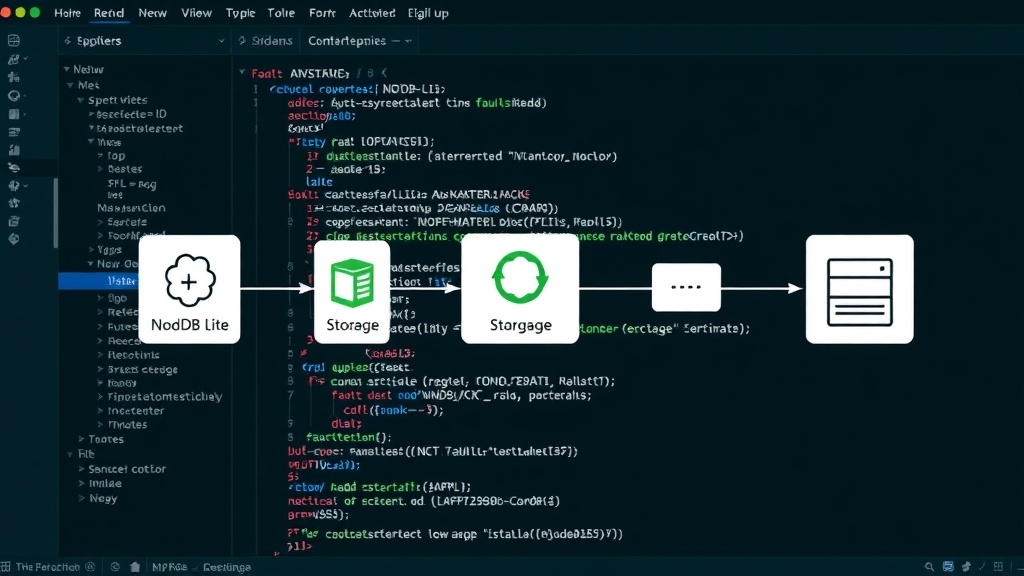
Traditional debugging methods, such as stepping through code with a debugger or relying on log files, were not yielding results. The corruption was subtle and appeared only under specific, hard-to-recreate conditions. This is where specialized tools become invaluable. The author turned to FaultBox, a tool designed to help developers inject faults and observe system behavior under stress.
FaultBox allows for the simulation of various failure conditions, such as network latency, disk I/O errors, or memory corruption. By introducing these controlled failures, developers can observe how their applications respond and identify potential weaknesses. In this case, the goal was not to simulate external faults but to leverage FaultBox's capabilities to monitor and analyze the internal state of the storage system as it operated under the real-world application workload.
The process involved configuring FaultBox to observe the critical components of NodeDB-Lite and PageDB. Instead of actively injecting faults, the tool was used in a passive monitoring and analysis mode. This allowed the author to gain deep visibility into the read and write operations, the authentication checks, and the internal data structures of the storage engine. Think of it less like a debugger that stops execution and more like a hyper-observant forensic analyst who meticulously records every detail of a complex event.
Pinpointing the Root Cause
The breakthrough came when FaultBox's detailed logging and state-tracking capabilities were applied to the moment of corruption. By correlating the application's actions with the internal state of PageDB, the author was able to identify a specific sequence of operations that led to the authentication failure. It turned out that a race condition was at play.
Specifically, a write operation to a page was not being fully flushed to disk before a subsequent read operation on the same page occurred. The read operation, expecting the data to be persistently stored and authenticated, encountered an intermediate, un-flushed state. This state had not yet undergone the final authentication checks that would have been applied to the completed write. The AEAD authentication check failed because the data in memory, in transit, did not match the expected finalized state on disk. The application restart exacerbated the issue by potentially re-ordering operations or exposing a different facet of the race condition.
FaultBox's ability to capture the precise timing and state transitions of these operations was crucial. It provided a granular view of the data flow and internal consistency checks, revealing the subtle timing dependency that had been missed by all other testing and debugging efforts. Without this level of visibility, the bug could have persisted, leading to data integrity issues for users of NodeDB-Lite.
Implications and Resolution
The resolution involved addressing the race condition within PageDB. This likely entailed implementing more robust synchronization mechanisms or ensuring that write operations were atomically completed and verified before being considered final for subsequent reads. For developers using NodeDB-Lite or PageDB, this incident underscores the importance of comprehensive testing, especially for applications that rely on local-first or embedded data stores.
The use of FaultBox highlights its value not just for fault injection but for advanced state analysis and debugging of complex, hard-to-reproduce bugs. Such tools are becoming indispensable as applications grow in complexity and require higher levels of reliability. The ability to peer into the internal workings of a system under stress, even when the stress is self-inflicted by normal application usage, is a powerful debugging paradigm.
This experience serves as a case study for developers facing similar challenges. When standard debugging fails, exploring tools that offer deeper system introspection and controlled observation can be the key to unlocking elusive bugs. The storage corruption bug, once a phantom threat, was brought into the light and resolved thanks to the strategic application of advanced debugging technology.