%22%20%2F%3E%0A%20%20%3C%2Fsvg%3E)
The Allure of the Algorithmic Grind
The promise of passive income, particularly through the lens of social media and AI-generated content, has become a siren song for many. Faceless persona accounts, where a consistent AI-generated character delivers advice or lifestyle content without a human face on screen, are often touted as a low-effort path to online earnings. This narrative suggests a future where algorithms and AI tools handle the heavy lifting, leaving creators to reap the rewards. To test this hypothesis, one individual embarked on a six-week experiment: building and managing a faceless AI persona account from scratch.
The core question driving the experiment was whether these accounts represented true passive income or merely a new iteration of gig work, augmented by AI middleware. The setup was designed for maximum automation and minimal personal involvement: a single, consistent AI character, dispensing generic lifestyle advice through short video clips posted daily. The absence of a human face or the need for personal performance was central to the concept, aiming to lean entirely into the 'algorithmic grind'.
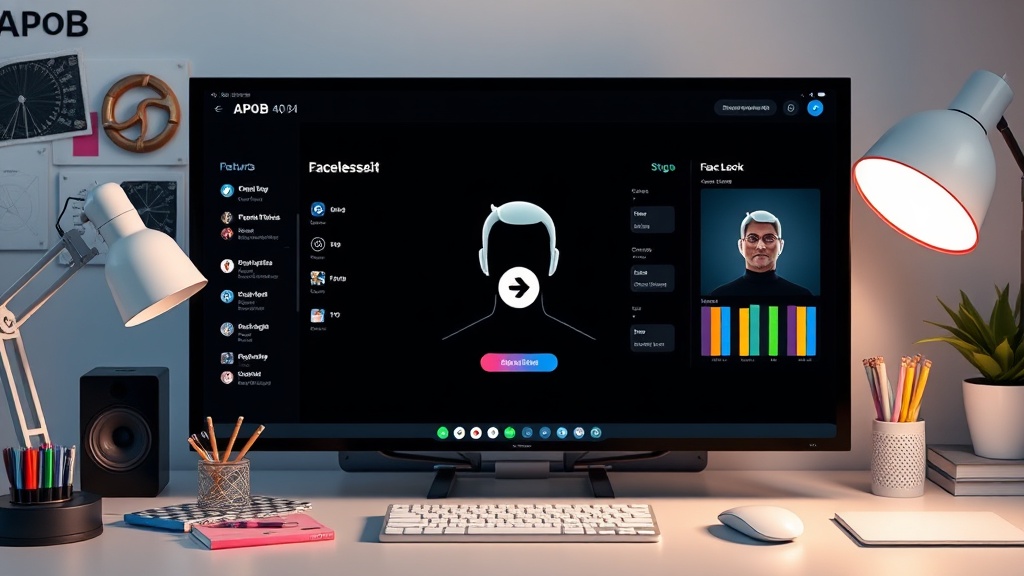
The technical stack for this endeavor was deliberately lean. The persona's face was generated using APOB AI's free tier, leveraging its face-lock feature. This was crucial for maintaining visual consistency across numerous video clips without the hassle of prompt engineering for every iteration. While the free tier imposed watermarks and usage caps, these were deemed acceptable for an experimental phase. For the voiceover, ElevenLabs was chosen, with its free tier offering a monthly allowance of 10,000 characters. Video editing was handled by CapCut. This constituted the entirety of the technological infrastructure.
When the Fantasy Cracks
The initial technical hurdle – ensuring a consistent AI-generated face – proved surprisingly manageable. The face-lock feature of APOB AI delivered on its promise, providing a stable visual identity for the persona. However, this early success was overshadowed by the realities of content generation and platform engagement. The free tier limitations of both APOB AI and ElevenLabs quickly became apparent. The 10,000 characters provided by ElevenLabs' free tier were exhausted rapidly, necessitating either a paid upgrade or a significant reduction in output. This immediately challenged the notion of 'passive' and 'low-cost' operation. Each video required a script, voice generation, and editing, even if the AI handled the avatar and voice synthesis. The time spent on these tasks, though seemingly small per unit, accumulated.
The experiment revealed that the 'passive' aspect was heavily reliant on the tools' free tiers and the creator's willingness to invest time in content assembly. Generating scripts still required human input, even if the topics were generic. While AI could generate the face and voice, the narrative arc, the specific advice, and the overall message still needed a guiding human hand. The daily posting schedule, a common requirement for algorithmic favor on many platforms, meant that even with AI tools, the creator was locked into a consistent production cycle. This is less akin to investing capital and more akin to clocking in for a shift, albeit one where the employee is an AI avatar.
The True Cost of 'Passive'
Six weeks into the experiment, the creator found that the 'view money' – the potential revenue from views and engagement – was far from guaranteed, and the effort involved was substantial. The time invested was not negligible. While the exact hours were tracked, the qualitative experience pointed to a significant time commitment for scripting, editing, and managing the account's presence. The initial assumption of a fully automated content pipeline quickly dissolved. The AI tools, while powerful, were assistants, not replacements for the creator's strategic input and labor.
The experiment highlighted a critical distinction: AI can automate *tasks*, but it does not automate *strategy* or *effort*. To maintain a consistent output and engage with platform algorithms, the creator had to dedicate hours each week. This effort included:
- Scriptwriting: Developing daily content ideas and writing scripts, even for generic advice.
- Voiceover Management: Generating voiceovers, ensuring quality, and sometimes re-generating segments.
- Video Editing: Assembling the AI-generated face, voice, and any background visuals or text overlays in CapCut.
- Platform Upload and Scheduling: Managing the actual posting process across social media platforms.
- Engagement Monitoring: While not explicitly detailed as a major time sink in the excerpt, effective social media management typically involves responding to comments and analyzing performance, which adds to the workload.
The financial aspect also proved elusive. Without a paid tier for the AI tools, the output was limited and watermarked, potentially hindering growth and professional appearance. To scale or even maintain a consistent, high-quality output, a financial investment would be necessary. This investment, coupled with the time commitment, fundamentally reframed the 'passive income' narrative. It suggested that building a successful faceless AI persona account is less about passive income and more about active, albeit AI-assisted, content production. The revenue potential, if any, would need to significantly outweigh both the time and financial costs, a threshold that remained uncertain after the six-week trial.
What No One Is Talking About Yet
What nobody has addressed yet is the sustainability of this model. If these accounts require significant human input for scripting and management, and financial input for premium AI tools, they are effectively just a new form of digital labor. The 'AI middleware' is not a magic bullet for passivity; it's a tool that shifts the nature of the work. The question becomes: at what point does the AI-assisted labor become so efficient that it drives down the value of the content itself, making it even harder to generate meaningful income? Furthermore, as more creators adopt similar AI-driven strategies, the algorithmic landscape will inevitably shift, demanding even more sophisticated content or a higher volume, pushing the boundaries of what can be considered 'passive' even further.
The experiment underscores a crucial point for anyone considering this path: view these AI tools not as an 'income generation machine' but as a set of advanced assistants. They can help overcome specific creative hurdles, like generating consistent visuals or voices, but they do not eliminate the need for human creativity, strategic planning, and consistent effort. The 'view money' might be real, but the path to earning it through faceless AI personas appears to be paved with more work than the marketing suggests.