
Kimi K3's Meteoric Rise: Beyond Distillation
The rapid ascent of Kimi K3, a large language model developed by Chinese AI firm Moonshot AI, has sparked intense debate within the AI research community. While some speculated that the model's impressive performance could be attributed to sophisticated distillation techniques, particularly leveraging Anthropic's Fable dataset, leading experts are pushing back against this simplistic explanation. They argue that achieving Kimi K3's level of capability and speed requires more advanced and novel training methodologies than mere knowledge transfer from a pre-existing dataset.
The core of the discussion revolves around how Kimi K3 achieved its remarkable performance benchmarks in such a short timeframe. Anthropic's Fable, a dataset designed for distilling knowledge from larger models into smaller, more efficient ones, was initially seen as a potential key. However, seasoned AI researchers interviewed by TechCrunch and other industry observers suggest this is unlikely to be the sole or even primary driver of Kimi K3's success. "I don't think you get a model this strong and this quickly on the heels of Fable doing strictly distillation," one expert stated, emphasizing the need for more fundamental advancements in the training process itself.
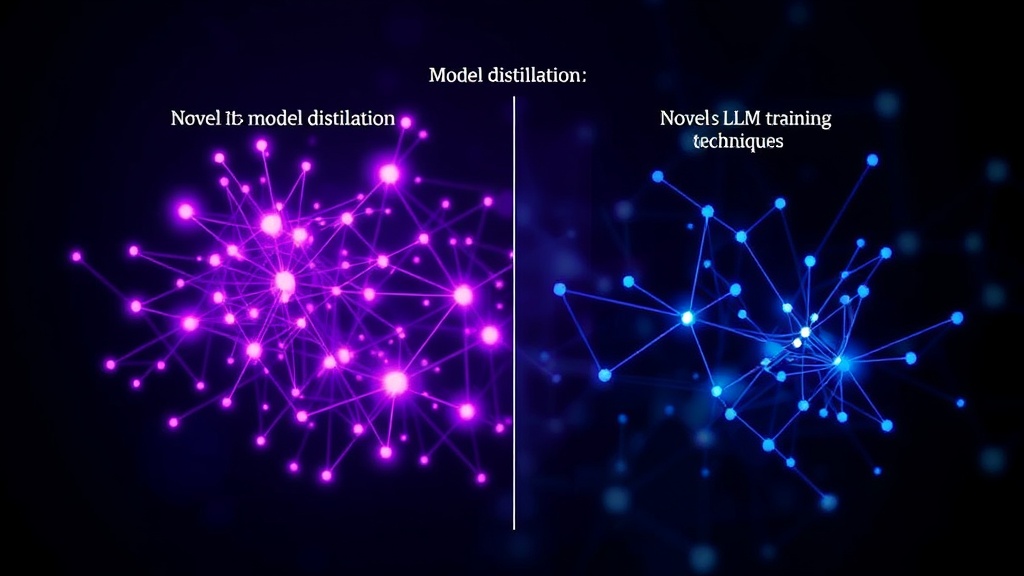
Understanding Model Distillation
Model distillation is a technique where a smaller, more compact model (the student) is trained to mimic the behavior of a larger, more complex model (the teacher). The goal is to transfer the knowledge and performance of the teacher model to the student, resulting in a model that is faster, cheaper to run, and requires less computational power, while retaining much of the original model's capabilities. Datasets like Anthropic's Fable are curated to facilitate this knowledge transfer, often containing carefully selected examples and targeted prompts designed to elicit specific responses from the teacher model, which are then used to train the student.
While distillation can be highly effective for creating more efficient models, it typically involves a trade-off. The student model, by its nature, often cannot surpass the performance ceiling of the teacher. The rapid and significant performance gains observed in Kimi K3 suggest that it may have gone beyond simply learning from a distilled dataset. This implies that Moonshot AI likely employed innovative architectural choices, novel training objectives, or perhaps even curated their own proprietary datasets that go beyond what is available through public or commercially licensed distillation resources.
The Case for Novel Training Paradigms
Experts point to several potential reasons why Kimi K3's performance likely exceeds what could be achieved through Fable distillation alone. Firstly, the sheer speed of Kimi K3's development and its subsequent performance leap suggests a breakthrough in training efficiency or methodology. This could involve advancements in areas like reinforcement learning from human feedback (RLHF), direct preference optimization (DPO), or entirely new unsupervised pre-training strategies that allow the model to learn more complex patterns and reasoning abilities directly from raw data.
Furthermore, the specific domain capabilities that Kimi K3 has demonstrated, particularly in areas like coding and complex reasoning, might necessitate training regimes that are not easily replicated through distillation. These advanced skills often require a deep understanding of underlying principles rather than just surface-level mimicry. It is plausible that Moonshot AI developed proprietary techniques for curriculum learning, where the model is exposed to increasingly complex tasks in a structured manner, or implemented advanced data augmentation strategies to expose the model to a wider and more challenging range of scenarios.
The comparison to other AI developments provides context. While distillation is a valuable tool, the most significant leaps in AI performance have often come from fundamental algorithmic innovations or architectural breakthroughs. For instance, the introduction of the Transformer architecture revolutionized NLP, and subsequent research has built upon that foundation with more efficient attention mechanisms and training strategies. Kimi K3's success could represent a similar step forward in training methodology.
Broader Implications for AI Development
The debate surrounding Kimi K3's training highlights a critical ongoing challenge in AI research: understanding and replicating rapid performance gains. As models become more complex and training datasets grow, it becomes harder to pinpoint the exact factors contributing to their success. This lack of transparency can hinder reproducibility and slow down the overall progress of the field.
If Kimi K3's success is indeed due to novel training paradigms rather than straightforward distillation, it underscores the importance of foundational research and development in AI methodologies. It suggests that companies that invest heavily in exploring new ways to train models, optimize architectures, and curate unique datasets will continue to lead the field. This also raises questions about the future of model distillation: while it will remain a crucial technique for creating efficient models, it may become less of a primary driver for achieving state-of-the-art performance in cutting-edge models.
The situation also brings to mind analogous challenges in other complex technical domains. For example, in software development, extracting complex business logic from monolithic services isn't a simple rewrite; it's about designing a robust "seam" that separates rules from control flow. This architectural decision, when done correctly, allows for greater flexibility and maintainability, regardless of the underlying technology stack. Similarly, achieving breakthroughs in AI may require more than just refining existing techniques; it demands a fundamental rethinking of how models learn and process information.
What remains unanswered is the specific nature of Moonshot AI's proprietary training techniques. Without further disclosure from the company, the AI community will continue to speculate. However, the consensus among experts is clear: Kimi K3's impressive capabilities are likely the result of more sophisticated innovations than a simple application of distillation using existing datasets like Anthropic's Fable. This suggests a future where competitive advantage in AI will hinge on deep research into training methodologies, not just on leveraging existing knowledge bases.