
Decoupling Services with an Event Processor
In modern software architecture, the ability to decouple services is paramount for scalability and maintainability. A common challenge arises when one service completes a critical task, such as user registration, and needs to trigger subsequent actions like sending a confirmation email or updating external systems. Traditionally, this might involve synchronous calls, leading to tight coupling and potential bottlenecks. The Event Processor, as detailed in the "Our System Series," offers a robust solution by providing a controlled mechanism for services to publish events, route them through configurable handlers, and deliver the resulting messages via external channels like email, REST APIs, and messengers.
Consider the signup process. After a service creates user and profile records, and another service encrypts sensitive data, the final step is notifying the user. This notification is precisely where the Event Processor shines. It abstracts the notification logic away from the core service responsible for user creation, preventing the registration process from being bogged down by synchronous email delivery or other external communication delays. This architectural pattern ensures that the primary service can complete its core function quickly, returning control to the user or initiating the next step in a business workflow without waiting for downstream operations to finish.
The Core Functionality of an Event Processor
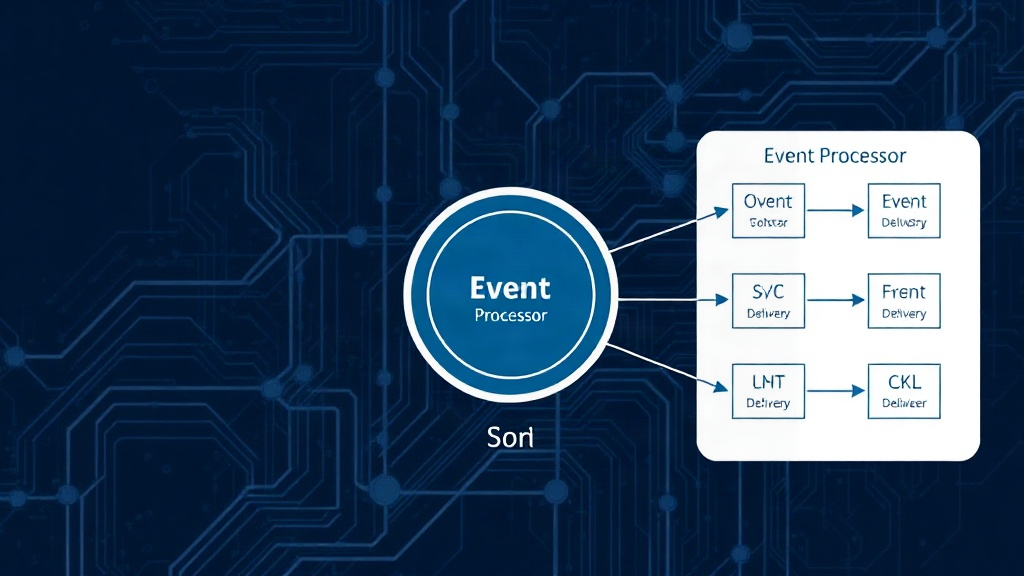
At its heart, the Event Processor acts as an intermediary. Services that generate significant business events can publish these events to the processor. These events are not just raw data; they represent a state change or an action that has occurred within the system. For example, a "UserRegistered" event could be published by the signup service.
Once published, these events are routed through a series of configurable handlers. This routing is key to the processor's flexibility. Instead of a single, monolithic handler for every event, the system allows for multiple handlers to be associated with a single event type, or for a single handler to process multiple event types. This configurability means that the system's behavior can be adjusted without altering the core services that publish the events. For instance, a "UserRegistered" event might trigger handlers for sending a welcome email, adding the user to a marketing list, and creating an initial entry in a CRM system.
The final stage involves delivering the processed messages through external channels. This could mean sending an email via an SMTP service, making a POST request to an external REST API to update a partner system, or sending a message to a messaging platform like Slack or Microsoft Teams. The Event Processor abstracts away the complexities of these external integrations, providing a unified interface for message delivery.
Benefits of an Event-Driven Approach
The primary advantage of using an Event Processor is the decoupling it enforces. Services no longer need to know the specifics of how subsequent actions are performed. The signup service, for example, only needs to know that it should publish a "UserRegistered" event. It doesn't need to manage the intricacies of email sending, API integrations, or messenger notifications. This separation of concerns leads to several benefits:
- Improved Scalability: Each component (event publishing, event handling, message delivery) can be scaled independently. If email delivery becomes a bottleneck, only the email delivery mechanism needs scaling, not the entire signup service.
- Enhanced Resilience: If an external API is temporarily unavailable, the Event Processor can queue messages and retry delivery. The originating service remains unaffected and can continue processing new events. This prevents cascading failures.
- Increased Agility: New functionalities or integrations can be added by simply configuring new handlers or external channels. For instance, if the company decides to integrate with a new analytics platform, a new handler can be added to process existing events without touching the services that generate them.
- Simplified Service Logic: Core services can focus on their primary responsibilities, leading to cleaner, more manageable codebases. Complex business logic that involves multiple external interactions is moved to the Event Processor's handlers.
Potential Challenges and Considerations
While powerful, an Event Processor architecture is not without its complexities. Developers must carefully consider the potential for message ordering issues, especially if event order is critical for certain business processes. Implementing idempotency in handlers is also crucial to prevent duplicate actions if an event is processed more than once due to retries.
Monitoring and tracing become more critical in an event-driven system. Understanding the flow of an event from its publication to its final delivery requires robust logging and tracing mechanisms across multiple services and the Event Processor itself. The configuration of handlers and routing rules also needs to be managed effectively, potentially through a dedicated configuration service or a well-defined deployment process.
The surprising detail here is not the existence of an event processor, but its comprehensive application across a system. Many systems implement basic eventing for notifications, but a fully realized Event Processor that handles complex routing and diverse external delivery mechanisms represents a mature approach to building scalable and resilient business applications. It transforms event processing from a simple notification mechanism into a core architectural component for managing complex business workflows.
The Future of Event Processing
As systems grow in complexity and the demand for real-time interactions increases, the role of sophisticated Event Processors will only become more critical. The ability to orchestrate actions across disparate services and external systems in a controlled, scalable, and resilient manner is fundamental to modern digital businesses. The pattern described offers a clear path for developers and architects looking to build systems that can adapt to changing business needs without requiring constant, disruptive rewrites of core service logic.