A Critical Juncture for European Innovation
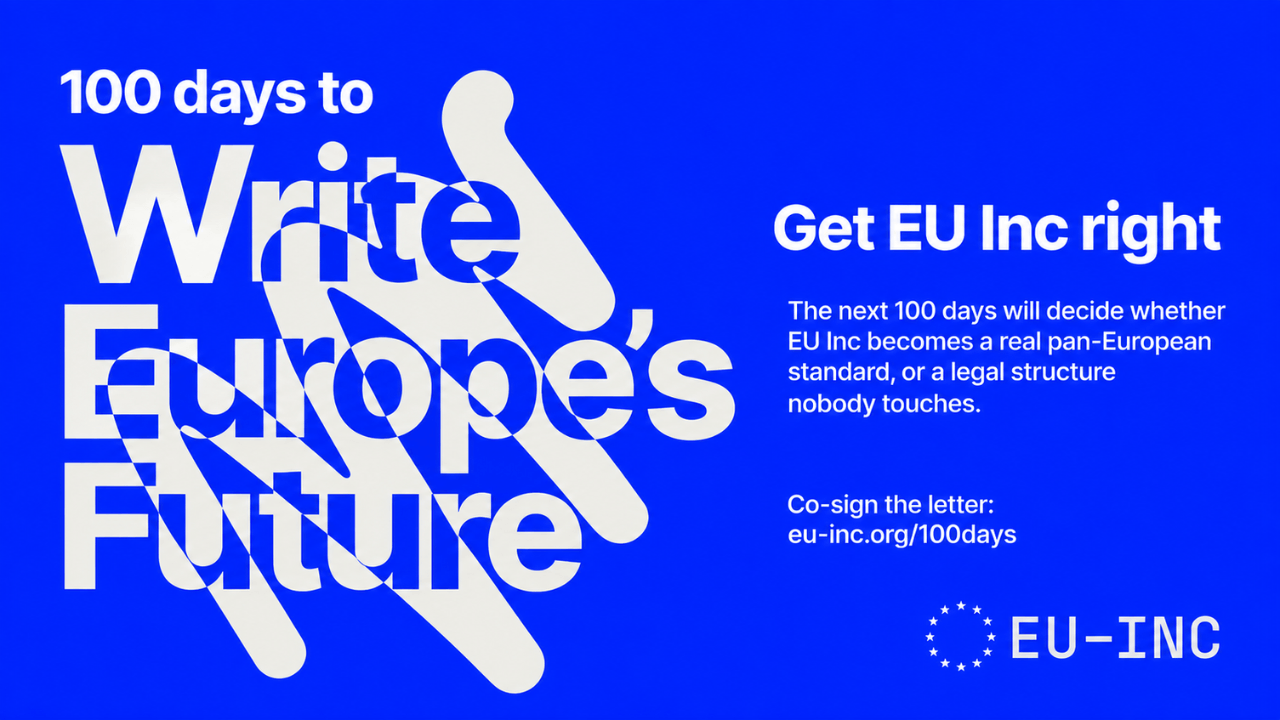
Europe's burgeoning tech ecosystem faces a pivotal moment. In a stark warning, a coalition of prominent startup founders and investors has issued a 100-day deadline to EU lawmakers, urging the swift and robust passage of the proposed European Company Statute, colloquially known as 'EU Inc'. The core concern is that the proposed legislation, designed to create a unified legal framework for businesses operating across the European Union, may be diluted or significantly altered before its enactment, thereby undermining its intended purpose and potentially stifling innovation.
The letter, released today, highlights the urgency of the situation. The founders and investors argue that a watered-down version of EU Inc would fail to achieve its primary objective: simplifying cross-border operations and making it easier for European companies to scale within the single market. They fear that national interests and bureaucratic inertia could lead to amendments that negate the benefits of a common statute, leaving businesses entangled in a patchwork of differing national regulations.
The proposed EU Inc statute aims to provide a single, common legal framework for companies to incorporate and operate within the EU. This would streamline processes, reduce administrative burdens, and facilitate easier access to capital and talent across member states. For a continent striving to compete on the global tech stage, such a reform is seen as essential for fostering growth and preventing a brain drain of talent and investment to more business-friendly jurisdictions like the United States and parts of Asia.
The Promise of a Unified European Company Framework
The current landscape for European startups is fragmented. Incorporating a company in one EU member state and then expanding to others often involves navigating complex and divergent legal and administrative systems. This complexity acts as a significant barrier to growth, increasing costs and slowing down expansion timelines. EU Inc is envisioned as a solution, offering a single set of rules that would apply uniformly across participating member states.
Think of it less like a complicated international tax treaty and more like a universal adapter for business operations within the EU. Instead of needing a different plug for each country, EU Inc aims to provide a single, standardized socket that simplifies connectivity and power delivery for businesses. This would allow startups to focus on innovation and scaling, rather than on deciphering the legal intricacies of each national jurisdiction.
Key benefits anticipated from the statute include:
- Simplified Cross-Border Operations: Businesses could operate and expand seamlessly across EU borders without needing to re-incorporate or comply with a multitude of different national laws.
- Enhanced Access to Capital: A unified framework is expected to make European companies more attractive to investors, both domestic and international, by offering greater legal certainty and predictability.
- Reduced Administrative Burden: The statute aims to cut down on red tape and the associated costs of complying with diverse national regulations, freeing up resources for R&D and growth.
- Attracting and Retaining Talent: By creating a more competitive and streamlined business environment, the EU hopes to encourage entrepreneurs and skilled workers to remain and thrive within the Union.

The Stakes: Why 100 Days Matter
The urgency conveyed by the tech leaders stems from the legislative process itself. Proposals within the EU often undergo extensive debate, negotiation, and amendment, which can lead to significant watering down of original intent. The 100-day period is a critical window during which the statute is likely to face its most significant challenges and potential modifications. The signatories of the letter are concerned that vested interests or a lack of understanding of the tech sector's needs could lead to compromises that render the law ineffective.
What remains unaddressed by the current discourse is the precise nature of the compromises being considered. While the general warning against dilution is clear, the specific clauses or provisions that are most at risk of being weakened are not publicly detailed, leaving room for speculation and anxiety within the startup community. This ambiguity could allow harmful amendments to slip through unnoticed.
The founders and investors are not just passively observing; they are actively lobbying for the statute to be enacted in its strongest possible form. Their involvement signals a recognition that the digital economy requires a modern, agile legal framework, and that Europe's ability to foster its own tech giants hinges on creating an environment that supports rapid scaling and international competitiveness. The success of EU Inc is, in their view, directly tied to Europe's ability to retain its technological sovereignty and economic dynamism.
The Path Forward: A Call for Decisive Action
The message from Europe's tech leaders is unequivocal: the time for deliberation is nearing its end, and the time for decisive action is now. They are calling on EU policymakers to prioritize the long-term vision of a unified, innovative Europe over short-term nationalistic concerns or bureaucratic convenience. The passage of a robust EU Inc statute is not merely a regulatory update; it is presented as a foundational element for Europe's future economic prosperity and its standing in the global digital landscape.
If the proposed statute is significantly weakened, the consequences could be far-reaching. European startups may continue to face hurdles in scaling, potentially leading to more companies being acquired by foreign entities or relocating their headquarters. This would represent a missed opportunity for the EU to cultivate its own globally competitive technology champions.
The next 100 days will be crucial. The commitment of EU lawmakers to enacting EU Inc in its most effective form will be a significant test of their dedication to fostering a thriving, innovative European economy. The tech community is watching, and the future of 'EU Inc' hangs in the balance.