ZuriQ Targets Scalability in Quantum Chip Design
ZuriQ, a new venture spun out of ETH Zurich, has secured a substantial $25.5 million seed funding round. The capital injection is earmarked for developing a novel architecture for quantum chips, which the company asserts is significantly more scalable than existing approaches. This move signals a fresh attempt to address the complex fabrication challenges that have long hindered the widespread adoption of quantum computing.
The funding round was co-led by Highland Europe and Lightspeed Venture Partners, with participation from existing investor 42Grow. This significant seed investment underscores the confidence investors have in ZuriQ's potential to disrupt the quantum computing landscape. The company's core innovation lies in its approach to quantum chip architecture, aiming to simplify manufacturing processes and enable higher qubit densities. This is crucial for building fault-tolerant quantum computers capable of tackling real-world problems.
ZuriQ's strategy focuses on a new design that simplifies the fabrication process, a persistent bottleneck in quantum chip development. Current methods often struggle with yield and consistency, making it difficult to produce reliable, large-scale quantum processors. By rethinking the fundamental architecture, ZuriQ aims to make quantum chip manufacturing more akin to established semiconductor processes, which could dramatically accelerate progress.
The quantum computing field is characterized by intense competition, with established players like Google, IBM, and Quantinuum, as well as numerous startups, vying for dominance. Many of these companies are pursuing different architectural paths, from superconducting qubits to trapped ions and photonic systems. ZuriQ's focus on a scalable architecture positions it to potentially offer a more pragmatic route to larger, more powerful quantum systems.
"We are at the cusp of a new era in quantum computing, and ZuriQ is poised to play a pivotal role in making it a reality," said Dr. Firas Faraji, co-founder and CEO of ZuriQ. "Our architecture is designed to overcome the inherent limitations of current quantum chip designs, paving the way for truly scalable and fault-tolerant quantum computers. This funding will enable us to accelerate our R&D efforts and bring our technology to market faster."

Rethinking Qubit Density and Fabrication
Traditional quantum chip designs often involve intricate wiring and complex cryogenic setups, limiting the number of qubits that can be practically integrated onto a single chip. ZuriQ's approach, while not fully detailed publicly, is understood to simplify these complexities. The goal is to achieve a much higher qubit density, meaning more qubits can be packed into a smaller area, which is essential for building more powerful quantum machines.
The company's strategy contrasts with some existing approaches that focus on increasing qubit coherence times or improving error correction codes. While these are critical areas, ZuriQ's emphasis on a scalable fabrication process suggests a belief that the physical limitations of chip manufacturing are the primary barrier to overcome. This perspective is informed by the deep expertise within the ETH Zurich research community, a renowned hub for quantum physics and engineering.
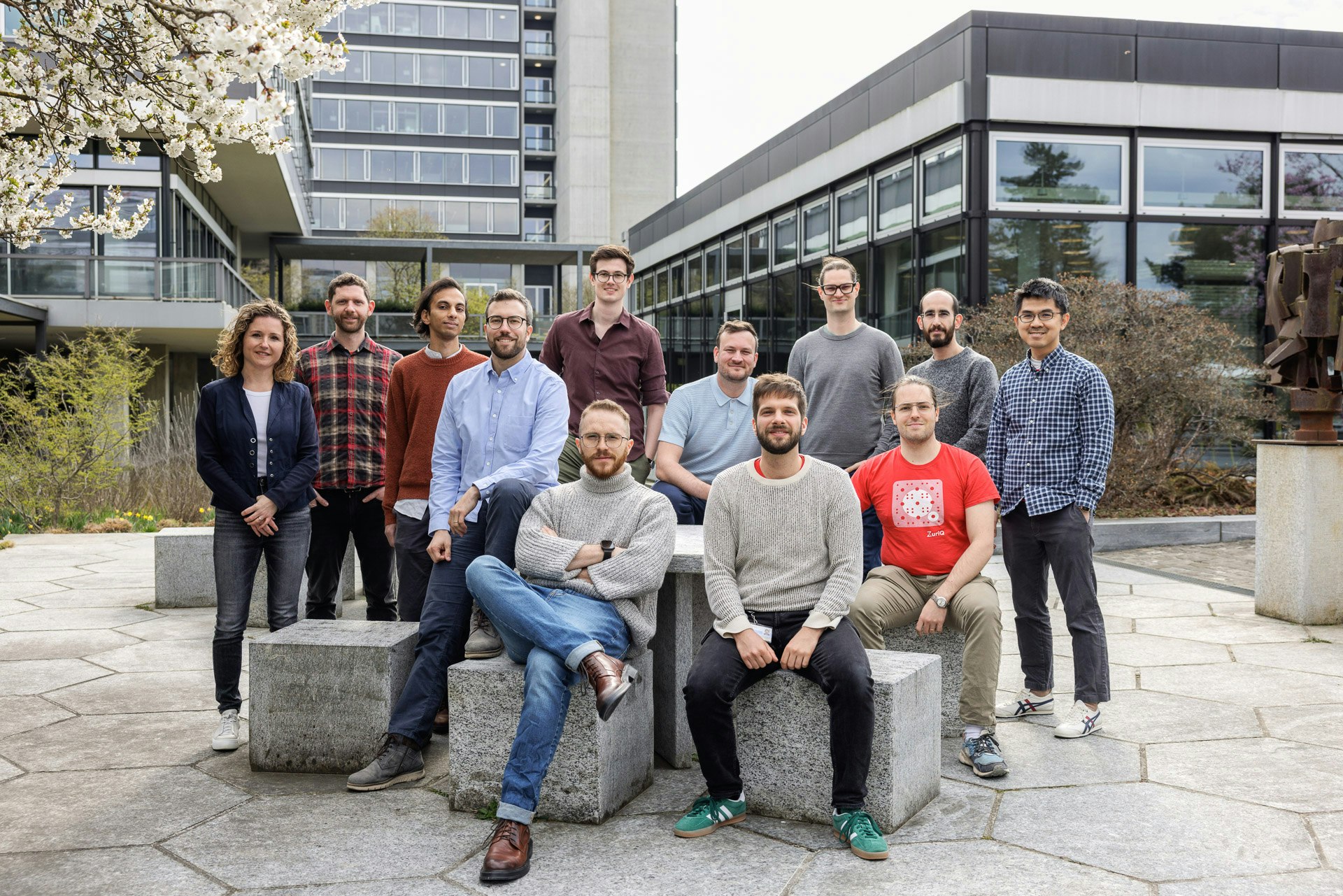
ZuriQ's founders, including Dr. Faraji and Dr. Jianxin Chen, bring a wealth of academic and practical experience in quantum information science and engineering. Their work at ETH Zurich laid the foundation for the company's innovative architecture. The venture aims to bridge the gap between theoretical quantum computing advancements and practical, manufacturable hardware.
The quantum computing market is still nascent, but projections indicate substantial growth in the coming decade. Companies are exploring quantum computing for applications in drug discovery, materials science, financial modeling, and complex optimization problems. However, the path to realizing these applications is heavily dependent on the availability of robust, scalable quantum hardware. ZuriQ's seed funding positions it to contribute significantly to this hardware development.
The Competitive Landscape and ZuriQ's Niche
The quantum computing hardware space is crowded. Startups like QuEra Computing and Pasqal are developing neutral-atom quantum computers, while others are focused on superconducting qubits or trapped ions. ZuriQ's approach appears to be carving out a niche by focusing on a manufacturing-friendly architecture. This could be a critical differentiator in a field where scaling has been a persistent challenge.
Existing AI-focused quantum computing companies, such as Zapata AI and QunaSys, are also active in the ecosystem, developing software and algorithms. However, ZuriQ's focus on the foundational hardware layer suggests a complementary role, aiming to provide the underlying computing power that these software companies will eventually leverage. The $25.5 million seed round is substantial for a company at this stage, reflecting the high stakes and potential rewards in the quantum computing race.
The company's technical roadmap includes scaling up to millions of qubits, a target that current architectures find extremely difficult to approach. ZuriQ's proposed solution aims to make this leap more feasible. "Our architecture is designed from the ground up for scalability," stated Dr. Chen. "We believe this is the most promising path to unlocking the full potential of quantum computing."
This funding will be critical for ZuriQ to move from its current research phase to developing and testing functional prototypes. The company faces the arduous task of translating complex theoretical designs into reliable, manufacturable hardware. However, with strong backing from prominent VCs and the foundational research from ETH Zurich, ZuriQ is well-positioned to make a significant impact on the future of quantum computing.
The journey for ZuriQ is just beginning, but their ambitious goal of creating a more scalable quantum chip architecture, backed by significant seed funding, marks them as a company to watch in the rapidly evolving quantum technology sector.