%22%20%2F%3E%0A%20%20%3C%2Fsvg%3E)
Project Overview
A recent project showcased on Hacker News details the creation of a compact, desk-friendly plane radar system built around an ESP32 microcontroller. This DIY endeavor leverages readily available hardware and open-source software to provide a visual representation of nearby aircraft in real-time. The system is designed for hobbyists and electronics enthusiasts looking to explore radio frequency detection and data visualization in a tangible, engaging way.
The core of the project lies in its ability to intercept and decode signals from aircraft transponders, specifically ADS-B (Automatic Dependent Surveillance–Broadcast) signals. These signals contain critical information about an aircraft, including its identity, altitude, speed, and position. By capturing and processing these signals, the ESP32-based radar can effectively track planes within a certain range, offering a unique and educational glimpse into air traffic control technology.
Hardware and Software Components
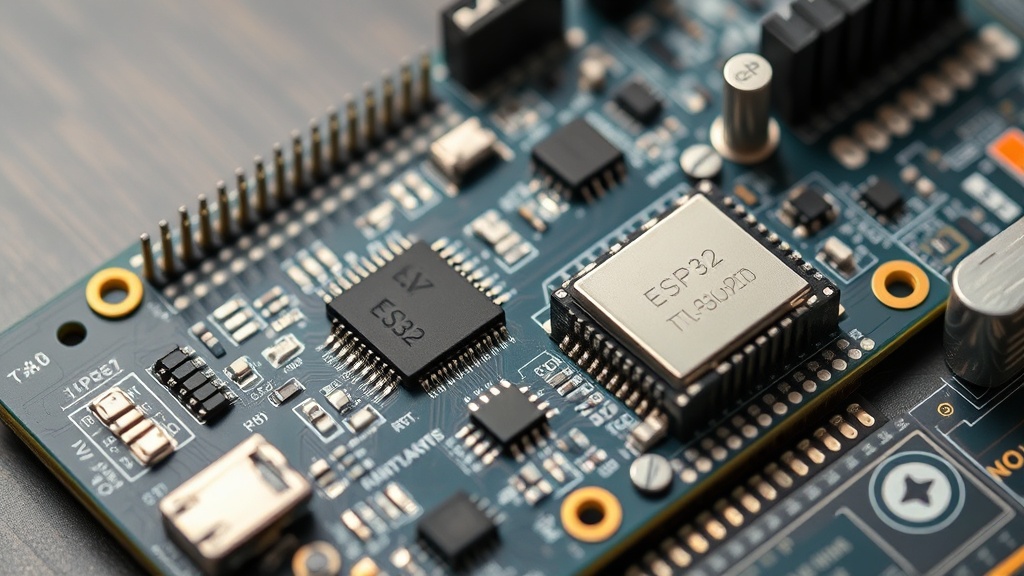
The project utilizes a common ESP32 development board, known for its integrated Wi-Fi and Bluetooth capabilities, making it suitable for both data processing and potential network connectivity. A critical component is the radio receiver module, often an RTL-SDR (Realtek Software Defined Radio) dongle, which is sensitive enough to pick up the 1090 MHz ADS-B signals. The ESP32, in conjunction with the RTL-SDR, acts as the primary data acquisition unit.
Software-wise, the system relies on custom firmware flashed onto the ESP32. This firmware is responsible for configuring the radio receiver, decoding the incoming ADS-B messages, and then processing this data. Libraries and frameworks for the ESP32 are essential here, enabling efficient handling of radio signals and data parsing. The output data, containing aircraft positions and other flight information, is then typically transmitted wirelessly, often via Wi-Fi, to a connected display or another processing unit.
Data Acquisition and Processing
The 1090 MHz ADS-B signal is a pulsed signal. The RTL-SDR dongle captures this raw radio frequency data, which is then fed to the ESP32. The ESP32’s firmware decodes these pulses into meaningful data packets. Each packet contains crucial flight information. The protocol for ADS-B is well-documented, allowing for accurate extraction of data like Mode S messages, which include aircraft identification (ICAO 24-bit address), velocity, and position. This is analogous to tuning into a specific radio station, but instead of music, you’re receiving digital flight data.
The processing on the ESP32 involves filtering out noise, identifying valid ADS-B messages, and extracting key fields. For position tracking, the system relies on the GPS data embedded within some ADS-B messages, or it can triangulate positions if it receives signals from multiple ground stations (though this specific desk project likely focuses on single-station reception). The ESP32 then aggregates this information, creating a dynamic list of aircraft currently within the reception range of the SDR.
Display and User Interface
The processed flight data needs a presentation layer. In this desk radar project, the data is typically sent to a connected device running a display application. This could be a laptop, a tablet, or even a dedicated small screen like an LCD or e-paper display controlled by another microcontroller. The display application visualizes the aircraft as points on a map or a radar-like interface, showing their current positions, altitudes, and sometimes their direction of travel.
The Hacker News discussion highlighted various display methods. Some users opted for web-based interfaces, where the ESP32 hosts a small web server and streams data to a browser. Others might use dedicated desktop applications or even connect to services like FlightAware or FlightRadar24 to overlay their local data onto a global map. The goal is to provide an intuitive, at-a-glance view of the local airspace, turning raw radio signals into actionable visual information.
Potential Enhancements and Applications
While the core project focuses on a desk display, the underlying technology has broader implications. Future enhancements could include integrating a GPS module directly into the ESP32 setup for more accurate self-positioning, improving antenna design for extended range, or even building a multi-station network for more comprehensive tracking. Adding alerts for specific aircraft types or proximity warnings could also enhance its utility.
For hobbyists, this project serves as an excellent introduction to SDR, embedded systems, and real-time data processing. It bridges the gap between theoretical concepts in radio communication and practical, observable results. The ability to see planes overhead not just with your eyes, but with a dedicated electronic system, offers a unique educational experience. It’s a tangible way to interact with the invisible world of radio waves that govern so much of modern air travel.
The surprising detail here is not the complexity of the hardware, which is relatively modest, but the ability of a low-cost ESP32 to handle the real-time signal processing and data transmission required for a functional radar display. This democratizes access to technology that was once the domain of specialized, expensive equipment.