The End of the 'Simple' Stack
The era of the "simple stack"—where a single LLM API call, a vector database, and a frontend framework constituted a complete AI product—is over. By 2026, the enterprise AI landscape has fractured into a complex, multi-layered architecture driven by the necessity of agent reliability, the economic collapse of subsidized cloud tiers, and the computational intensity of on-premise inference. For software engineers and systems architects, the challenge is no longer just building AI features; it is building resilient, cost-aware, and deterministic systems atop non-deterministic foundations.
This is not a story about a single tool, but a structural shift in how we engineer software. The abstraction layers that once hid the complexity of GPUs and token economics are now exposed, forcing engineers to confront the underlying realities of AI deployment. The days of treating AI as a black box, accessible via a simple API, are rapidly fading. Instead, we are entering an era where understanding the nuances of model inference, agent orchestration, and cost management is paramount for successful enterprise AI implementation.
The Unfolding Crisis: Agent Reliability and Inference Demands
Agent reliability is at the forefront of this shift. Unlike traditional software, AI agents, especially those powered by LLMs, are inherently non-deterministic. Their outputs can vary, their reasoning processes can be opaque, and their susceptibility to prompt injection or hallucination introduces significant risks for enterprise applications. Building systems that can consistently depend on agent behavior requires sophisticated error handling, state management, and validation layers that go far beyond standard software engineering practices.
Consider the challenge of building an autonomous customer service agent. While a simple chatbot might handle basic FAQs, an agent designed to resolve complex issues, process returns, or even upsell products needs to maintain context across multiple turns, access and interpret disparate data sources, and execute actions in a predictable manner. This necessitates a robust orchestration layer that can manage agent workflows, detect failures, and implement fallback mechanisms. It’s akin to building a complex industrial robot that not only performs its task but also self-diagnoses, reports errors, and can be remotely reset—all while operating on a system that can sometimes misunderstand its own instructions.
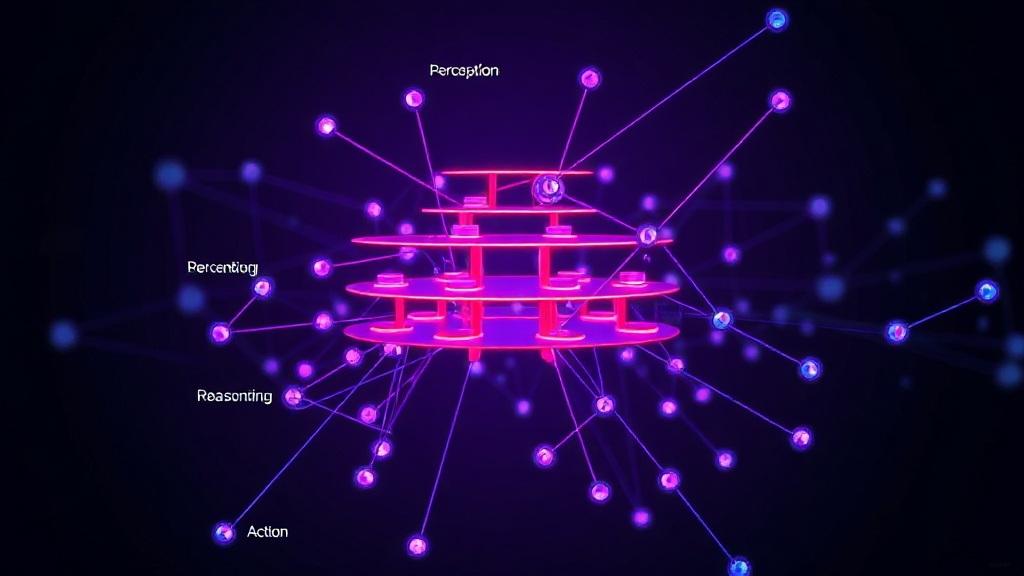
The computational demands of enterprise AI inference are also escalating. As models grow larger and more sophisticated, the cost and complexity of running them efficiently increase dramatically. While cloud providers have historically offered generous free tiers and competitive pricing, the economics are shifting. The sheer volume of inference requests, coupled with the specialized hardware required (GPUs, TPUs), means that these services are no longer sustainable as a loss leader for many companies. This economic pressure is forcing a re-evaluation of where and how AI models are deployed.
The Collapse of Free Cloud Tiers and the Rise of Cost-Aware Engineering
The altruistic phase of cloud-based AI services, characterized by heavily subsidized or free tiers, is drawing to a close. As the demand for AI compute power surges and the underlying infrastructure costs become more transparent, providers are recalibrating their pricing models. This means that the cost-per-token, cost-per-inference, and cost-per-GPU-hour are no longer negligible line items in an engineering budget. For startups and even established enterprises, relying on perpetually free or cheap cloud AI services is becoming a precarious strategy.
This economic reality forces a new discipline: cost-aware engineering. Developers and architects must now actively consider the financial implications of their AI design choices. This includes optimizing model size and complexity, exploring techniques like model quantization and pruning, and strategically deciding between cloud-hosted APIs, managed inference services, or even self-hosted on-premise solutions. The decision to use a large, general-purpose LLM for every task might be replaced by a more nuanced approach, employing smaller, specialized models for specific functions, or a hybrid strategy that leverages both.
Furthermore, the concept of a "simple stack" often implied a single point of interaction with an AI service. As costs rise and reliability becomes critical, enterprises are likely to diversify their AI infrastructure. This could involve using multiple LLM providers for different tasks, integrating specialized AI hardware, and developing internal tools for monitoring and managing inference costs. The architectural complexity will inevitably increase, mirroring the evolution seen in other areas of cloud computing where specialized services and multi-cloud strategies became the norm.
Navigating the New Landscape: Strategies for 2026
The transition to this more complex AI engineering paradigm requires a proactive approach. Software engineers and systems architects must equip themselves with new skills and adopt new strategies:
- Embrace Observability and Monitoring: Implement robust logging, tracing, and monitoring for AI agent behavior and inference performance. Understand not just that a request was made, but how the agent reasoned, what data it accessed, and why it produced a particular output.
- Develop Agent Orchestration Frameworks: Build or adopt frameworks that manage complex agent workflows, handle state, manage context, and implement deterministic fallback mechanisms for non-deterministic agent actions.
- Master Inference Optimization: Dive deep into techniques for optimizing model inference, including quantization, pruning, knowledge distillation, and efficient hardware utilization. Understand the trade-offs between model accuracy, latency, and computational cost.
- Strategic Cloud vs. On-Premise Decisions: Evaluate the total cost of ownership for AI inference. For high-volume, predictable workloads, on-premise or dedicated cloud inference solutions might become more cost-effective than relying solely on external APIs.
- Cost Management and Budgeting: Integrate cost tracking and budgeting directly into the AI development lifecycle. Treat AI compute costs with the same seriousness as other infrastructure expenses.
The shift from a "simple stack" to a complex, multi-layered AI architecture is not merely an evolution; it is a fundamental change in how software is engineered for the enterprise. By 2026, success will depend on mastering agent reliability, understanding inference economics, and building resilient systems that can navigate the inherent non-determinism of artificial intelligence. This demands a new breed of engineers—those who can bridge the gap between cutting-edge AI capabilities and the pragmatic demands of enterprise deployment.