A New Era of Prosthetic Feedback
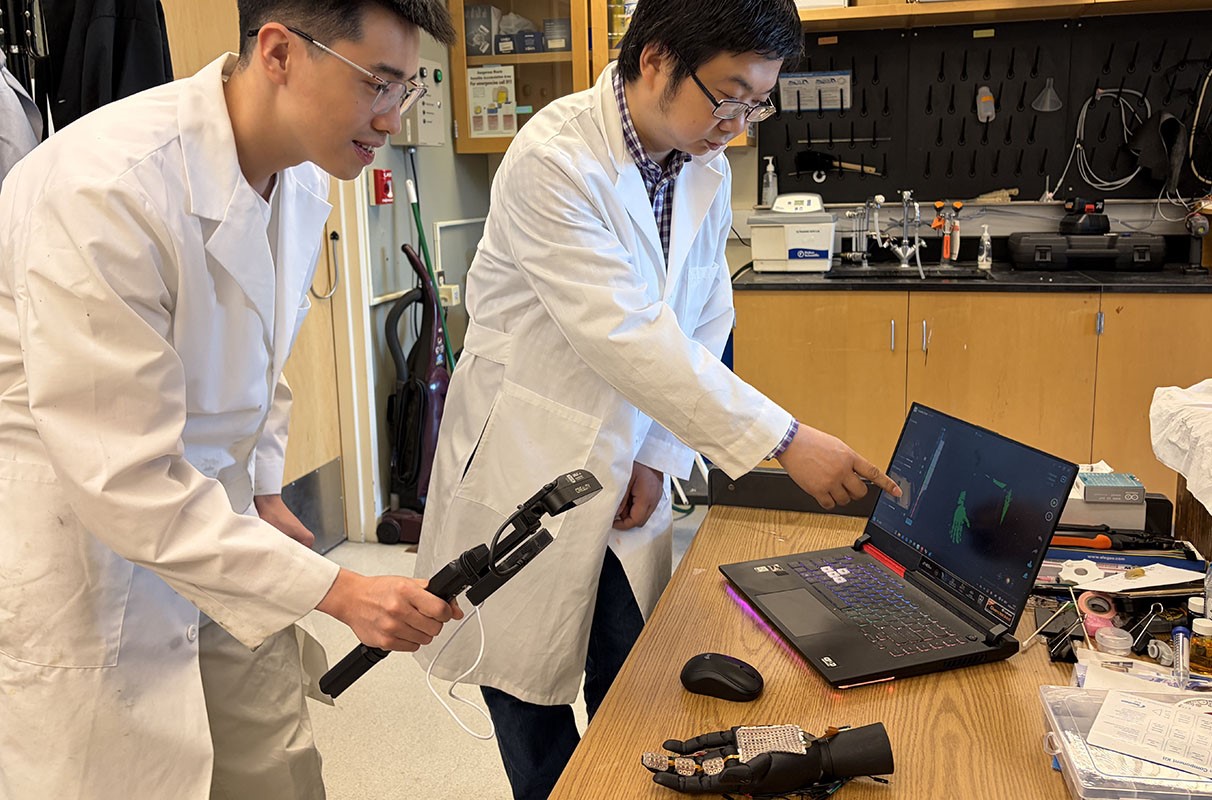
Researchers at Washington State University (WSU) have developed a novel electronic skin capable of sensing both temperature and pressure, a significant leap forward for prosthetic limbs. This innovation promises to restore a crucial sense of touch for amputees, moving beyond simple movement to a more intuitive and integrated user experience. The flexible, stretchable material integrates seamlessly with existing prosthetic designs, offering a pathway to more sophisticated and lifelike artificial limbs.
The core of this advancement lies in the material science and engineering behind the e-skin. Unlike rigid sensors, this new material is designed to conform to the contours of a prosthetic, much like human skin. This adaptability is key to accurately capturing the nuances of touch, which involve varied pressure points and thermal gradients across a surface. Dr. Bhaskar Mitra, a lead researcher on the project, highlighted the importance of this tactile feedback, stating that it could dramatically improve the dexterity and confidence of prosthetic users.
The development addresses a long-standing challenge in prosthetics: the lack of sensory feedback. For decades, prosthetic limbs have primarily focused on restoring motor function. While impressive, this often leaves users feeling disconnected from their artificial limbs, unable to gauge the force they are applying or the texture of objects they are holding. This can lead to fumbled items, excessive force, or a general lack of confidence in using the prosthetic for everyday tasks. The WSU e-skin aims to bridge this gap, providing a richer sensory experience that better mimics the natural interaction between a human hand and the environment.
The technology utilizes a network of embedded sensors that are both highly sensitive and durable. These sensors are fabricated using advanced nanomaterials and flexible substrates, allowing the skin to withstand the stresses of daily use. The pressure sensors are designed to register a wide range of forces, from a gentle brush to a firm grip, while the temperature sensors can detect subtle shifts in heat. This dual-sensing capability is critical for tasks such as holding a warm mug without crushing it or discerning between different materials based on their thermal conductivity.

How the Electronic Skin Works
The e-skin is constructed from a composite material that combines a flexible polymer matrix with embedded conductive nanoparticles and micro-scale sensors. The polymer provides the stretchability and conformability, allowing the skin to adapt to the shape of the prosthetic. Within this matrix, a dense array of piezoresistive sensors detects pressure. When pressure is applied, these sensors change their electrical resistance, and this change is precisely measured and translated into a quantifiable pressure reading. The density of these sensors allows for a high resolution of pressure mapping across the surface.
For temperature sensing, the researchers have integrated thermistor-like elements. These components exhibit a predictable change in electrical resistance with variations in temperature. By monitoring these resistance shifts, the system can accurately determine the temperature of an object in contact with the prosthetic. The combination of these two sensor types within a single, flexible layer is a significant engineering feat. It avoids the bulk and complexity of integrating separate sensor modules, leading to a more streamlined and integrated solution.
Data from these sensors is processed by a compact, low-power microelectronic system. This system interprets the raw sensor signals and converts them into data that can be transmitted wirelessly to the user's nervous system or a connected prosthetic control unit. The transmission can be via Bluetooth or other low-energy wireless protocols. The goal is to provide real-time feedback that feels as natural as possible, allowing the user to instinctively adjust their grip or avoid harmful temperatures. The researchers are exploring various methods for feedback, including haptic vibrations or direct neural interfaces, depending on the prosthetic's capabilities and the user's specific needs.
Restoring Natural Interaction
The implications of this technology are profound for individuals living with limb loss. For amputees, the ability to feel pressure can mean the difference between a secure grip and dropping an object, or between delicately handling a fragile item and crushing it. Similarly, sensing temperature can prevent accidental burns or frostbite, adding a critical layer of safety and environmental awareness. This sensory feedback loop is what makes natural interaction with the world possible, and its restoration could significantly enhance the quality of life for prosthetic users.
Consider the simple act of picking up an egg. Without tactile feedback, a user might apply too much force and break it. With this new e-skin, they could feel the slight pressure required and adjust their grip accordingly. Or imagine holding a hot pan handle – the temperature sensor could provide an early warning, allowing the user to release their grip before being burned. This level of nuanced interaction moves prosthetics from being mere tools to becoming extensions of the body, fostering a greater sense of embodiment and control.
The development team, led by Dr. Mitra and Dr. Arunkumar Subramanian, emphasized that their work is still ongoing. They are focused on improving the durability, power efficiency, and resolution of the sensors. Further research will also explore more advanced integration methods with prosthetic control systems and potential neural interfaces for more direct sensory feedback. The ultimate goal is to make this technology accessible and affordable, enabling widespread adoption and transforming the landscape of prosthetic care. The surprising detail here is the material's ability to maintain high sensitivity and accuracy even after extensive stretching and bending, a common challenge for flexible electronics.
The Road Ahead
While the current prototype demonstrates remarkable capabilities, the path to widespread clinical adoption involves further rigorous testing and refinement. The researchers are collaborating with prosthetic manufacturers and clinicians to ensure the e-skin can be easily integrated into existing and future prosthetic designs. Scalability of manufacturing is also a key consideration; the team is exploring methods to produce the e-skin efficiently and cost-effectively.
The potential for this technology extends beyond prosthetics. Similar electronic skin applications could be envisioned for robotics, where robots need to interact with delicate objects or operate in environments with varying temperatures. It could also find use in wearable health monitoring devices, providing continuous, non-invasive sensing of skin temperature and pressure. However, for now, the primary focus remains on empowering amputees with a more complete and intuitive prosthetic experience.