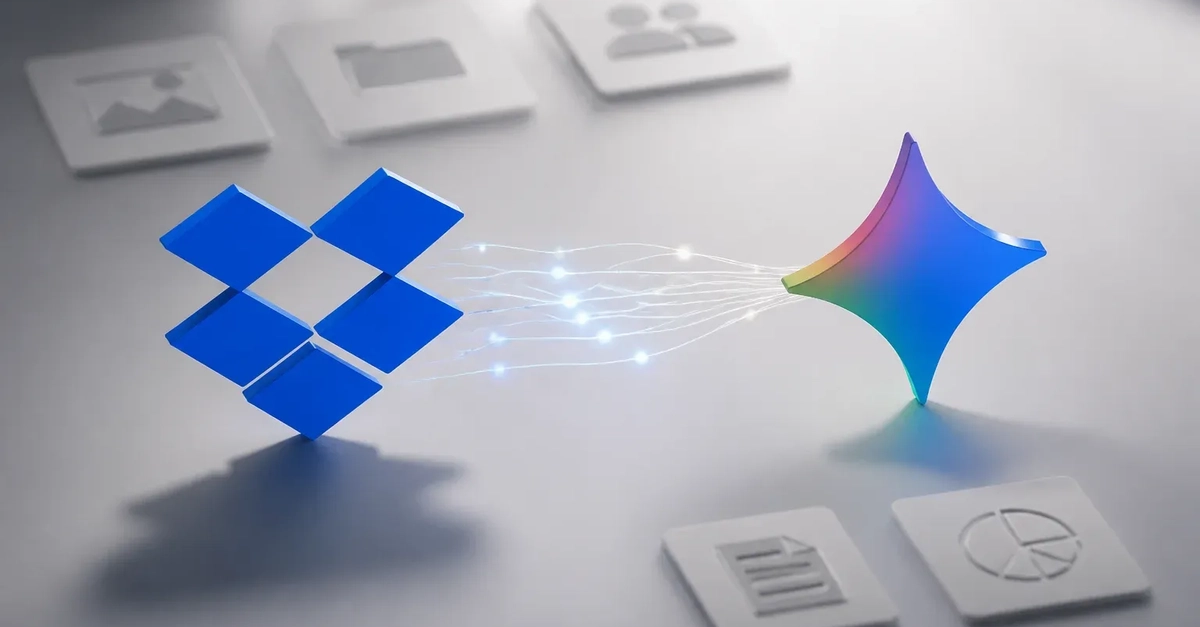
Dropbox Joins Gemini Spark Ecosystem
Dropbox has officially become a connected app for Google Gemini, marking a significant step in integrating cloud storage capabilities directly into AI-powered conversational interfaces. This new integration allows eligible users to search, summarize, share, and manage their Dropbox files without ever leaving the Gemini chat environment. The move signifies a broader trend of embedding productivity tools directly into AI assistants, aiming to streamline workflows where work is increasingly planned and executed.
The integration extends beyond basic chat functionality, reaching into Gemini Spark, Google’s workflow automation platform. This means users can leverage their Dropbox files within more complex, multi-app automated tasks orchestrated by Gemini. For teams heavily reliant on Dropbox for storing working documents, this development brings essential file management actions into closer proximity with the AI conversations and workflows that are becoming central to project planning and execution.
It's important to note that this integration is not yet a universal rollout for all Dropbox and Gemini users. Google and Dropbox have initiated a US-first release with specific access criteria. Users must be at least 18 years old, be using a personal Google account, conduct their interactions in English, and access Gemini through the web app at gemini.google.com. This controlled release allows for testing and refinement before a wider deployment.
The connection is positioned by Google as a key expansion of its Gemini Spark ecosystem, which aims to bring together various third-party applications and services. By allowing Gemini to interact directly with Dropbox content, Google is enhancing Gemini's utility as a central hub for productivity, moving it beyond a simple chatbot to a more integrated digital assistant capable of performing tangible actions on user data stored across different services.
Enhanced File Management within Gemini
The core functionality of the Dropbox app for Gemini centers on making file management more accessible and efficient. Users can now initiate searches for specific Dropbox files directly from their Gemini chat interface. This capability is particularly valuable for individuals and teams who store a large volume of documents, presentations, and other files within Dropbox. Instead of switching between applications, users can simply ask Gemini to find a document by name, keyword, or even by content if Gemini's summarization capabilities are leveraged.
Beyond search, the integration facilitates seamless file sharing. Once a file is located, users can share it with collaborators directly through Gemini, eliminating the need to copy links or navigate to the Dropbox website. This feature streamlines communication and ensures that team members can quickly access the documents they need for ongoing projects.
Summarization is another key benefit. Gemini can now access and process the content of Dropbox files, providing users with concise summaries. This is invaluable for quickly understanding the gist of a document without needing to open it, saving time and improving efficiency, especially when dealing with lengthy reports or complex proposals. Managing files, which can include actions like organizing or moving documents, is also being brought into the Gemini workflow, further consolidating file operations within the AI interface.
Implications for Workflow Automation
The inclusion of Dropbox within Gemini Spark opens up new avenues for workflow automation. Gemini Spark is designed to enable users to build automated sequences of actions that can span multiple connected applications. With Dropbox as a connected app, users can create workflows that, for example, automatically save new files uploaded to a specific Dropbox folder into a project management tool, or trigger a notification in a team chat when a critical document is updated.
This level of integration allows for more sophisticated automation scenarios. Imagine a workflow where Gemini receives an email with an attached document. It can then automatically upload that document to a designated Dropbox folder, summarize its content, and then share the summary and a link to the file with a project team in Slack. Such end-to-end automation reduces manual effort and minimizes the risk of errors, allowing teams to focus on higher-value tasks.
The ability to manage files within these automated workflows means that users can maintain a cleaner, more organized digital workspace without constant manual intervention. For instance, a workflow could be set up to automatically move files older than a certain date to an archive folder in Dropbox, or to rename files based on predefined naming conventions as they are processed by Gemini.
Broader Market Context and Future Potential
This integration reflects a larger industry shift towards AI assistants becoming central hubs for digital productivity. Companies are increasingly looking for ways to embed AI capabilities into their existing tools and workflows, rather than forcing users to adopt entirely new platforms. By connecting Dropbox to Gemini, Google and Dropbox are enabling users to leverage the power of AI without disrupting their established file management systems.
The move by Dropbox positions it as a key player in the evolving landscape of AI-powered productivity tools. As more companies integrate their services with AI platforms like Gemini, the competitive advantage will lie in how seamlessly and effectively these integrations enhance user workflows. The success of this integration could pave the way for similar partnerships with other cloud storage providers and productivity software companies.
What remains to be seen is how this integration will evolve regarding advanced file manipulation and security controls. As AI becomes more capable of acting upon user data, the demand for granular permissions and robust security measures within these AI-driven workflows will only increase. Ensuring that sensitive data remains protected while still being accessible for AI processing will be a critical challenge moving forward.
For developers and businesses, this integration signals an opportunity to build more intelligent applications that can interact with cloud storage in novel ways. The underlying APIs and frameworks that enable this connection will likely become points of interest for those looking to leverage AI for content management and workflow automation. As Gemini's ecosystem expands, users can anticipate a future where their AI assistant is not just a conversational agent but a powerful orchestrator of their digital life and work.