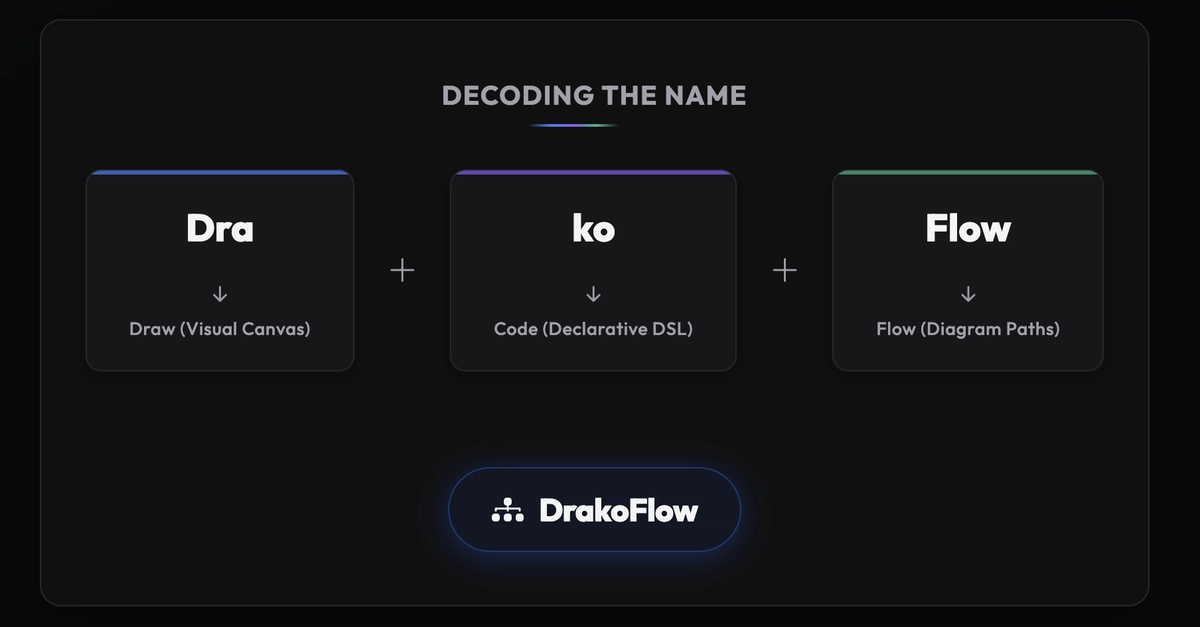
The Tech Stack Behind DrakoFlow
In the ongoing quest for a more modern UML and diagramming engine, DrakoFlow's development is rooted in specific technological choices designed to meet ambitious goals. The project's creator, Pazvanti, outlines a clear vision: diagrams that are not merely static images but living, interactive artifacts. This philosophy directly informed the selection of the tech stack, prioritizing ease of use, modern aesthetics, cross-platform compatibility, and robust privacy.
The core objectives for DrakoFlow were manifold. First, enabling users to create complex diagrams with minimal friction was paramount. This implies an intuitive interface and a powerful, yet accessible, Domain Specific Language (DSL). Second, diagrams needed to be dynamic and responsive, offering an interactive experience rather than a passive viewing. Third, the visual design had to eschew the dated aesthetics often associated with older diagramming tools, embracing a contemporary look and feel. Fourth, universality was key: the engine must perform identically across different programming languages, Integrated Development Environments (IDEs), and operating systems. Finally, user privacy was non-negotiable, positioning it as a fundamental design principle from the outset.
Core Technology Choices
To achieve these objectives, several key technologies were selected. For the frontend, a modern JavaScript framework was essential to deliver the interactive and visually appealing user experience. While not explicitly named in this excerpt, the need for a framework capable of handling complex state management and rendering dynamic SVG or Canvas elements is implied. This choice directly addresses the 'alive and interactive' and 'look and feel modern' requirements.
On the backend, the choice of technology would likely depend on the specific features DrakoFlow aims to support, such as real-time collaboration, complex data processing for diagram generation, or secure storage of user data. Given the emphasis on privacy, a backend that allows for on-premises deployment or end-to-end encryption would be a strong consideration. The DSL, conceived to simplify diagram creation, likely leverages parsing and interpretation techniques common in compiler design or language processing. This allows users to express complex structures in a concise, human-readable format that the engine then translates into visual diagrams.
Addressing Development Challenges
Developing a tool that aims to be a universal diagramming engine presents a unique set of challenges. One significant hurdle is achieving true cross-platform consistency. Differences in rendering engines, input handling, and even font rendering across operating systems and browsers can lead to visual discrepancies. Rigorous testing and a robust abstraction layer are necessary to mitigate these issues.
Another challenge lies in balancing the power and flexibility of the DSL with its ease of use. A DSL that is too simple might not support complex modeling scenarios, while one that is too complex will alienate users who are not seasoned language designers. Pazvanti's design philosophy likely focuses on finding this sweet spot, possibly by offering progressive complexity or sensible defaults. The interactive nature of the diagrams also introduces performance considerations. Rendering and updating complex diagrams in real-time requires efficient algorithms for layout, rendering, and event handling. This is where optimized frontend technologies and potentially WebAssembly could play a crucial role.
Privacy, as a first-class citizen, adds another layer of complexity. Implementing features like end-to-end encryption, secure data handling, and potentially offline-first capabilities requires careful architectural planning. It means that data should ideally not leave the user's device unless explicitly shared, and any synchronization or collaboration features must be designed with security and privacy as the primary concern, not an afterthought.
The Future of Diagramming Engines
DrakoFlow's ambition to create a modern, interactive, and private diagramming engine speaks to a broader need in the developer community. Traditional UML tools, often clunky and outdated, struggle to keep pace with agile development methodologies and the increasing complexity of modern software systems. The demand is for tools that integrate seamlessly into developer workflows, offer real-time feedback, and support collaborative design processes.
The success of DrakoFlow will hinge on its ability to deliver on its promises. If it can provide a genuinely intuitive DSL, a fluid and responsive user interface, and robust privacy guarantees, it could become an indispensable tool. The journey from concept to a fully realized engine is fraught with technical and design challenges, but the vision presented by Pazvanti suggests a deep understanding of the shortcomings of existing solutions and a clear path forward. The focus on making diagrams feel 'alive' is particularly compelling, hinting at a future where diagrams are not just documentation, but active participants in the software development lifecycle.
What remains to be seen is how DrakoFlow will handle the integration of AI-powered features, such as automated diagram generation from code or intelligent suggestions for modeling. As AI advances, the potential for diagramming tools to become even more powerful and intuitive is immense. The next iteration of diagramming engines might not just visualize code; they might help write it.
The emphasis on a universal approach, irrespective of programming language or IDE, also positions DrakoFlow as a potential unifying force in a fragmented landscape. Developers often juggle multiple languages and platforms, and a consistent, high-quality diagramming experience across all of them would be a significant advantage. This universality, combined with the interactive and modern design, sets a high bar for what users can expect from future diagramming tools.