Domyn's Ambitious Trajectory
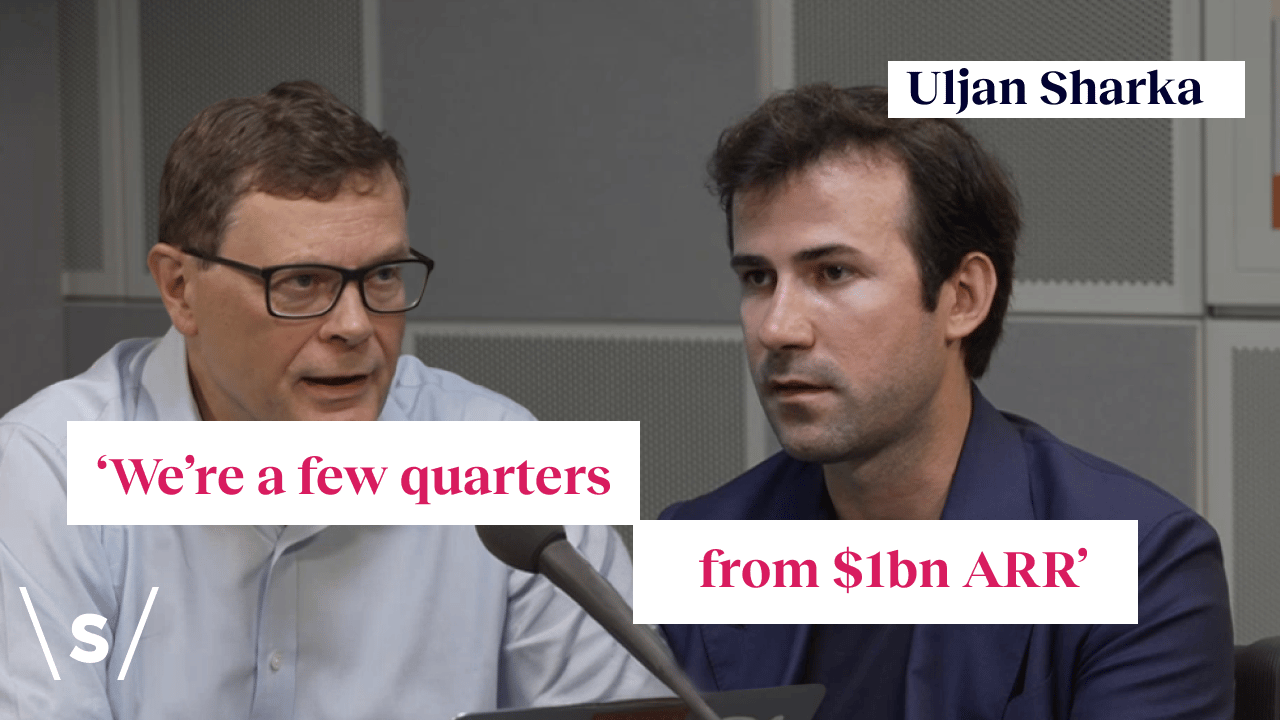
Uljan Sharka, the founder and CEO of Milan-based AI firm Domyn, is projecting a near-term surge towards $1 billion in Annual Recurring Revenue (ARR), stating the company is merely "a few quarters away" from this significant financial milestone. Sharka, who previously worked at Apple in Silicon Valley, launched Domyn in 2016. The company has since carved out a niche by developing sophisticated AI models and agents specifically for enterprise use cases. Beyond custom model development, Domyn is also investing heavily in what it terms "AI gigafactories" – large-scale, efficient infrastructure designed to train and deploy AI models at an unprecedented volume.
Sharka’s journey to leading a burgeoning AI unicorn is as compelling as the company’s financial targets. Having migrated from Albania to Italy in 2008 with no knowledge of the Italian language, his path underscores a deep-seated fascination with technology. This early exposure and subsequent experience in the tech industry, including his tenure at Apple, have clearly shaped his strategic vision for Domyn. The company’s dual focus on bespoke AI solutions for businesses and the development of scalable AI infrastructure positions it to capitalize on the rapidly expanding enterprise AI market.
The Case for Small Language Models
A key tenet of Domyn’s strategy, as discussed by Sharka, centers on the advantages of Small Language Models (SLMs). While the industry has seen a significant push towards massive, general-purpose Large Language Models (LLMs), Sharka advocates for the efficiency and tailored performance of SLMs for specific enterprise tasks. Unlike their larger counterparts that require immense computational resources and broad training data, SLMs can be fine-tuned for particular domains or functions, offering a more cost-effective and precise solution for many business needs. This approach allows businesses to deploy AI capabilities without the prohibitive costs and complexities associated with full-scale LLMs.
The argument for SLMs is not merely about cost reduction; it’s also about performance and control. For many enterprise applications, a highly specialized SLM can outperform a general LLM. Think of it less like a Swiss Army knife and more like a precision-engineered scalpel. The scalpel is designed for one job, but it performs that job exceptionally well, with greater accuracy and less collateral damage than a multi-tool. Domyn's focus here suggests a strategic bet on the maturation of AI, moving beyond broad capabilities to highly optimized, application-specific intelligence.
Leading Europe’s AI Frontier Ambitions
Domyn is also at the forefront of European AI initiatives, notably leading the EU's Europa Frontier Model consortium. This leadership role places the company at the heart of continental efforts to develop sovereign AI capabilities, aiming to compete with, and potentially differentiate from, the AI models developed in the United States and China. The consortium's work is crucial for Europe, which seeks to establish its own robust AI ecosystem, fostering innovation while adhering to the region’s regulatory and ethical frameworks. By leading this consortium, Domyn not only gains significant influence but also access to critical research and development opportunities that can feed back into its commercial product roadmap.
The implications of Europe’s frontier model efforts are significant. It represents a strategic pivot towards technological independence in a field increasingly dominated by a few global giants. For Domyn, this means a direct role in shaping the future of AI development within a major economic bloc. It also suggests that the company’s growth trajectory is not solely dependent on market forces but is also being actively supported by strategic, governmental initiatives aimed at fostering national and regional AI champions.
Lessons from the Unicorn Herd
Sharka also shared insights gleaned from observing other successful tech companies, specifically mentioning lessons learned from Revolut’s CEO, Nik Storonsky. While the specifics of these lessons are not detailed in the provided excerpt, the reference points to a founder’s commitment to continuous learning and adapting strategies from established players. This implies a pragmatic approach to scaling and operational excellence, drawing parallels between Domyn’s ambitions and the growth stories of other prominent tech unicorns. The ability to learn from both successes and failures within the startup ecosystem is a hallmark of resilient leadership.
The journey to $1 billion ARR is fraught with challenges, from technological hurdles to market competition and scaling operational complexities. Domyn’s stated proximity to this goal, coupled with its strategic focus on SLMs and its leadership in European AI initiatives, paints a picture of a company poised for significant expansion. The success of its AI gigafactories and its ability to translate research into commercial viability will be key indicators of its ability to achieve and sustain such ambitious revenue targets.