
The Domain-Grounded Advantage in Data Science
The promise of AI coding assistants has largely centered on general-purpose tools like GitHub Copilot and Claude Code. These tools excel at understanding natural language prompts and generating code based on broad contextual awareness. However, for specialized domains, particularly data science and machine learning, a new class of AI agents is emerging, offering a compelling alternative: domain-grounded agents.
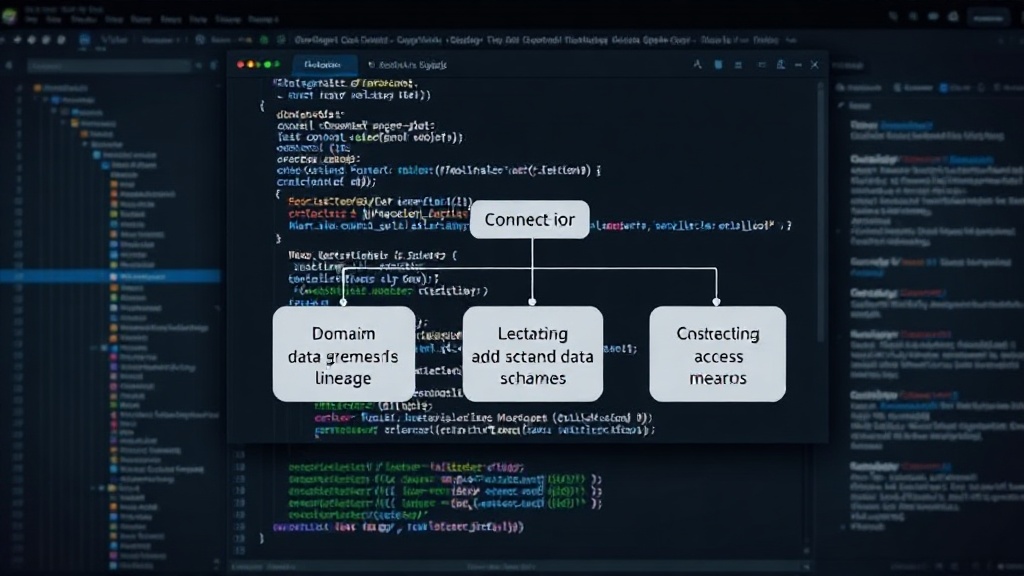
These specialized agents, exemplified by tools like Databricks' Genie Code, claim a significant performance leap by integrating directly with a platform's underlying data governance, schema, and lineage information. The core argument is straightforward: instead of guessing table and column names from a limited code snippet, a grounded agent *knows* them. This direct access to domain-specific metadata drastically reduces the need for the agent to hallucinate or for the user to constantly re-explain data structures.
Databricks, a prominent proponent of this approach, cites a remarkable jump in task success rates. They report a shift from approximately 32% success with generalist approaches to around 77% with their domain-grounded Genie Code for real-world data science tasks. While this specific number requires independent verification, the qualitative improvements reported by users—fewer erroneous column name suggestions and less time spent clarifying data relationships—align with observed benefits.
The Trade-off: Specialization vs. Generalization
The critical question for developers and data professionals becomes where to draw the line. When does the added benefit of a domain-specific agent justify the potential vendor lock-in or the learning curve associated with a new tool? General-purpose agents offer broad applicability across various programming languages and tasks. They can draft boilerplate code, suggest refactors, and answer general programming questions with impressive fluency. Their strength lies in their versatility and their ability to integrate into existing, diverse workflows without requiring deep platform-specific knowledge.
Domain-grounded agents, conversely, are inherently tied to the platform or ecosystem they serve. A tool grounded in Databricks' Unity Catalog, for instance, will likely have limited utility outside that environment. This specialization, however, is precisely what allows them to achieve higher accuracy and efficiency within their designated domain. For tasks involving complex data manipulation, querying large datasets with specific schemas, or adhering to strict governance policies, an agent that understands the precise structure and provenance of the data has a distinct advantage.
Consider a scenario where a data scientist needs to write a SQL query to join several tables. A general-purpose agent might infer common join patterns or suggest joins based on column name similarity. A domain-grounded agent, however, can directly access the data catalog, understand primary and foreign key relationships, and propose a query that is not only syntactically correct but also semantically aligned with the actual data model. This can save significant debugging time, especially in large, complex data warehouses where schema evolution is common.
Beyond Data Science: Identifying Other Domains
The principle of domain grounding is not exclusive to data and ML. The same logic applies to other specialized fields where deep, structured knowledge is paramount. In legal tech, an AI assistant grounded in specific case law databases, statutes, and firm-specific document templates could offer more accurate contract analysis or legal research than a generalist tool. Similarly, in infrastructure management, an agent trained on an organization's specific cloud configurations, network topology, and compliance policies could automate complex deployment or troubleshooting tasks with greater reliability.
The challenge for vendors in these specialized domains is to demonstrate a value proposition strong enough to overcome the inertia of adopting general-purpose tools. This value must manifest not just in theoretical accuracy improvements but in tangible productivity gains and reduced error rates that outweigh the costs of integration and potential platform dependency. For users, the decision hinges on assessing the frequency and complexity of domain-specific tasks versus the breadth of general coding needs.
The Future: Hybrid Approaches and Contextual Awareness
It's unlikely that the future will be a simple dichotomy between generalist and specialist agents. A more probable scenario involves hybrid approaches. General-purpose agents might become more adept at integrating with specialized knowledge bases or APIs. Conversely, domain-specific agents could incorporate broader coding capabilities to handle ancillary tasks. The key will be how effectively these agents can leverage context, whether it's derived from a deep understanding of a specific data platform or from a more generalized, but highly sophisticated, awareness of programming best practices.
The success of domain-grounded agents hinges on their ability to provide a demonstrably superior user experience for their target audience. For data professionals, this means fewer hallucinations, more accurate code generation for data tasks, and a smoother workflow. As these tools mature, they have the potential to significantly accelerate development cycles and reduce the cognitive load associated with managing complex, specialized systems. The underlying question remains: how widely can this grounding principle be applied before the overhead of maintaining specialized knowledge bases becomes prohibitive, and when does a