The Pitfall of Treating Zone IDs as Domain Names
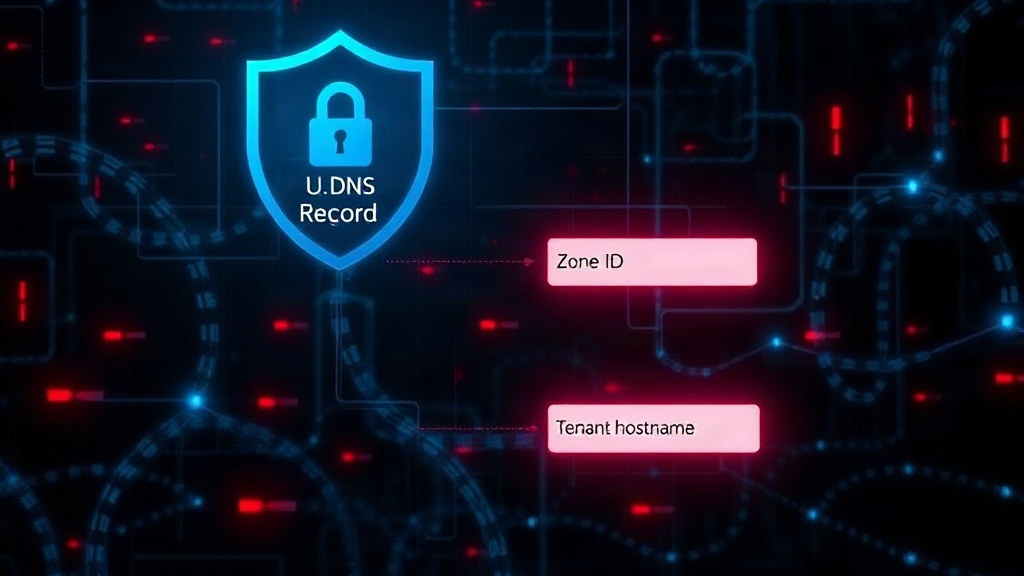
A common, yet critical, oversight in managing DNS records for multi-tenant applications is treating a DNS zone identifier as if it were a domain name. This fundamental misunderstanding can lead to rejected DNS record writes and, more importantly, misconfigurations that are difficult to trace and rectify. The core issue lies in conflating the control-plane's opaque identifier for a DNS zone with the human-readable domain name that defines its public identity. When developers or systems incorrectly use a zone identifier (like an AWS Route 53 Hosted Zone ID or a Cloudflare Zone ID) interchangeably with a tenant's hostname, the system lacks the necessary context to correctly associate a DNS record with its intended zone.
Consider a media platform that assigns every tenant a unique subdomain, such as tenant1.example.com or tenant2.example.com. Each of these subdomains must resolve to the platform's infrastructure, but they are managed within specific DNS zones. If the system attempts to create a record for tenant1.example.com and erroneously uses a zone identifier like Z123ABCDEF456 as the owner name, the DNS provider's API will likely reject the request. This rejection isn't a temporary glitch; it's a deterministic failure because the provided owner name doesn't logically fall under the zone represented by Z123ABCDEF456 in the way the API expects. Retrying such a malformed request is futile; it consumes valuable error budget without any chance of success.
The operational recommendation is clear: treat a DNS zone identifier as an opaque control-plane key. It should never be treated as a domain name, and crucially, it should be stored in a separate field from the tenant hostname or record owner name. This separation ensures that the system always understands the distinct roles of these two pieces of information.
Four Essential Identity Checks for Tenant Domains
To build a resilient DNS write path that avoids these pitfalls, four key identity checks must be implemented before any write operation is attempted:
1. Resolve the Authoritative Zone
Before accepting any request to create or modify a DNS record, the system must first identify and resolve the authoritative DNS zone for the requested domain. This involves querying a DNS service or an internal mapping to determine which zone the target domain (or subdomain) belongs to. For example, if a user wants to manage records for app.tenant.example.com, the system needs to identify that this falls under a specific zone, say, tenant.example.com.
2. Retain Human-Readable Name and Provider Identifier
Once the authoritative zone is resolved, the system must retain both its human-readable name (e.g., tenant.example.com) and the provider-issued identifier (e.g., Z123ABCDEF456). These two pieces of information serve different, vital purposes. The human-readable name is useful for logging, debugging, and user interfaces, providing context that is easily understood. The provider-issued identifier is the actual key used by the DNS service to manage the zone. Storing both ensures that the system has a complete picture and can use the correct identifier for API calls while retaining human-understandable context.
3. Verify Record Ownership Within the Zone
This is the critical step that prevents the conflation of zone IDs and domain names. The system must verify that the requested owner name for the DNS record actually belongs under the identified authoritative zone. For instance, if the system has identified Z123ABCDEF456 as the zone for tenant.example.com, and a request comes in to create a record named tenant.example.com within that zone, it should be flagged. The owner name (e.g., app for app.tenant.example.com) must be a subdomain or the root of the identified zone. If the requested owner name is identical to the zone's human-readable name, or if it's an identifier that doesn't conform to the expected subdomain structure, it's a strong indicator of a misconfiguration.
4. Log the Mapping Used for Mutation
Every successful write operation, and importantly, every rejected one, should be logged with the specific mapping used. This means recording which human-readable zone name and which provider-issued zone identifier were associated with the attempted record creation or modification, along with the owner name and record type. This detailed logging is invaluable for auditing, debugging, and understanding patterns of errors. If a write is rejected, the logs will clearly show the incorrect input, allowing developers to pinpoint where the system or user logic failed. For a platform managing thousands of tenant subdomains, this audit trail is indispensable for maintaining operational integrity.
The Importance of Deterministic Rejection
The implications of these checks extend beyond mere error prevention. DNS record write operations, when correctly defined, are typically deterministic. This means that a malformed request will consistently fail in the same way. Relying on retry policies for such deterministic errors is a common anti-pattern. Instead of fixing the underlying issue, retries simply consume resources and error budgets without achieving the desired outcome. By implementing robust validation at the application layer, before the request even reaches the DNS provider's API, these deterministic failures can be caught early, providing immediate feedback and preventing wasted cycles.
For developers building multi-tenant SaaS products, managing custom domains, or any service that dynamically provisions DNS records, adopting these four checks is not an optional enhancement; it's a foundational requirement for stability and scalability. The boundary between a control-plane identifier and a public domain name must be strictly enforced to prevent costly misconfigurations and ensure the reliability of the DNS infrastructure.