
Recreating the Lost Google Discovery Feed with AI
The abrupt discontinuation of Google's Discovery feed left a void for many users who relied on it for curated daily news. One enterprising user, dissatisfied with the loss of this personalized digest, has engineered a sophisticated workaround using Gemini's Google Workspace extensions. This DIY solution leverages Gemini's capabilities to interact with Google Docs, Sheets, and Gmail, automating the process of news gathering, summarization, and delivery, effectively recreating a personalized AI-hosted news service.
The system is designed to mimic the functionality of a daily news briefing, but with a significant upgrade: intelligent tracking of read content to prevent duplication and a preference-logging mechanism. The ultimate goal is to provide users with concise email summaries and detailed Google Docs formatted for consumption by Google NotebookLM, enabling an AI-generated audio overview of the day's key tech news. While still under active development, the current iteration proves robust enough to serve as a functional automated news assistant.
Automating News Workflows with Gemini
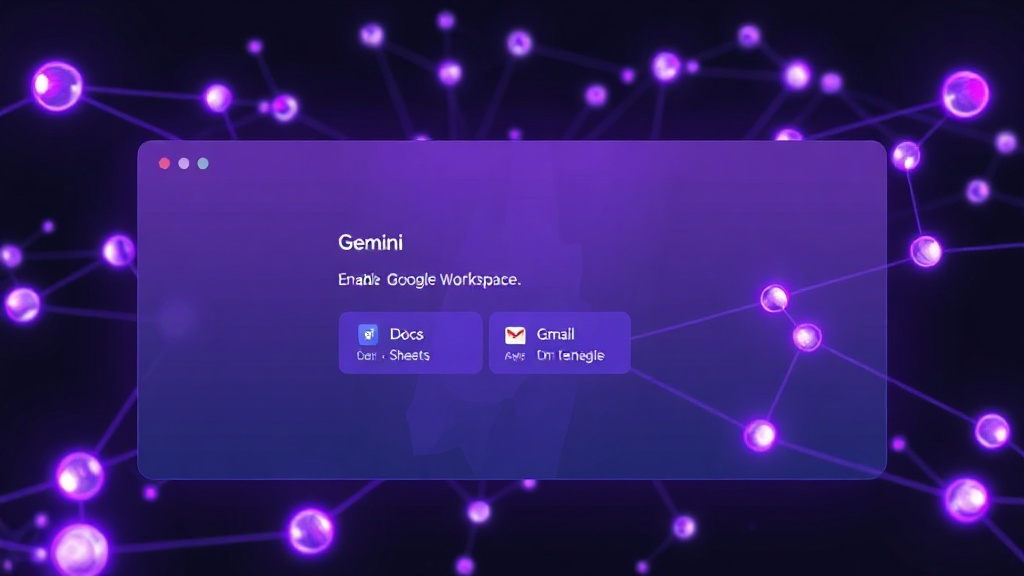
The foundation of this system lies in Gemini's ability to integrate with core Google Workspace applications. The user initiates the process by enabling Gemini's extensions for Docs, Sheets, and Gmail within the Gemini interface. This grants Gemini the necessary permissions to read, write, and manage content across these services, forming the backbone of the automated workflow.
The core of the system is a detailed prompt that instructs Gemini to act as a personal news assistant. This prompt outlines the desired automated workflow, emphasizing the need to integrate Docs, Sheets, and Gmail. The system begins by identifying relevant tech news sources, which the user would ideally specify or allow Gemini to infer based on their broader Google activity and stated preferences. Gemini then processes these sources, extracting key information and performing initial filtering.
A critical component is the tracking of read articles. To avoid bombarding the user with the same information repeatedly, the system maintains a record of content that has already been processed. This likely involves storing article URLs or unique identifiers in a Google Sheet, which Gemini references before processing new articles. This ensures that each day's briefing contains fresh information, maintaining user engagement and the perceived value of the service.
Personalization and Delivery Mechanisms
Beyond simple aggregation, the system focuses on personalization and tailored delivery. A dedicated Google Doc serves as a repository for user preferences. This document likely contains keywords, preferred topics, trusted news sources, and even topics to avoid. Gemini consults this preference document to refine its news selection, ensuring the delivered content aligns with the user's interests.
The primary delivery mechanism is email. Gemini generates short, digestible summaries of the selected news articles. These summaries are designed to provide a quick overview of the most important developments without overwhelming the user. This is akin to the concise snippets that characterized the original Google Discovery feed, providing value at a glance.
For users seeking a more in-depth experience, the system takes an extra step. It compiles a more detailed Google Doc, specifically formatted for import into Google NotebookLM. This detailed document includes extracted articles, key quotes, and contextual information. NotebookLM can then transform this structured data into an audio overview, effectively creating a personalized daily news podcast generated by AI. This feature directly addresses the user's stated goal of recapturing the AI-hosted daily news experience lost with the discontinuation of Google Discovery.
The Prompt: Orchestrating the AI Assistant
The success of this DIY news service hinges on the intricate prompt provided to Gemini. While the full prompt is not publicly detailed, its described functions paint a picture of sophisticated AI instruction. It goes beyond a simple request for news summaries; it defines a multi-step process involving cross-application interaction and state management (tracking read items and preferences).
The prompt likely instructs Gemini to:
- Access and parse content from specified or inferred news sources.
- Cross-reference new articles against a list of previously processed items stored in Google Sheets.
- Filter articles based on user preferences stored in a Google Doc.
- Generate concise summaries for email delivery.
- Compile detailed summaries and relevant content into a Google Doc formatted for NotebookLM.
- Manage the state of processed articles to prevent duplicates.
This approach transforms Gemini from a conversational AI into a proactive workflow automation tool. It highlights the potential of large language models when integrated with existing productivity suites, enabling users to build bespoke solutions for everyday tasks.
Implications for Personalized News Consumption
This user-created system demonstrates a powerful paradigm shift in how individuals can curate their information consumption. Instead of relying on platform-provided feeds, users can now architect their own. This DIY approach offers unparalleled control over content selection, summarization depth, and delivery format. It’s a return to a more intentional form of news engagement, driven by user needs rather than algorithmic assumptions.
The reliance on Gemini's Workspace extensions is particularly noteworthy. It signals a growing trend of leveraging AI not just for content generation, but for workflow automation across a user's digital tools. For developers and power users, this opens up possibilities for building custom assistants for a myriad of tasks, from managing personal finances to organizing research projects. The ability to integrate with familiar tools like Docs, Sheets, and Gmail lowers the barrier to entry for creating sophisticated automated systems.
What remains to be seen is how widely this approach will be adopted. While the technical steps are relatively straightforward for someone comfortable with prompt engineering and Google Workspace, broader adoption will depend on the ease of sharing and replicating these complex prompts. Furthermore, as AI models evolve, the underlying mechanisms for such integrations may change, potentially requiring users to adapt their custom workflows over time.
The Future of AI-Assisted Information Curation
The user's initiative to rebuild a personalized news service with Gemini underscores a desire for more agency in information consumption. The AI-driven daily briefing, complete with summaries and audio overviews, is a testament to the flexibility of modern AI tools. As more users explore these integration possibilities, we can expect to see a proliferation of custom AI assistants tailored to individual needs, moving beyond generic feeds to hyper-personalized information streams.
This project also highlights the continued value of structured data for AI processing. By formatting the output for NotebookLM, the user ensures that the AI can effectively process and present the information, whether for reading or listening. This symbiotic relationship between AI generation and structured input is likely to define future advancements in personalized content delivery. The ability to feed AI-generated content into other AI tools for further processing or presentation creates powerful feedback loops for information synthesis.