
The Illusion of Data
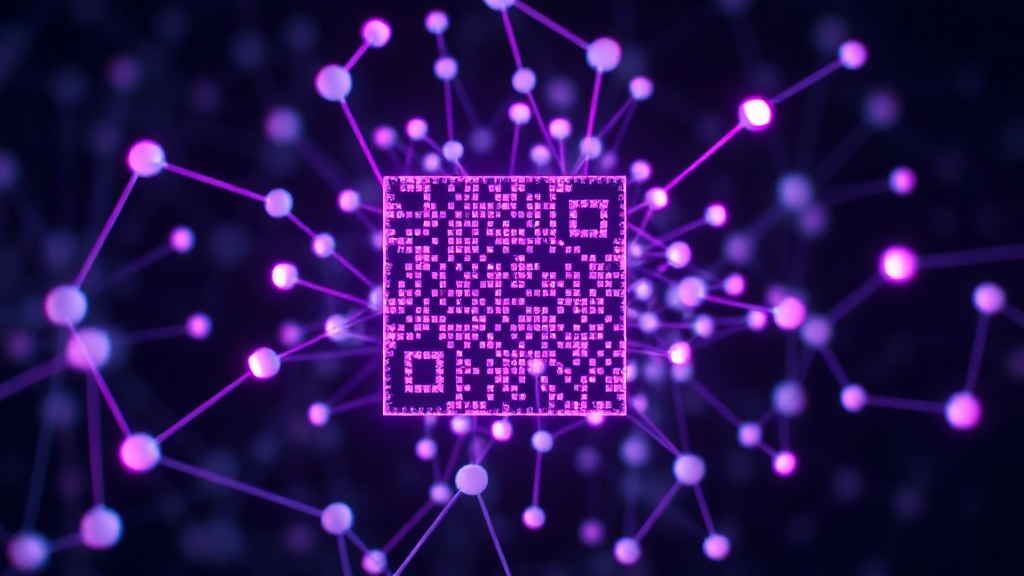
QR codes are ubiquitous. We scan them daily for everything from restaurant menus to payment confirmations. Their visual simplicity belies a robust error correction system designed to withstand damage and dirt. But what if that apparent simplicity could be weaponized to hide information in plain sight? A novel technique called "dithered QR codes" achieves just that, embedding secondary, hidden data within the seemingly normal patterns of a QR code.
At its core, a dithered QR code manipulates the visual appearance of the code's modules (the black and white squares) using dithering algorithms. Dithering is a technique commonly used in digital imaging to simulate color depth or patterns using a limited palette of colors. For example, a grayscale image can be dithered to appear on a black-and-white display by strategically placing black and white pixels to create the illusion of intermediate shades. In the context of QR codes, these algorithms are applied to the individual modules, subtly altering their perceived shape or color without fundamentally changing the data the QR code is meant to represent.
The trick lies in exploiting how both the human eye and, crucially, QR code scanners interpret these altered patterns. While a standard QR code consists of distinct, solid black and white squares, a dithered QR code might have modules that appear to have a texture, a gradient, or even a slightly different shade. These visual nuances are precisely engineered. They are designed to be imperceptible or ignorable by typical scanning software, which primarily focuses on identifying the presence and arrangement of the fundamental black and white modules to decode the primary message.
How the Hidden Data is Embedded
The process involves a two-stage encoding. First, the original, intended data (e.g., a URL, contact information) is encoded into a standard QR code. This forms the visible, primary message. Second, a separate, hidden message is encoded. This hidden message is then used to guide the dithering process applied to the modules of the primary QR code. The dithering algorithm effectively paints over the solid black and white modules with a pattern that, when viewed by a scanner with specific processing, reveals the secondary data.
Imagine a standard QR code module. It's either black or white. A dithered version might use a pattern of tiny black and white dots within that module's area. A standard scanner, designed for crisp, solid blocks, might average out these dots or ignore the fine pattern, still recognizing the module as predominantly black or white and decoding the primary message correctly. However, a specially designed or modified scanner, or one that applies a specific interpretation layer, can be tuned to detect these subtle dithered patterns. These patterns, when analyzed, form the secondary, hidden data stream.
This technique is analogous to steganography, where information is hidden within other information in a way that is not immediately obvious. In traditional steganography, a secret message might be embedded within the pixels of an image file. Here, the 'carrier' is the QR code itself, and the 'hidden' message is embedded within the visual representation of its own data modules.
Exploiting Scanner Interpretation
The success of dithered QR codes hinges on the precise interpretation mechanisms of QR code scanners. Most scanners are optimized for speed and reliability, prioritizing the decoding of the primary data. They often employ algorithms that smooth out minor visual imperfections or focus on macro-level pattern recognition. This is where the dithered patterns are designed to slip through the cracks.
The hidden data is not encoded as additional modules or error correction bits in the traditional sense. Instead, the dithering patterns act as a form of visual modulation. Think of it like an old analog radio signal where a carrier wave is modulated to carry audio information. Here, the visual structure of the QR code modules serves as the 'carrier,' and the dithered patterns are the 'modulation' that encodes the hidden message.
A key insight is that the dithering is applied *after* the primary QR code data has been determined. The visual transformation doesn't alter the fundamental data bits that a standard scanner reads. Instead, it adds a layer of visual information that is only detectable by a scanner programmed to look for it. This could involve analyzing the texture of modules, the sub-pixel patterns, or even the perceived color variations introduced by the dithering. The surprising detail here is not that hidden data can be encoded, but that the very visual robustness designed to protect QR codes can be subverted to conceal additional information.
Potential Applications and Security Implications
The implications of dithered QR codes are wide-ranging. On the positive side, they could enable novel forms of secure communication or authentication. For instance, a physical product could have a QR code that displays a standard URL for product information, but scanning it with a specialized app could reveal a unique serial number for verification or warranty purposes. This adds a layer of security by requiring a specific tool to access the sensitive information.
Another application might be in digital art or interactive experiences, where a QR code on a poster could lead to a website, but a hidden message within it could unlock exclusive content or trigger a special animation on a user's device when scanned with a particular app. This creates a "hidden Easter egg" effect.
However, the security implications are also significant. Malicious actors could use dithered QR codes to embed hidden phishing links or malware payloads. A QR code that appears to link to a legitimate website could, when scanned with a specially crafted tool, redirect the user to a malicious site or initiate a harmful download. This could be particularly dangerous in scenarios where users are accustomed to scanning QR codes without much scrutiny, such as in public spaces or on marketing materials.
The challenge for cybersecurity professionals is that these dithered QR codes would likely bypass standard QR code scanning security checks, which are typically designed to analyze the primary data content for malicious URLs. Detecting the hidden data would require analyzing the visual rendering of the QR code at a much deeper level, essentially looking for the steganographic layer.
The Unanswered Question: Detection and Standardization
What nobody has addressed yet is how widely this technique might be adopted or how it could be standardized for legitimate use. If dithered QR codes become a common method for embedding secondary data, will there be a push to develop universal detection protocols for scanners? Or will it remain a niche technique used by specific applications, creating an arms race between those who wish to hide data and those who wish to detect it?
The development of dithered QR codes presents a fascinating duality: a clever exploitation of visual perception and a potential new vector for both innovation and security threats. As the technology evolves, understanding how these codes are constructed and how they can be reliably detected will be crucial for both developers and security professionals navigating the increasingly complex digital landscape.