The Inevitable Question: How Much AI is This?
In the rapidly evolving landscape of content creation, a crucial question looms over every piece of writing: how much of this was generated by AI? This isn't just a niche concern for tech enthusiasts; it's a question that permeates the minds of everyday readers, including the authors themselves. When a paragraph feels a little too polished, a bit too perfect, the suspicion arises. It’s an instinctual, almost automatic, response in today's AI-saturated world. If this is happening to you when you read, you can be certain it’s happening to others when they read your work.
This underlying skepticism means judgment is already occurring. The absence of clear information about content origin forces readers to fill the void with assumptions. These assumptions, however, are often inaccurate. Readers might overestimate the AI contribution, thereby discounting the genuine human effort and insight that went into the piece. Conversely, they might underestimate it, attributing human creativity to machine processes and thus awarding credit where it is not entirely due. Both scenarios erode trust and misrepresent the author's true involvement and skill.
The author, Trewaters, argues that this judgment is happening regardless of whether the creator participates in defining it. The choice isn't whether AI's role will be considered, but whether the creator will have agency in how that consideration plays out. By proactively labeling AI-assisted content, the author aims to steer this inevitable judgment toward a more accurate and honest representation of their work.
Seizing Control of the Narrative
When readers encounter content without clear provenance, their default is to guess. This guessing game is often detrimental. If a reader assumes a piece is entirely AI-generated when it’s not, they may dismiss the human author's unique perspective, research, and voice. This can lead to a loss of credit and authority, as the genuine intellectual labor is overlooked. On the other hand, if readers underestimate the AI's contribution, they might attribute the entire work to human effort, which is also a misrepresentation and can lead to inflated expectations or a sense of being misled when the human element is less pronounced than perceived.
Trewaters' strategy of labeling AI content is a direct response to this dilemma. It’s an act of transparency designed to preempt these inaccurate assumptions. By explicitly stating the extent to which AI was used, the author provides readers with the information they need to form a more informed opinion. This approach acknowledges the reality of AI tools in content creation while asserting the author's control over how their work is perceived. It’s about managing expectations and building trust through honesty, rather than letting assumptions dictate the reader's experience.
The Nuance of AI Assistance
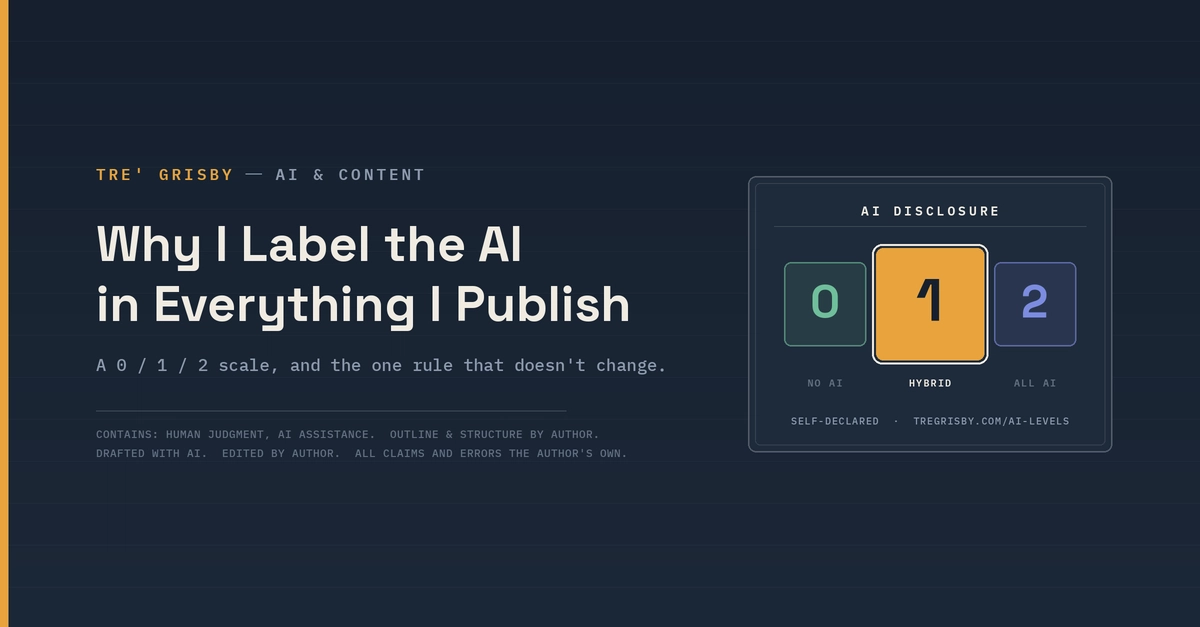
The author emphasizes that AI is not a monolithic entity; its use can range from a minor assistant to a primary generator. Labeling allows for this nuance. A simple tag can indicate whether AI was used for brainstorming, drafting, editing, or a combination of these. This detailed labeling moves beyond a binary “AI or human” classification, offering a more accurate spectrum of involvement. This is crucial because the impact on the reader’s perception and the author’s authority can vary significantly depending on the depth of AI integration.
Consider the difference between using AI to suggest alternative phrasing for a sentence versus using it to generate an entire article outline and draft. Both involve AI, but the author's role and the resulting content's authenticity are vastly different. By labeling, the author empowers the reader to understand this difference. It allows readers to appreciate the human creativity in refining AI-generated text, the critical thinking involved in guiding AI output, and the author’s unique voice that shapes the final product. This transparency fosters a more sophisticated understanding of AI's role in modern content creation.
Building Trust in an AI-Driven Future
The author's decision to label AI content is a forward-thinking move in a world where AI is becoming increasingly integrated into creative processes. It’s a proactive stance that prioritizes authenticity and reader trust. In an era where deepfakes and AI-generated misinformation are growing concerns, transparency in content origin is paramount. By being upfront about AI usage, creators can differentiate themselves from those who might be using AI deceptively or without disclosure.
This practice also sets a precedent for ethical AI use in content creation. It encourages a culture of honesty and accountability, which is vital for maintaining the integrity of online information. As AI tools become more sophisticated and accessible, the ability to discern human-authored content from AI-generated content will become increasingly challenging. Proactive labeling offers a simple yet effective solution to this growing problem, ensuring that readers can engage with content confidently, knowing its origins.
Ultimately, the author's commitment to labeling AI content is not just about managing perceptions; it's about building a more trustworthy and transparent digital ecosystem. It's an acknowledgment that AI is a powerful tool, and like any tool, its use should be clear and understood by all parties involved. This approach allows the author to maintain their authority and credibility while embracing the benefits of AI assistance, fostering a healthier relationship between creators, their audience, and the evolving technology landscape.