
Don't Confuse Encoding with Encryption
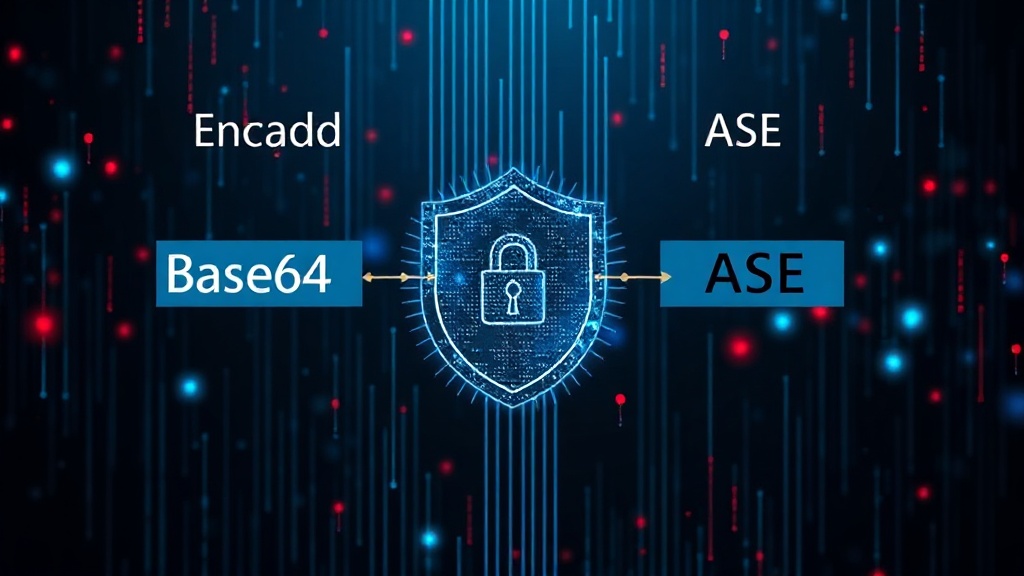
A pervasive misunderstanding in API development is treating data encoding as a security measure. Techniques like Base64 or URL encoding transform data into different formats but do not obscure it from anyone with the decoding key. Storing sensitive information, such as API tokens, passwords, or personally identifiable data, in an encoded format within configuration files or databases is a critical mistake. This practice creates a false sense of security, as the data is trivially recoverable. For instance, simply Base64 encoding a password does nothing to protect it from an attacker who gains access to the database. True encryption, on the other hand, renders data unreadable without a corresponding decryption key, involving complex mathematical algorithms and cryptographic primitives.
The core difference lies in intent and mechanism. Encoding is about data representation, enabling transmission or storage in specific formats. Encryption is about confidentiality, using algorithms to scramble data into an unreadable ciphertext that can only be reversed with a secret key. Relying on encoding for security is akin to putting a valuable document in a labeled envelope instead of a locked safe. Anyone who intercepts the envelope can read the contents if they understand the labeling system.
Misusing Authentication Tokens
Authentication tokens, such as JSON Web Tokens (JWTs), are fundamental to securing modern APIs. However, developers often misuse them, creating significant vulnerabilities. A common anti-pattern is storing sensitive information directly within JWT claims. While JWTs are often signed to ensure integrity and authenticity, they are typically not encrypted by default. This means that any data embedded in the payload, even if it's just encoded (like Base64), is readable by anyone who obtains the token. Attackers can inspect these tokens to glean information about users, roles, or even sensitive application details, which can then be used in further attacks.
Another critical mistake is relying solely on the signature of a JWT without validating it properly. A valid signature only proves that the token was issued by a trusted party and hasn't been tampered with. It does not inherently guarantee the accuracy or trustworthiness of the claims within the token. Developers must always validate the token's signature, issuer, audience, and expiration time before trusting its contents. Furthermore, using weak or predictable secrets for signing JWTs significantly weakens their security, making them susceptible to forgery. The secret key used for signing should be strong, kept confidential, and rotated periodically.
Insecure Direct Object References (IDOR)
Insecure Direct Object References (IDOR) is a vulnerability that arises when an application provides direct access to objects based on user-supplied input, without proper authorization checks. In the context of APIs, this often occurs when an API endpoint exposes an identifier for an internal object, such as a database record or file, and relies on the user to provide that identifier. If the API doesn't rigorously verify that the authenticated user has the permission to access the specific object requested, an attacker can manipulate the identifier to access resources belonging to other users or gain unauthorized access to sensitive data.
For example, an API endpoint might look like GET /users/{userId}/profile. If the application only checks if the user is authenticated but not if the authenticated user is actually {userId}, a malicious user could change the request to GET /users/12345/profile to view another user's profile. This is particularly dangerous when dealing with financial data, personal records, or administrative functions. Robust authorization checks at the API level, ensuring that each request is validated against the user's explicit permissions for the requested resource, are essential to prevent IDOR vulnerabilities. This means checking not just authentication (who you are) but also authorization (what you are allowed to do).
Weak or Predictable Cryptographic Keys
The strength of any cryptographic system hinges on the security of its keys. Using weak, easily guessable, or predictable keys is a direct invitation for attackers. This includes using default keys, keys generated from simple algorithms, or keys that are hardcoded into the application source code. If an attacker can guess or derive the key, the entire encryption scheme becomes useless. For instance, using a hardcoded AES key that is part of the application's public repository is equivalent to leaving the safe unlocked.
Key management is as crucial as the encryption algorithm itself. Keys must be generated using cryptographically secure random number generators, kept confidential, and rotated regularly. Storing keys securely, often using dedicated key management systems (KMS) or hardware security modules (HSMs), is paramount. Avoid deriving keys from easily guessable information or using static keys across multiple systems or environments. Think of cryptographic keys like the master keys to your entire digital vault; they must be unique, complex, and protected with the utmost care.
Improper TLS/SSL Configuration
Transport Layer Security (TLS), formerly known as SSL, is critical for securing data in transit between clients and APIs. However, misconfigurations in TLS can undermine its protective benefits. Common anti-patterns include using outdated TLS versions (like TLS 1.0 or 1.1, which have known vulnerabilities), employing weak cipher suites that are susceptible to decryption or man-in-the-middle attacks, and failing to properly validate server certificates. An API server that negotiates a weak TLS connection is effectively communicating in plain text, even if it believes it is secure.
The surprise here is that many organizations, despite implementing TLS, still suffer from weak configurations. This often stems from legacy system support or a lack of regular security audits. Developers and system administrators must ensure that their servers are configured to use the latest secure TLS versions (TLS 1.2 and TLS 1.3) and strong, modern cipher suites. Regular vulnerability scanning and adherence to security best practices, such as those recommended by the Mozilla SSL Configuration Generator, are essential. Furthermore, properly implementing certificate validation on the client side prevents man-in-the-middle attacks where an attacker impersonates the legitimate server.
The Unanswered Question of Key Rotation in Microservices
While avoiding these common anti-patterns is crucial for API security, a significant challenge remains in managing cryptographic keys within complex microservice architectures. How do organizations effectively and securely rotate cryptographic keys used across dozens or hundreds of independently deployed services, especially when downtime is unacceptable? Current key management solutions often struggle with the dynamic and distributed nature of microservices, leading to potential inconsistencies or security gaps during rotation processes. This is the next frontier in API security that demands innovative solutions.