The Problem: AI's Fragmented Memory
Current AI tools, from ChatGPT and Claude to specialized coding assistants like Cursor, operate in isolated silos. Each interaction, no matter how lengthy or insightful, remains confined to its originating platform. This fragmentation means developers build up context within one tool, only for it to be completely inaccessible to another. A productive long conversation can easily become lost in an endless sidebar, effectively forgotten. This lack of cross-platform memory hinders workflow efficiency and prevents the accumulation of a unified knowledge base for individual users.
Rajveer Gill, a developer, recognized this critical limitation and set out to build a solution: Mind Silo. This project aims to create a single, unified memory layer that AI tools can both read from and write to, consolidating all conversational history and extracted knowledge into a cohesive whole.
Mind Silo: Architecture and Functionality
Mind Silo operates through a multi-stage process designed to capture, distill, and store conversational data effectively.
Capture
The initial stage involves a Chrome MV3 extension that passively monitors conversations across supported platforms, including ChatGPT, Claude, Gemini, and Cursor. Crucially, this extension requires no manual intervention; it automatically reads interactions without needing users to remember to save or copy-paste content. This passive capture ensures that all conversational data is eligible for inclusion in the unified memory layer.

Extraction
Raw transcripts, while comprehensive, are often too verbose, redundant, and semantically noisy to serve as effective memory. Mind Silo employs a background worker, utilizing technologies like Redis and Arq, to process these raw transcripts. This worker distills each conversation into discrete, atomic memories. These memories represent single facts, decisions, or preferences that are self-contained and semantically meaningful, forming the building blocks of a structured knowledge base.
Storage
The distilled memories are then stored in a PostgreSQL database. This relational database provides a robust and scalable infrastructure for organizing and querying the extracted information. The structured nature of the data allows for efficient retrieval and integration with various AI models.
Bridging the Gap: Cross-Platform Integration
The core innovation of Mind Silo lies in its ability to make this consolidated memory accessible to multiple AI tools. While the current implementation focuses on reading and writing to this central store, the vision is to enable AI models to query this memory directly. For instance, a query in ChatGPT could leverage a fact learned during a conversation in Cursor, or Claude could recall a decision made in a Gemini session.
The project is envisioned as an open-source initiative, encouraging community contributions to expand compatibility and develop deeper integrations. The goal is to move beyond simple transcription to a system where AI models can intelligently access and utilize a user's accumulated knowledge across all their AI interactions.
Visualizing Memory: The 3D Brain Metaphor
Beyond the functional aspects, Gill has rendered the stored memories as a navigable 3D brain. This visualization offers a unique and intuitive way to explore the consolidated knowledge base. Each node in the brain represents a distilled memory, with connections illustrating relationships between facts, decisions, and conversations. This visual metaphor transforms abstract data into a tangible, explorable structure, providing users with a novel perspective on their AI-assisted learning and work.
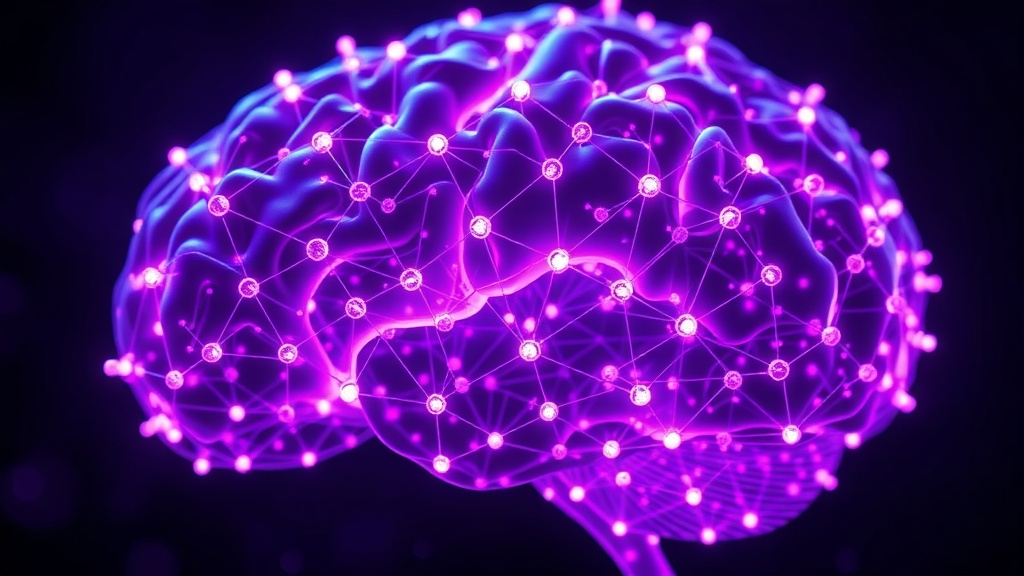
This 3D representation is not merely aesthetic; it serves as an interface for understanding the breadth and depth of the user's AI-derived knowledge. Users can navigate through different conversational threads, identify key decisions, and see how disparate pieces of information connect. This approach aims to make the process of recalling and utilizing AI-generated knowledge more fluid and accessible than sifting through linear chat logs.
Future Implications and Open Questions
Mind Silo represents a significant step towards more integrated and context-aware AI assistants. By abstracting memory away from individual applications, it lays the groundwork for AI systems that possess a persistent, user-centric knowledge base. This could fundamentally change how developers interact with AI, moving from discrete, session-based queries to a continuous, evolving dialogue with an AI that truly remembers across all contexts.
However, several questions remain. The technical challenge of enabling arbitrary AI models to reliably query and write to such a memory layer is substantial. Developing standardized APIs or protocols for memory access will be critical. Furthermore, privacy and security considerations are paramount. A centralized memory store, even if locally managed, could become a rich target for malicious actors if not adequately secured. The project's reliance on a Chrome extension also raises questions about its compatibility with future browser security models and other operating systems.
What nobody has addressed yet is the potential for AI models to intentionally or unintentionally *corrupt* this unified memory. If an AI hallucination or a flawed decision is written back into the central store, it could poison future interactions across all connected tools. Ensuring data integrity and providing mechanisms for users to correct or curate their AI-derived memories will be as important as capturing them in the first place.
Despite these challenges, Mind Silo offers a compelling vision for the future of AI interaction – one where our digital assistants learn, remember, and grow with us, coherently and continuously.