From Keyboard Frustration to Hand Gestures
Tired of typing prompts into a terminal, one developer decided to explore a more intuitive interface for interacting with AI coding agents: hand gestures. The project, detailed on Dev.to, demonstrates how a webcam, MediaPipe for landmark tracking, and a custom Python script can translate specific hand movements into commands for an Anthropic-powered AI agent. This approach aims to eliminate the need for traditional keyboard input, transforming the developer's interaction into a gestural command system akin to a conductor leading an orchestra.
The core concept is straightforward: a webcam captures the user's hand, MediaPipe processes the video feed to identify key hand landmarks, and a set of predefined gestures are mapped to distinct actions. The developer identified three primary gestures for controlling the AI:
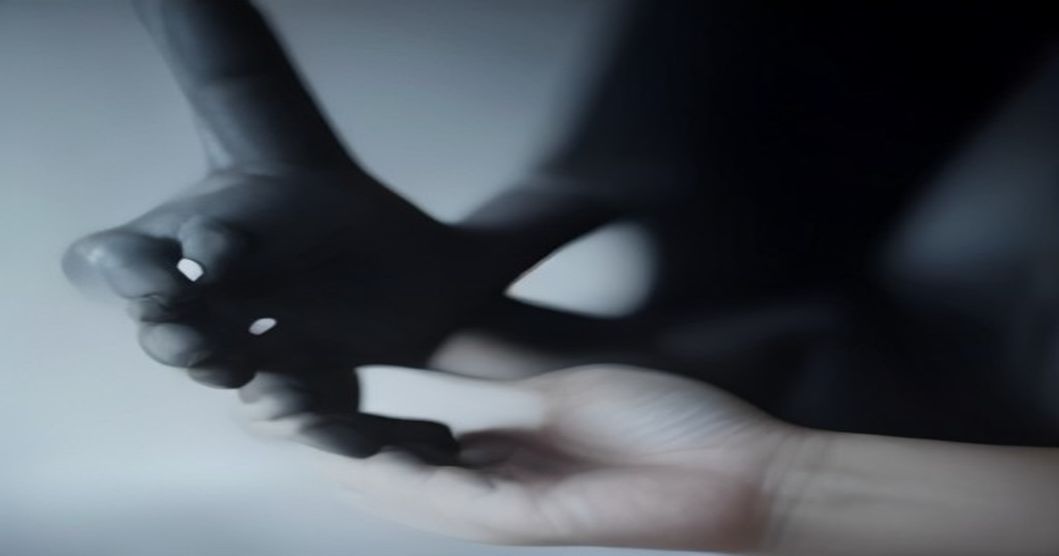
- Pinch: When the thumb and index finger touch, the AI agent is instructed to write code.
- Spinning Index Finger: A circular motion with the index finger signals the agent to brainstorm ideas or suggest approaches.
- Running Fingers: Two fingers moving up and down mimic the action of running code, instructing the agent to execute its last generated code block.
This setup bypasses the keyboard and prompt box entirely, offering a novel, hands-on method for AI-assisted development.
The MediaPipe Hurdle
The initial stages of development involved integrating MediaPipe's newer Tasks API, specifically the HandLandmarker, which is the recommended tool for current projects. However, the developer encountered immediate difficulties. The HandLandmarker API reportedly crashed on their Mac setup, a problem unrelated to the core gesture recognition logic but a significant roadblock nonetheless. This detour into troubleshooting the development environment consumed a considerable amount of time, highlighting the practical challenges of working with cutting-edge AI tools and their dependencies. The experience underscores that even seemingly straightforward integrations can involve unexpected technical debt, particularly when pushing the boundaries of existing frameworks.
After resolving the MediaPipe issues, the focus shifted to mapping the recognized hand landmarks to specific actions. This involves creating a system that can reliably detect the precise configuration of the hand for each gesture and translate that into an actionable command for the AI. The developer implemented a Python script that acts as the intermediary, receiving gesture data from MediaPipe and sending API requests to the Anthropic Claude model.
Connecting Gestures to AI Actions
The Python script serves as the central orchestrator. It continuously captures frames from the webcam, processes them using the MediaPipe HandLandmarker, and analyzes the resulting hand landmarks. Based on the predefined gesture recognition logic, the script determines which action the user intends. For instance, if the thumb and index finger are detected as touching, the script triggers a function to send a prompt to the Anthropic API, instructing Claude to generate code. The specific prompt sent would depend on the context, but the gesture itself acts as the primary command trigger.
Similarly, the spinning finger gesture would initiate a different API call, perhaps asking Claude to outline a plan, suggest algorithms, or brainstorm solutions to a coding problem. The running fingers gesture would be programmed to execute the last code snippet generated by the AI, possibly within a sandboxed environment or directly in a terminal, depending on the desired workflow. This direct mapping from physical action to AI task execution is the core innovation of the project.
The choice of Anthropic's Claude as the AI backend is significant. Claude is known for its strong performance in code generation and reasoning tasks. By leveraging Claude, the developer aims to create a system that is not only novel in its input method but also highly effective in its output, providing meaningful assistance in the coding process. The system allows for a fluid interaction where a developer can quickly request code, brainstorm solutions, and test implementations without ever touching their keyboard, potentially accelerating the development cycle for certain tasks.
Future Implications and Challenges
While this project is a personal exploration, it hints at broader possibilities for human-computer interaction in software development. Imagine pair programming where one developer writes code, and the other uses gestures to guide the AI pair programmer. Or complex debugging sessions where gestures trigger specific diagnostic code execution or data visualization requests. The potential for reduced physical strain from repetitive typing is also a compelling factor.
However, challenges remain. Accuracy and reliability are paramount. Distinguishing between similar gestures, handling variations in lighting and hand position, and ensuring low latency are critical for a usable system. Furthermore, integrating this into existing professional development workflows requires robust error handling and a clear understanding of when such a gestural interface is more efficient than traditional methods. The current setup is a proof-of-concept, and scaling it to handle more complex coding tasks or a wider array of gestures would necessitate significant engineering effort. The developer acknowledges the time spent troubleshooting GPU crashes, a common pain point in AI development, indicating that practical deployment involves more than just the core gesture recognition logic.
The success of such a system hinges on its ability to seamlessly integrate into a developer's thought process, acting as a natural extension of their intent rather than a cumbersome intermediary. The path from a weekend project to a production-ready tool is long, but this experiment provides a compelling glimpse into a future where our hands might become the primary interface for commanding intelligent coding assistants.