The Problem: Disposable Scripts
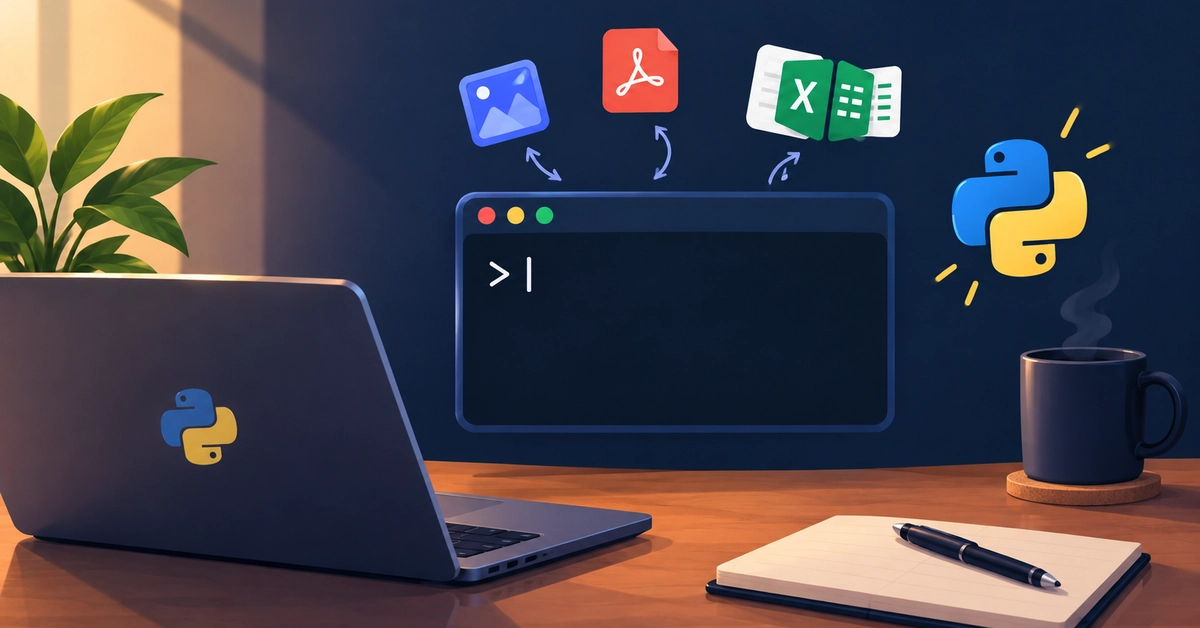
Many developers, when faced with small, repetitive tasks, turn to AI assistants for quick solutions. These AI-generated scripts can convert images, compress PDFs, or transform CSVs to Excel. The issue? These scripts are typically written for a single use. They perform the task, are used once, and then often discarded or lost. This cycle of requesting and discarding disposable code is inefficient for tasks that recur frequently.
The author, drawing from a background primarily in Node.js, found themselves repeatedly asking for similar utility scripts. This led to a crucial realization: why continue generating unique, single-use scripts when a more sustainable, reusable solution could be developed? This thought process sparked the creation of a personal command-line interface (CLI) toolbox.
Building the Toolbox: From Concept to Code
The result is 'Toolbox,' a Python CLI application designed to consolidate frequently needed utilities. The core functionalities address common file and image manipulation tasks that the developer frequently encountered. These include:
- CSV to Excel conversion
- Excel to CSV conversion
- Image processing: grayscale, blur, and compression
- PDF compression
The project also served as a practical application for the author's recent freeCodeCamp Python certification. It provided an opportunity to move beyond theoretical knowledge and build something tangible. For someone accustomed to the Node.js ecosystem, this project also became an exploration into Python's project structure and tooling, highlighting differences from their existing experience.
Navigating Python's Ecosystem: npm to uv
A significant part of building the toolbox involved understanding and integrating with Python's package management and build tooling. The author, coming from a Node.js background, compared the Python experience to the familiar `npm` or `yarn` workflow. The article touches upon the transition from traditional Python packaging methods to more modern solutions like `uv`.
uv, a fast Python package installer and resolver, is gaining traction for its speed and efficiency, aiming to streamline dependency management in Python projects. For developers new to Python or those looking to optimize their workflows, understanding tools like `uv` is crucial. It offers a compelling alternative to older, slower package managers, providing a more robust and performant development experience.
The choice to use Python for this CLI toolbox is strategic. Python's extensive standard library and its vast ecosystem of third-party packages make it an ideal language for scripting and utility development. Libraries like Pandas for data manipulation (CSV/Excel), Pillow for image processing, and various PDF manipulation libraries readily available on PyPI simplify the implementation of complex functionalities into a cohesive tool.
The Benefits of Reusability
The primary advantage of building a dedicated toolbox, rather than relying on one-off scripts, is reusability and maintainability. Once developed and tested, the toolbox provides a consistent interface for performing these tasks. This eliminates the need to remember or re-implement logic for each instance. Furthermore, if a bug is found or an improvement is needed, it can be addressed in a single location, benefiting all future uses of the tool.
For developers, this approach fosters a more organized and efficient workflow. It encourages thinking about common tasks as components that can be abstracted and reused, a fundamental principle in software engineering. This mindset shift can lead to cleaner code, reduced development time for recurring needs, and a more robust set of personal development utilities.
The project's success lies not just in its functionality but in its demonstration of how a developer can leverage their learning and address their own pain points to create valuable, practical tools. It’s a testament to the power of building for oneself, turning everyday frustrations into opportunities for engineering solutions.
Future Considerations
While the current 'Toolbox' addresses a specific set of common tasks, the potential for expansion is significant. Future iterations could include more advanced image manipulation, video conversion, data cleaning utilities, or even integrations with cloud services. The modular nature of CLI applications makes it relatively straightforward to add new commands and functionalities without disrupting existing ones.
The author's journey from disposable AI scripts to a self-built, reusable Python CLI toolbox highlights a common challenge and a practical solution within the developer community. It underscores the value of investing in foundational tools that streamline daily workflows and encourage more systematic problem-solving.