
The Vision: Code That Mends Itself
The concept of a "self-driving codebase" is emerging as a potential paradigm shift in software development, promising to alleviate the growing burden of code maintenance and evolution. Detail.dev, a company focused on developer productivity, has articulated this vision, suggesting that software systems could one day manage their own health, upgrades, and refactoring with minimal human intervention. This ambitious goal draws a direct analogy to the development of autonomous vehicles, where complex systems are designed to navigate, adapt, and operate without constant human input.
The core problem Detail.dev addresses is the escalating technical debt and the sheer complexity of modern software stacks. As applications grow and evolve, dependencies shift, security vulnerabilities emerge, and codebases can become difficult to manage, update, and understand. This leads to slower development cycles, increased costs, and a higher risk of bugs and security breaches. The "self-driving codebase" concept posits that AI and advanced automation can tackle these challenges proactively.
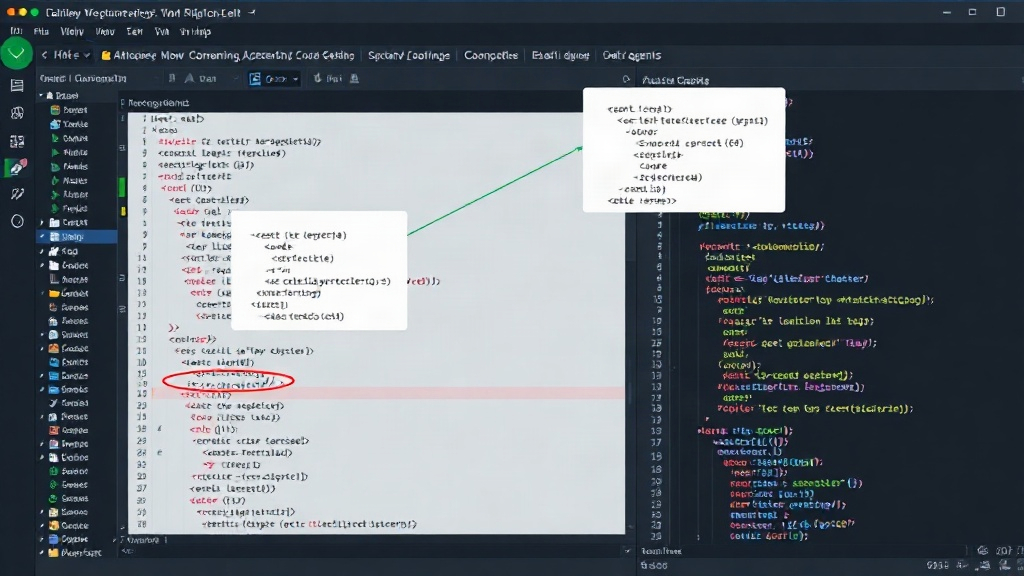
Components of a Self-Driving Codebase
Detail.dev's proposal outlines several key components that would enable a codebase to exhibit self-driving capabilities:
Automated Dependency Management
Modern software relies on a vast network of external libraries and frameworks. Keeping these dependencies up-to-date is crucial for security and access to new features, but it's often a manual, time-consuming process. A self-driving codebase would feature an AI agent that continuously monitors dependency versions, identifies outdated or vulnerable packages, and automatically proposes or even applies updates. This agent would understand semantic versioning, compatibility matrices, and the potential impact of updates on the rest of the system. It would act much like an autonomous vehicle's navigation system, constantly recalculating the best path forward through the dependency graph.
Proactive Refactoring and Code Health
Technical debt accumulates through suboptimal design choices, quick fixes, and evolving best practices. A self-driving codebase would incorporate tools that analyze code quality, identify code smells, and suggest or perform refactoring operations. This could involve automating the extraction of common logic into functions, optimizing performance bottlenecks, or ensuring adherence to modern coding standards. The system would learn from the project's history and the broader community's best practices to maintain a high level of code health organically. Think of it like a self-healing material that repairs minor cracks before they become structural issues.
Intelligent Security Patching
Security is a paramount concern. A self-driving codebase would integrate with vulnerability databases and security scanning tools. When a new vulnerability affecting a project's dependencies is discovered, the system would automatically assess the risk and, if deemed safe, apply the necessary patches or upgrades. This would significantly reduce the window of exposure to known threats, a critical advantage in today's fast-evolving threat landscape.
Automated Testing and Validation
Crucially, any automated changes must be validated. A self-driving codebase would leverage sophisticated testing frameworks, including unit tests, integration tests, and potentially even AI-driven fuzz testing, to ensure that automated updates and refactorings do not introduce regressions or break existing functionality. The system would learn which tests are most critical for specific code regions and prioritize validation accordingly.
Analogies and Implications
The parallels to autonomous vehicles are striking. Just as self-driving cars aim to reduce human error, improve efficiency, and democratize transportation, self-driving codebases aim to reduce developer toil, improve software quality, and accelerate innovation. The complexity of managing a modern software project, with its intricate web of dependencies and evolving requirements, mirrors the complexity of navigating dynamic road environments. Both require sophisticated sensing, decision-making, and actuation capabilities.
The development of autonomous vehicles has been a decades-long, multi-billion dollar endeavor involving significant advancements in AI, sensor technology, and systems engineering. Similarly, achieving truly self-driving codebases will likely require breakthroughs in areas like program analysis, automated reasoning, machine learning for code, and robust testing methodologies. Companies like Aurora Innovation and Kodiak AI are pushing the boundaries in the autonomous vehicle space, demonstrating the real-world application of these complex systems. The recent move of former Waymo CFO Elisa de Martel to Wayve further signals the intense competition and investment in the broader autonomous systems sector.
While the vision is compelling, the path to fully self-driving codebases is fraught with challenges. Code is not as predictable as a road environment; it is abstract, symbolic, and subject to human intent and creativity. Ensuring that AI can reliably understand, modify, and validate code without introducing subtle, hard-to-detect errors is a monumental task. However, the incremental progress in AI-assisted coding tools, such as GitHub Copilot and intelligent IDEs, suggests that we are moving in this direction. The "self-driving codebase" represents a future where developers can focus more on high-level design and feature development, leaving the intricate, day-to-day maintenance to intelligent systems.
The Road Ahead
The concept challenges the traditional developer workflow. Instead of developers manually updating libraries or refactoring code, they might oversee AI agents performing these tasks, intervening only when the AI encounters novel situations or requires strategic direction. This shift could redefine the role of the software engineer, moving them towards system architecture, AI supervision, and complex problem-solving, away from routine maintenance. The ultimate goal is to create software systems that are not only functional but also resilient, secure, and adaptable throughout their lifecycle, much like a well-maintained, continuously improving autonomous vehicle.