The Core Function: Rendering Pixels
Graphics Processing Units (GPUs) are specialized electronic circuits designed to rapidly manipulate and alter memory to accelerate the creation of images intended for output to a display device. Initially, their sole purpose was to offload the demanding task of rendering graphics from the Central Processing Unit (CPU), allowing for smoother, more complex visual experiences in video games and graphical applications. This involved tasks like polygon rendering, texture mapping, and shading, all of which require massive parallel computation.
At their heart, GPUs are massively parallel processors. Unlike CPUs, which are designed for serial task execution and excel at complex logic and decision-making, GPUs feature thousands of smaller, simpler cores optimized for executing the same operation on many different data points simultaneously. Think of a CPU as a highly skilled manager capable of tackling diverse, complex problems one by one, while a GPU is an army of workers, each performing a similar, repetitive task in unison. This parallel architecture is what makes them indispensable for tasks that can be broken down into many independent, identical calculations.
Beyond Graphics: The Rise of GPGPU
The inherent parallel processing power of GPUs soon proved valuable for more than just rendering pixels. Researchers and developers began exploring the concept of General-Purpose computing on Graphics Processing Units (GPGPU). This paradigm shift recognized that the computational capabilities of GPUs could be harnessed for a wide range of non-graphical tasks that also benefited from massive parallelism.
The key enabler for GPGPU was the development of programming models and APIs that allowed developers to access the GPU's compute capabilities directly. CUDA, developed by NVIDIA, was one of the earliest and most influential platforms, providing a C-like language and libraries for GPU programming. OpenCL, an open standard, emerged as an alternative, offering cross-platform compatibility. These tools transformed GPUs from mere graphics accelerators into powerful co-processors capable of accelerating scientific simulations, data analytics, machine learning, and more.
Architectural Differences: CPU vs. GPU
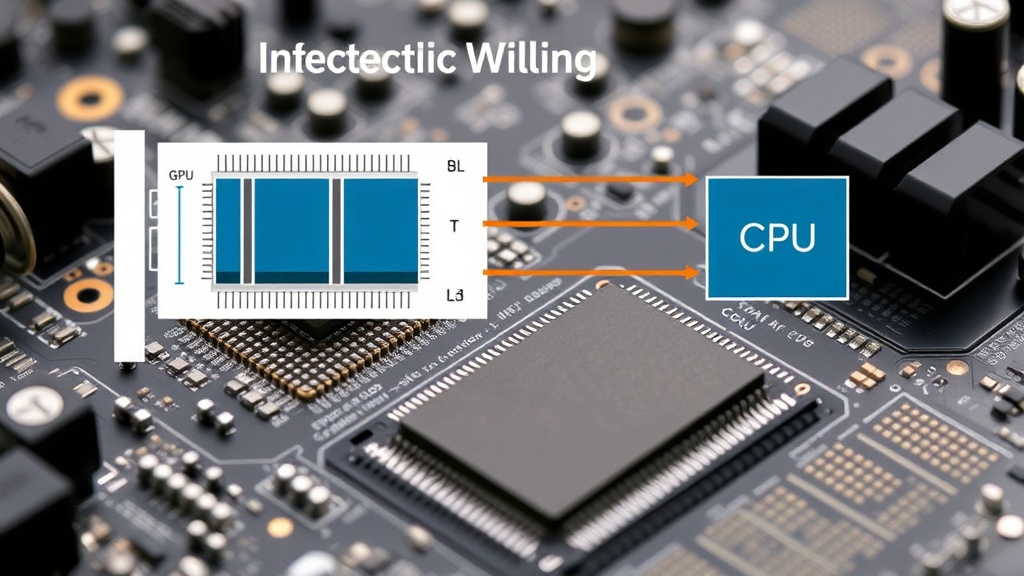
Understanding the architectural distinctions between CPUs and GPUs is crucial to grasping their respective strengths. A typical CPU has a few powerful cores, each with large caches and sophisticated control logic, designed for low-latency, high-throughput execution of sequential tasks. They are optimized for branching, task switching, and handling diverse instruction sets.
In contrast, a GPU has hundreds or thousands of smaller, simpler cores grouped into execution units. These cores share resources like caches and control logic, sacrificing some individual core performance and latency for the sake of sheer parallel throughput. They are designed to execute a limited set of instructions very efficiently across many threads simultaneously. This design makes them ideal for data-parallel problems, where the same computation is applied to a large dataset, such as matrix multiplications in machine learning or physics calculations in simulations.
Key Components and Concepts
Several key components and concepts define GPU operation:
- Streaming Multiprocessors (SMs): These are the fundamental building blocks of NVIDIA GPUs. Each SM contains multiple CUDA cores, special function units (SFUs), load/store units, and shared memory. They are responsible for executing threads in parallel.
- CUDA Cores: These are the arithmetic logic units (ALUs) within an SM that perform the actual computations, similar to the cores in a CPU but optimized for parallel execution of simple instructions.
- Memory Hierarchy: GPUs have a complex memory hierarchy, including global device memory (large but high latency), shared memory (fast, on-chip memory shared by threads within an SM), local data share (LDS) in AMD GPUs, and various levels of cache. Efficiently managing data movement between these memory spaces is critical for performance.
- Threads, Blocks, and Grids: In CUDA programming, threads are the smallest unit of execution. Threads are grouped into blocks, and blocks are grouped into grids. Blocks can execute in parallel on different SMs, and threads within a block can cooperate using shared memory and synchronization primitives.
- Warps: NVIDIA GPUs execute threads in groups called warps (typically 32 threads). All threads in a warp execute the same instruction at the same time. If threads in a warp take different execution paths (a divergence), the GPU must execute both paths serially, which can impact performance.
Applications of Modern GPUs
The evolution of GPU technology has led to their widespread adoption across numerous fields:
- Artificial Intelligence and Machine Learning: Training deep neural networks involves massive matrix multiplications and other parallelizable operations, making GPUs the de facto standard for AI workloads. Libraries like TensorFlow and PyTorch are heavily optimized for GPU acceleration.
- Scientific Computing and Simulations: From molecular dynamics and fluid simulations to weather forecasting and financial modeling, complex scientific problems that require extensive numerical computation benefit immensely from GPU power.
- Data Analytics and Big Data: Processing and analyzing large datasets, especially for tasks like database acceleration and business intelligence, can be significantly sped up using GPUs.
- Cryptocurrency Mining: The energy-intensive process of mining certain cryptocurrencies, which relies on solving complex cryptographic puzzles, is highly amenable to GPU parallel processing.
- Video Editing and Rendering: Beyond real-time graphics, GPUs are essential for accelerating video encoding, decoding, and complex 3D rendering in professional content creation workflows.
The transition from GPUs solely for graphics to powerful, general-purpose computing engines represents a significant evolution in hardware architecture and software development. Their ability to perform thousands of calculations in parallel has unlocked new possibilities in scientific discovery, artificial intelligence, and beyond, making them indispensable components of modern computing infrastructure.