The Hidden Cost of Framework Shortcuts
Modern Java development often introduces data persistence through a seemingly innocuous shortcut: extending framework-specific repositories like JpaRepository<Product, UUID>. While this accelerates initial development, it creates a dangerous coupling. Your entire application, particularly the service layer and even REST controllers, becomes intrinsically linked to specific frameworks such as Spring Data and Hibernate. This tight integration means that concepts like Pageable or Specification from Spring can easily leak into your core business logic. This leakage compromises the integrity of a clean architecture, making your core module dependent on database infrastructure frameworks. The long-term consequence is a 'framework prison' where migrating to different persistence technologies, like raw JDBC or MongoDB, becomes a monumental task. Your business logic is effectively trapped, unable to evolve independently.
This is precisely the problem Chapter 3 of the Evolutionary Architecture series addresses: building a robust DAO API Module. The goal is to create a distinct layer that acts as a contract between your domain and the persistence mechanism, ensuring zero dependencies on external frameworks within your core domain.
Designing the DAO API Module
The DAO API Module serves as the sole gateway for data access operations. It defines interfaces that express the domain's data needs without revealing implementation details. Think of it less like a database interface and more like a well-defined request form that your business logic fills out. This form specifies what data is needed, but not how it's fetched or stored. The module itself contains only interfaces and simple data transfer objects (DTOs) or records that represent the data being queried or persisted. Crucially, it must not contain any framework-specific annotations or types. This ensures that the domain layer, which consumes these interfaces, remains entirely framework-agnostic. The domain layer simply asks for data, and the DAO API contract guarantees that it will receive it, irrespective of the underlying persistence technology.
The key principle here is to abstract away the persistence concerns. Instead of your service layer calling a method like productRepository.findByCategoryAndPriceGreaterThan(category, price), it would interact with an interface defined within the DAO API Module. This interface might expose methods like findProducts(ProductQuery query). The ProductQuery object would encapsulate all the necessary criteria (category, price range, etc.) in a domain-neutral format. The implementation of this interface, residing in a separate persistence layer, would then translate this domain-neutral query into the specific syntax required by the chosen database technology.
Implementing the Persistence Layer
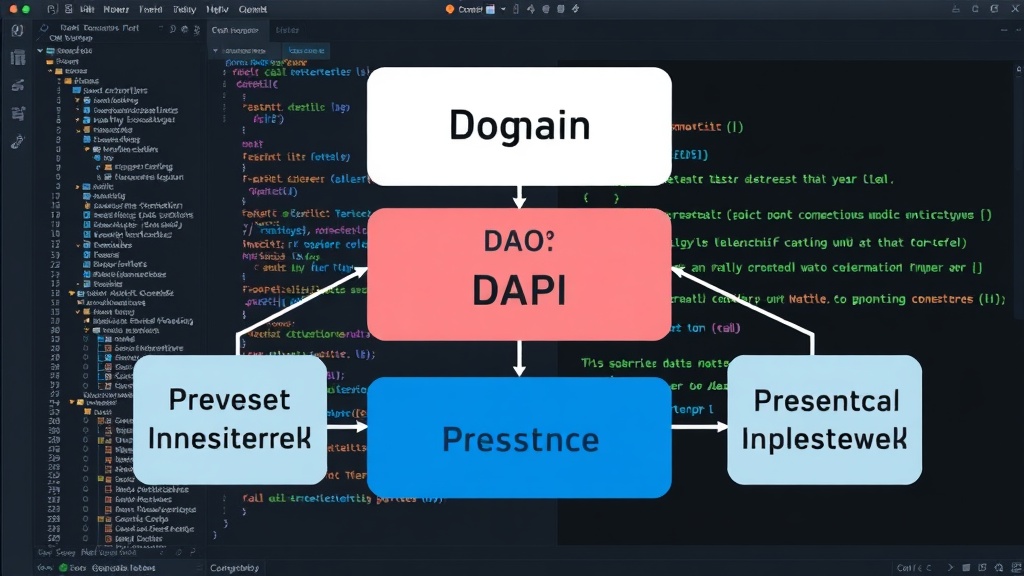
The persistence layer is where the actual implementation of the DAO API interfaces resides. This layer is responsible for translating the domain-neutral requests from the DAO API into framework-specific operations. For a Spring Data JPA implementation, this would involve creating classes that implement the DAO API interfaces and use JpaRepository or direct JPA/Hibernate calls internally. However, these framework-specific details are confined strictly within this layer. The DAO API interfaces remain clean, free from any Spring or Hibernate dependencies. This separation is vital. If you decide to switch from Spring Data JPA to raw JDBC, for instance, you would only need to rewrite the persistence layer implementation. The domain and service layers would remain untouched, as they only interact with the framework-agnostic DAO API.
This architectural pattern allows for what's known as “framework migration.” When a new, more efficient persistence technology emerges, or when a specific sub-domain's access patterns change drastically (e.g., requiring a graph database for a specific feature), you can introduce a new persistence implementation alongside the existing one. The DAO API remains the stable contract. You can then gradually migrate parts of your application to the new implementation without a disruptive, application-wide rewrite. This is the essence of evolutionary architecture: the ability to adapt and change the underlying infrastructure without compromising the core business logic or incurring massive technical debt.
Protecting Against Framework Leaks
The most insidious threat to clean architecture is the accidental leak of framework-specific types into the domain or service layers. This often happens unintentionally, especially with junior developers who are accustomed to the conveniences offered by frameworks. For example, returning a Page<Product> (a Spring Data type) directly from a service method means that the caller is now aware of and dependent on Spring Data's pagination mechanism. To prevent this, strict guidelines and automated checks are necessary. All public interfaces exposed by the DAO API module must use only plain Java types or custom DTOs/records. Any attempt to include framework types in these interfaces should be flagged by static analysis tools or code reviews. This rigorous enforcement ensures that the boundary between the domain and the persistence implementation remains impermeable. The domain layer should never need to know if its data comes from a relational database, a NoSQL store, or even an in-memory cache; it only knows it receives data according to the contract.
Consider the analogy of a house's plumbing. The faucet in your bathroom is the interface. You turn it, and water comes out. You don't need to know if the pipes are copper or PEX, or if the water comes from a municipal supply or a well. The faucet (the DAO API contract) provides a consistent interface to the service (your need for water). The underlying plumbing infrastructure (the persistence layer) can be changed or upgraded without affecting your ability to get water from the faucet. If the faucet itself started requiring you to specify the exact pipe material you wanted to use, it would be a broken interface, just as a service layer requiring specific framework types is a broken abstraction.
The Evolutionary Advantage
By establishing a clear DAO API Module, you gain significant flexibility. When your application needs to scale, you can optimize the persistence layer for specific read-heavy paths using raw JDBC, or adopt a specialized database like MongoDB for certain sub-domains, without impacting your core business logic. This adaptability is the hallmark of evolutionary architecture. It allows your system to grow and change in response to business needs and technological advancements, rather than becoming rigid and brittle. The DAO API Module is not just a design pattern; it's a strategic investment in the future maintainability and evolvability of your software.